
Table of Contents
- 1. The data centre sits in a 200-metre former paper machine hall
- 2. EuroHPC JU signed a EUR 387.8 million contract with Bull in August 2026
- 3. LUMI-AI aims at ten times the AI capacity and roughly double the HPC capability
- 4. Construction began in January 2026, topped out in September, and runs to 2027
- 5. The LUMI-IQ quantum computer will share the same hall
- 6. Finland's national machine, Roihu, was inaugurated at the site in May 2026
- 7. Waste heat goes into Kajaani's district heating network under an April 2026 deal
- 8. The build employs about 115 people, peaking at 150, mostly from Kainuu
- 9. Compute is applied for, not bought — and SMEs have had it free since April 2025
- References
The LUMI supercomputer runs out of a converted paper machine hall in Kajaani, Finland, operated by CSC – IT Center for Science on behalf of a pan-European consortium. The hardest number attached to the site is EUR 387.8 million: the contract EuroHPC JU signed with Bull in August 2026 for the LUMI-AI system, funded half by EuroHPC JU and half by a six-country consortium of Finland, Czechia, Denmark, Estonia, Norway and Poland.
1. The data centre sits in a 200-metre former paper machine hall
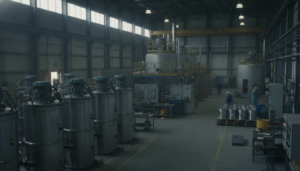
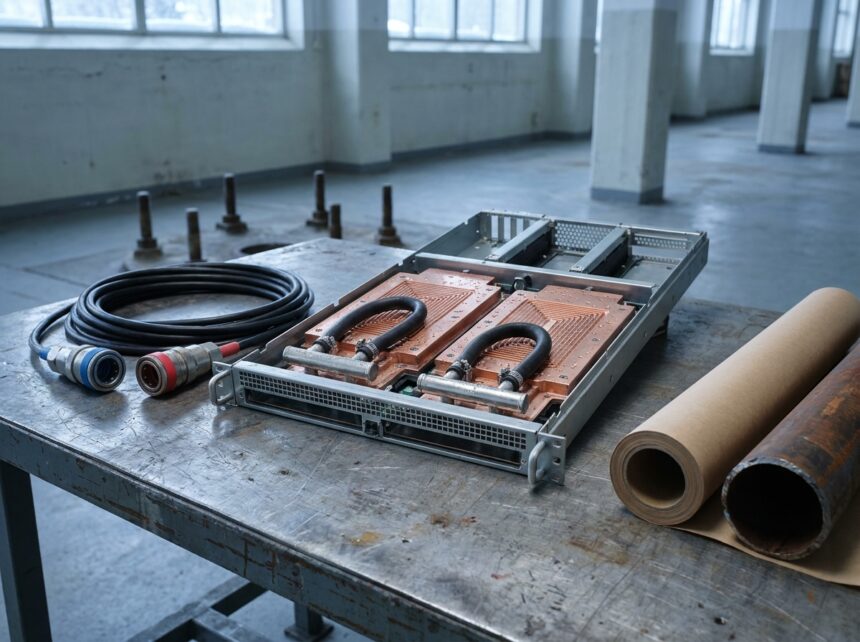
The new building occupies a 200-metre-long former paper machine hall in the Renforsin Ranta business area of Kajaani. The mill that closed there left behind exactly what a supercomputer needs and what takes years to build from scratch: a heavy grid connection, cooling water access and industrial-scale floor space. Reusing that shell cut both the capital cost and the lead time of putting compute on the site.
Finland’s climate does the rest of the work. Cooling loads stay low for most of the year, and the Kajaani data centre draws on a low-carbon Nordic grid, so the electricity bill and the emissions figure both come in lower than they would further south.
2. EuroHPC JU signed a EUR 387.8 million contract with Bull in August 2026
The procurement is worth EUR 387.8 million and covers acquisition, delivery, installation and maintenance of LUMI-AI, according to the EuroHPC Joint Undertaking’s announcement of the Bull contract dated 31 August 2026. Bull is the supplier; CSC’s Kajaani site is the host.
Funding splits evenly between EuroHPC JU and the LUMI AI Factory consortium. That split is not an accounting detail — it determines who gets to use the machine. Countries that put money in receive a national share of the system’s time, which is why Czechia, Denmark, Estonia, Norway and Poland are at the table alongside Finland rather than queueing for European calls alone.
3. LUMI-AI aims at ten times the AI capacity and roughly double the HPC capability
LUMI-AI is projected to deliver a tenfold increase in AI capacity and nearly double the high-performance computing capability of the current system, a figure that comes from EuroHPC JU and Bull rather than from any measured benchmark. The hardware behind it, per the Kajaani Data Centre Ecosystem’s account of the Bull selection, is next-generation AMD Instinct MI430X GPUs paired with 6th Gen AMD EPYC 256-core processors.
EuroHPC JU Executive Director Anders Jensen has described the deployment as forming a powerful European AI infrastructure ecosystem. Treat that as a projection with a delivery date attached, not a ranking: nothing appears on a Top500 list until the machine is installed and running. For a verified point of comparison in the meantime, see Frontier’s exascale specifications at Oak Ridge.
4. Construction began in January 2026, topped out in September, and runs to 2027
SRV started the conversion in January 2026 and held the topping-out ceremony on 3 September 2026. As of November 2026, production readiness and the start of operations are scheduled for the second half of 2027, which sets the earliest date any research team can run production workloads on the new system. Everything in the access section below is governed by that date.
5. The LUMI-IQ quantum computer will share the same hall
LUMI-IQ is the experimental quantum system destined for the new building alongside LUMI-AI. Putting quantum processors on the same network as the GPU and CPU partitions means hybrid jobs — a quantum step calling classical compute, or the reverse — run without shipping data between sites.
Juha Torvinen, Senior Project Manager at CSC, has said the combination will create one of the world’s most advanced publicly available research infrastructures for quantum-accelerated HPC. That’s his assessment of what the finished facility will offer, made before either machine is installed.
6. Finland’s national machine, Roihu, was inaugurated at the site in May 2026
CSC inaugurated Roihu, Finland’s national supercomputer, at the Kajaani data centre in May 2026. It triples the country’s national computing capacity and shares the hall with the original LUMI system, but the two are allocated through entirely separate processes: Roihu through Finnish national routes, LUMI through consortium shares and European calls.
For a researcher, that redundancy matters. A Finnish team turned down in a European review still has a domestic machine at the same address — an option few EuroHPC host countries can offer at this scale.
7. Waste heat goes into Kajaani’s district heating network under an April 2026 deal
CSC and the energy company Loiste Lämpö Oy signed an agreement in April 2026 to recover excess heat specifically from the LUMI AI Factory building and feed it into the Kajaani district heating network. The deal, reported by the LUMI supercomputer’s account of the CSC–Loiste excess heat agreement, extends heat recovery already practised at the site to the new hall.
The economics are straightforward. Marko Saviniemi, Director of Heat Business at Loiste, has pointed out that data centres are excellent sources of consistent, year-round heat — a steady thermal output is worth more to a heat pump plant than a seasonal one, because it displaces fuel that would otherwise be burned through the Finnish winter. The contrasting bet, building new generation rather than recycling what compute already produces, is visible in the Kemmerer Natrium build and its data-centre power bet.
8. The build employs about 115 people, peaking at 150, mostly from Kainuu
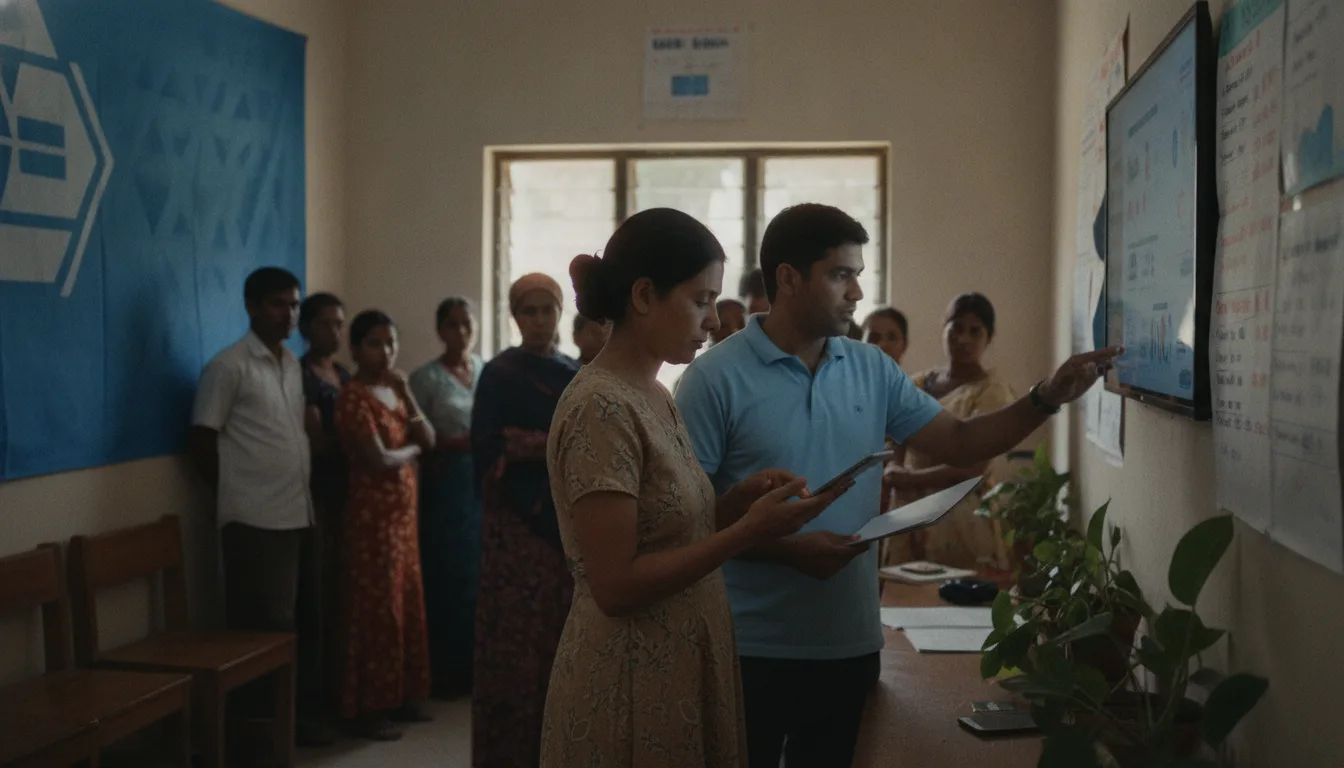
Roughly 115 people are working on the conversion during 2026, with the workforce expected to peak at 150. Jarkko Salmenoja, Unit Director at SRV, has said most of the construction work is being done by a local workforce, and that about half the building services engineering team comes from Kainuu itself.
That detail is the part regional authorities should read twice. The EUR 387.8 million machine is the headline, but the wages and subcontracts land during the construction phase — and in a region shaped by a mill closure, two years of local engineering contracts is the measurable return before a single job runs.
9. Compute is applied for, not bought — and SMEs have had it free since April 2025
Access comes through peer-reviewed EuroHPC access calls and through the national allocation shares held by the six consortium countries. It is not sold as cloud capacity, and there is no price list.
Since April 2025 there has been a third route. The LUMI AI Factory has supplied compute and support services free of charge to eligible European SMEs and startups, with priority on manufacturing, health and life sciences, and communication technologies, as DeiC’s description of the LUMI AI Factory sets out. Deadlines recur rather than falling once, so a missed cut-off costs months, not the opportunity. The Italian equivalent is worth reading alongside it: see how CINECA allocates Leonardo’s compute to climate and health research.
- Decide your route: a EuroHPC access call for research, a consortium country’s national share, or the LUMI AI Factory service for SMEs and startups.
- Check eligibility — EU or associated-country affiliation for research calls; European SME or startup status for the AI Factory service.
- Size the request against the call type: benchmark and development access for small, fast-turnaround allocations, regular and extreme-scale access for production runs.
- Prepare the technical and scientific case, including code scalability on GPU partitions, which is where most applications fail.
- Submit before the recurring cut-off published on the EuroHPC JU access page, then wait for peer review.
- If awarded, work with CSC’s support team on porting before the allocation clock starts.
Strip away the gigaflops and what’s in Kajaani is a public procurement with dates, named recipients and an application form: EUR 387.8 million of shared European money, a heat contract that sends the by-product into a municipal network, 150 construction jobs in a region that lost a mill, and a 2027 start date that researchers planning climate or life-sciences runs on the LUMI supercomputer should already be writing into their proposals.
References
- EuroHPC Joint Undertaking — EuroHPC JU signs contract to deploy the LUMI-AI supercomputer, 31 August 2026
- Kajaani Data Centre Ecosystem — Bull selected to deliver LUMI-AI supercomputer
- Kajaani Data Centre Ecosystem — LUMI AI Factory
- LUMI Supercomputer — CSC and Loiste excess heat agreement
- LUMI Supercomputer — Construction progresses
- DeiC — LUMI AI Factory
- CSC – IT Center for Science — CSC strengthens the future of Kainuu