
Table of Contents
- What HALEU Is and Why 9 of 10 Advanced Reactors Need It
- Uranium enrichment bands and what each fuels
- Centrus Energy: The Only NRC-Licensed HALEU Producer in America
- Licence and authorisation milestones at Piketon
- Inside the American Centrifuge Plant at Piketon, Ohio
- From UF6 feed to a finished HALEU cylinder: the six-step production sequence
- The AC-100M and the October 30, 2026 First Expansion Shipment
- The $900 Million DOE Task Order Finalized July 1, 2026
- The Gates-Era Reactor Fleet Waiting on Piketon Fuel
- Centrus HALEU customer agreements signed in 2026
- TerraPower's Natrium and the 2030 Fuel Deadline
- The Oklo-Meta Ohio Campus and the November 12, 2026 Agreements
- Why the Russian Uranium Import Ban Made Piketon a Bottleneck
- The $7.0 Billion Backlog and What Wall Street Priced In
- Centrus Energy key figures, as reported for the period ending September 30, 2026
- How Piketon Fits Bill Gates's Climate Capital Thesis
- What Piketon's 2029 Ramp Means for Ohio and the Grid
- Frequently Asked Questions About Centrus's HALEU Plant
- Limitations, Risks and What Could Go Wrong
- The Bottom Line on America's Only HALEU Line
- References
Key Takeaway: HALEU — high-assay low-enriched uranium — is uranium enriched above 5% and up to 19.75% U-235, and it is the fuel required by nine of the ten advanced reactor designs funded under the Department of Energy’s demonstration programme. Centrus Energy’s American Centrifuge Plant in Piketon, Ohio is the only Nuclear Regulatory Commission-licensed source in the United States. Three 2026 figures define its position: a $900 million DOE task order finalized July 1, 2026; more than 1,900 kg of demonstration output completed in June 2026; and a $7.0 billion order backlog as of September 30, 2026.
The entire American advanced-reactor build-out now depends on one fuel line in southern Ohio. HALEU supply is the binding constraint on every domestic small modular reactor and microreactor schedule, because no other facility in the United States holds a licence to produce it — which means reactor timelines in Wyoming, Ohio and on military bases are all coupled to the ramp rate of a single plant in Pike County.
The clearest evidence arrived on November 12, 2026, when Centrus and Oklo finalized definitive agreements covering fuel for up to five Aurora powerhouses supporting a planned 1.2 GW power campus in Pike County, Ohio, built to serve Meta’s data centers, with deliveries from Piketon scheduled to begin in 2029 and Oklo prepayments helping to fund Centrus’s capacity expansion. Those agreements exist because AI-driven electricity demand collided with a fuel supply chain that does not yet operate at commercial scale, and developers responded by paying upfront to secure a place in the queue.
This article covers the licence position that creates the monopoly, how the fuel is physically produced, the $900 million federal contract finalized on July 1, 2026, the four customer agreements signed during 2026, the mechanics of the Russian uranium import ban, the financial picture behind a $7.0 billion backlog, and where a project like this fits inside Bill Gates-era long-duration climate capital.
About this analysis: This article is reported from publicly disclosed company announcements, Nuclear Regulatory Commission licensing records, Department of Energy programme documentation and dated analyst coverage. Every figure is attributed to its source and reporting date in the text.
Transparency note: This is editorial analysis of disclosed information, not investment advice. No commercial relationship exists between billgates.pk and Centrus Energy, Oklo, TerraPower, X-energy or Antares Nuclear. Contract values and pricing terms that have not been published are identified as undisclosed rather than estimated.
What HALEU Is and Why 9 of 10 Advanced Reactors Need It
HALEU is uranium fuel enriched to between 5% and 19.75% U-235 — above the roughly 3% to 5% assay used across the existing US light-water fleet, and below the 20% threshold that defines highly enriched uranium under international safeguards conventions.
The engineering reason the demand exists is compactness. Higher fissile density allows a smaller core, longer intervals between refuelling and higher burnup per fuel load, which is why nine of the ten advanced reactor designs funded under the DOE demonstration programme specify high-assay fuel. Small modular reactors and microreactors are physically small precisely because the fuel carries more fissile material per unit volume; therefore the fuel is not a procurement preference that designers could swap out, it is written into the neutronics of the reactor itself. Change the enrichment and you change the core.
The consequence is a timing mismatch that the industry built for itself. A fuel requirement locked into reactor designs years ago created a demand curve that no licensed domestic supplier could serve, because commercial enrichment in the United States had been built exclusively around light-water fuel assay. As a 2024 NRC licensing record for the Piketon facility documents, authorisation to enrich up to 20% required its own licensing basis — which is why the gap persisted until Piketon’s cascade began producing.
Uranium enrichment bands and what each fuels
| Category | U-235 enrichment | Typical use | US licensed producers |
|---|---|---|---|
| Natural uranium | ~0.711% | Feed material for enrichment | Not applicable — mined, not enriched |
| LEU (commercial light-water fuel) | ~3–5% | Existing US reactor fleet | Multiple Western suppliers; domestic capacity limited |
| HALEU | Above 5%, up to 19.75% | Advanced reactors, SMRs, microreactors | Centrus Energy, Piketon, Ohio — only licensed source |
| HEU (highly enriched uranium) | 20% and above | Naval propulsion, research, defence | Government-controlled; not commercial |
Centrus Energy: The Only NRC-Licensed HALEU Producer in America
Centrus Energy holds, through its operating subsidiary, the only NRC licence permitting uranium enrichment up to 20% U-235 anywhere in the United States — which is why every domestic advanced reactor fuel conversation routes through Piketon rather than through a competitive tender.
The regulatory mechanics explain why that position has proved durable. Enrichment above roughly 10% assay requires a separate licensing basis covering nuclear criticality safety, material control and accounting, and physical security at a higher category of protection. Converting an existing LEU plant is therefore a multi-year regulatory exercise with new safety analysis and new security infrastructure, not a procurement decision a competitor can execute inside a budget cycle. That asymmetry is the source of Centrus’s commercial leverage.
The commercial effect of the licensing record became visible in June 2025, when the NRC approved License Amendment 29. Because the regulator authorised continued operation of the 16-centrifuge cascade at a minimum of 900 kg of HALEU UF6 per year across three optional three-year periods, Centrus could underwrite multi-year offtake agreements against a licensed production baseline rather than against an aspiration. Reactor developers signing in 2026 were contracting against a regulatory permission that already existed — and that distinction is what made the agreements financeable.
Licence and authorisation milestones at Piketon
- NRC licence authorising enrichment up to 20% U-235 at the Piketon site — the only such authorisation in the United States
- DOE HALEU Operation Contract: demonstration cascade commissioned and the first production campaign completed
- June 2025 — NRC approves License Amendment 29, permitting continued operation of the 16-centrifuge cascade at a minimum of 900 kg HALEU UF6 per year for three optional three-year periods
- June 2026 — the final 900 kg demonstration campaign completed two weeks ahead of schedule, taking cumulative output above 1,900 kg
- July 1, 2026 — $900 million DOE task order finalized, shifting the site from demonstration to commercial build-out
- October 30, 2026 — first newly manufactured expansion centrifuge shipped from Oak Ridge, Tennessee to Piketon
Inside the American Centrifuge Plant at Piketon, Ohio
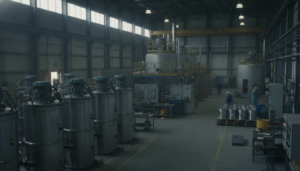
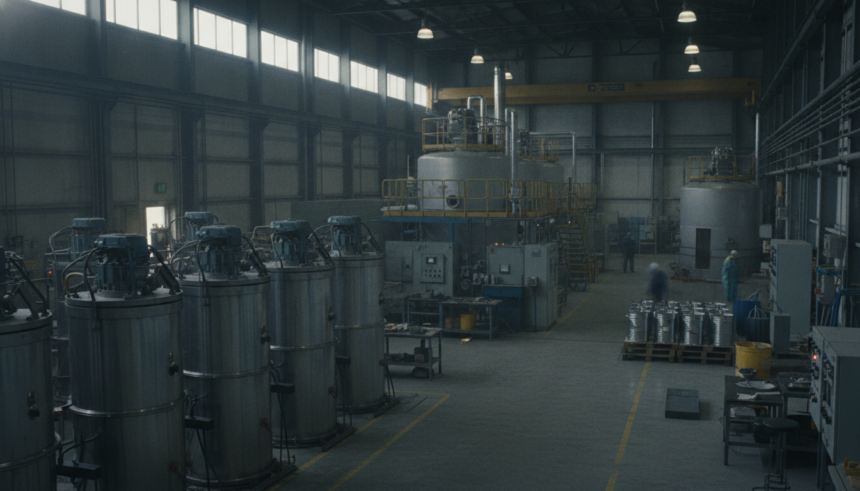
The American Centrifuge Plant occupies part of the DOE’s Portsmouth Gaseous Diffusion Plant site (PORTS) near Piketon in Pike County, Ohio. The location was chosen because the infrastructure, the security perimeter and a workforce trained through decades of federal enrichment work were already in place — which removed years of siting and staffing lead time that a greenfield plant would have carried.
The separation physics is straightforward in principle and demanding in practice. Gas centrifuges spin uranium hexafluoride at very high rotational speed so that the marginally heavier U-238 molecules migrate outward while the lighter U-235 concentrates toward the centre. The mass difference is tiny, which means useful enrichment is achieved by cascading hundreds of small separations in series rather than by one large one.
From UF6 feed to a finished HALEU cylinder: the six-step production sequence
- Uranium hexafluoride (UF6) feed material is delivered to the Piketon site and staged under NRC material control and accounting rules
- Feed cylinders are heated so solid UF6 sublimates into gas and enters the cascade header
- Gas is routed through the AC-100M centrifuge cascade, where rotation separates the lighter U-235 stream from the heavier U-238 tails
- Enriched product passes through successive cascade stages until assay reaches the target band, up to 19.75% U-235
- Product gas is withdrawn and cooled into solid form inside certified HALEU product cylinders
- Cylinders are sampled, assayed and certified, then shipped under NRC and Department of Transportation requirements to the fuel fabricator
The throughput reality follows directly from that architecture. A 16-machine cascade licensed to a 900 kg annual minimum is demonstration scale, which means the 12 metric tonnes per year commercial target requires hundreds of additional machines installed and operating in parallel — and buying, building and installing those machines is precisely what the $900 million task order funds.
The AC-100M and the October 30, 2026 First Expansion Shipment
The AC-100M is the US-designed and US-manufactured gas centrifuge derived from the Oak Ridge technology lineage, and according to Centrus it is currently the only domestic machine qualified to produce this enrichment at scale. That provenance matters for reasons beyond engineering pride.
On October 30, 2026, Centrus shipped the first newly manufactured AC-100M expansion centrifuge from its Oak Ridge, Tennessee manufacturing facility to Piketon, marking the physical start of the multibillion-dollar expansion. The consequence is strategic rather than symbolic: because the machines are built domestically, expansion throughput is gated by US manufacturing cadence rather than by an import queue or a foreign supplier’s order book — which is the entire policy rationale for funding the programme in the first place.
The $900 Million DOE Task Order Finalized July 1, 2026
On July 1, 2026, Centrus finalized a competitively awarded $900 million task order from the US Department of Energy to expand Piketon from demonstration output to commercial-scale production. That single contract converted a proof-of-concept cascade into a capital project.
“The government’s investment from this contract will be matched several times over with billions of dollars in capital… to restore America’s ability to enrich uranium at a large scale.”
— Amir Vexler, President and Chief Executive Officer, Centrus Energy
The capital structure behind that statement is the part worth reading closely. Federal money de-risks the first tranche of the build, and that de-risking is what makes customer prepayments from Oklo, X-energy and others financeable — which means the taxpayer contribution functions as credit enhancement rather than as the whole build cost. Private capital follows the federal commitment because the federal commitment removes the earliest and most expensive layer of execution uncertainty.
The timing of the award was not arbitrary either. The demonstration phase closed in June 2026 when Centrus completed the final 900 kg campaign two weeks ahead of schedule, which meant the DOE was contracting against a producer with a documented operating record rather than against a proposal. Consequently the award was competitive and the evaluation had real performance data to weigh — a materially different procurement posture from awarding first-of-a-kind capacity on paper.
The Gates-Era Reactor Fleet Waiting on Piketon Fuel
Across 2026 Centrus converted a demonstration record into four named, dated customer agreements, because reactor developers cannot reach financial close on a plant whose fuel has no contracted source. Lenders and equity partners price fuel risk, and an unsigned fuel supply chain is an unpriceable risk.
Centrus HALEU customer agreements signed in 2026
| Developer | Reactor design | Scale / units | Agreement date | First deliveries |
|---|---|---|---|---|
| TerraPower | Natrium demonstration reactor, Wyoming | One demonstration reactor | Strategic collaboration, 2026 | Targeting 2030 operation |
| Oklo | Aurora powerhouses, Pike County, Ohio | Up to five units; 1.2 GW campus | November 12, 2026 | 2029 |
| X-energy | Xe-100 SMRs and TRISO-X fuel | Initial deployments | August 6, 2026 | Not stated |
| Antares Nuclear | Microreactors for US military and Space Force | Multi-year supply | September 17, 2026 | Not stated |
The pattern across all four is the same, and it is unusual. Every agreement carries prepayment terms or strategic collaboration commitments, which means the customers are financing the supplier they depend on. That inversion is driven entirely by the absence of a second licensed domestic producer: a developer cannot negotiate on price when there is no alternative seller, so it negotiates on access instead — and pays early to secure it. X-energy CEO J. Clay Sell framed the logic plainly when the company described the partnership as necessary “to secure a portion of the HALEU our current and future customers will need to deploy advanced reactors at scale.”
TerraPower’s Natrium and the 2030 Fuel Deadline
TerraPower was founded with Bill Gates as co-founder and chairman, and it is building the Natrium demonstration reactor in Wyoming under a strategic collaboration with Centrus for its fuel supply.
The dependency is structural. Natrium targets operation around 2030, and its sodium-cooled fast design is specified for high-assay fuel, therefore the Wyoming construction schedule is coupled to the Ohio enrichment ramp. If commercial capacity arrives later than 2029, the fuel margin ahead of a 2030 startup compresses — and because no second licensed US source exists, there is no procurement workaround that restores that margin.
What the two companies have announced is a collaboration intended to ensure Natrium has the fuel it needs for its target date. Commercial terms — volumes, pricing and delivery milestones — have not been disclosed, so the depth of the contractual commitment cannot be assessed from public filings alone.
The Oklo-Meta Ohio Campus and the November 12, 2026 Agreements
On November 12, 2026, Centrus and Oklo finalized definitive multi-year agreements for fuel supply to up to five Aurora powerhouses, with deliveries from Piketon scheduled to begin in 2029. These were definitive agreements rather than a letter of intent, which is the distinction that moves a deal from announcement to balance sheet.
The geography is a cause, not a coincidence. The planned 1.2 GW power campus sits in Pike County, Ohio — the same county as the enrichment plant — which shortens the fuel logistics chain and concentrates enrichment, generation and data center load inside a single corridor. The effect is a tightly integrated industrial cluster where transport distance, permitting jurisdiction and workforce overlap all work in the project’s favour.
The financing arrangement is the more telling detail. Oklo is making prepayments that help fund Centrus’s capacity expansion, which means a reactor developer backed by data center demand is underwriting its own fuel supplier. That happens because no second source exists, so securing supply requires capital rather than negotiation.
Centrus-Oklo agreement terms at a glance
- Announced: November 12, 2026, as definitive agreements rather than a letter of intent
- Scope: multi-year HALEU supply for up to five Aurora powerhouses
- End use: a planned 1.2 GW power campus in Pike County, Ohio, supported by Meta for data center load
- Delivery start: 2029, from the American Centrifuge Plant at Piketon
- Financing: Oklo prepayments contribute to funding Centrus’s capacity expansion
- Not disclosed: total contract value and per-kilogram pricing
Why the Russian Uranium Import Ban Made Piketon a Bottleneck
The Russian uranium import ban removes roughly 20% of US enrichment supply by 2028, according to the market analysis Cantor Fitzgerald cited in its November 16, 2026 initiation of coverage on Centrus. That single policy decision converts a gradual domestic capacity shortfall into a hard scheduling problem for every reactor operator and developer in the country.
Trace the chain of consequence. Utilities that relied on Russian enrichment services must re-source separative work capacity; Western LEU capacity is already largely contracted through the end of the decade; therefore new domestic enrichment must be built for the conventional light-water fleet at exactly the moment advanced reactors need a fuel that has never been produced commercially in the United States. Two demand waves now compete for the same engineering firms, the same skilled labour and the same regulatory review bandwidth.
The structural conclusion is uncomfortable but unavoidable: because Piketon is the only licensed source, it is simultaneously the enabler and the single point of failure for the American advanced reactor build-out. The prepayment-heavy contract structures signed throughout 2026 are the market’s rational response to that concentration — developers are not buying fuel so much as buying position in a queue, and they are paying in advance because queue position is the scarce good.
The $7.0 Billion Backlog and What Wall Street Priced In
Two numbers frame the financial position. As of September 30, 2026, Centrus reported a $7.0 billion order backlog extending to 2040 alongside approximately $2.2 billion in cash, which means the expansion is being built against contracted future revenue rather than against speculative demand projections.
On November 16, 2026, Cantor Fitzgerald initiated coverage with an overweight rating and a $130 price target, citing three drivers: surging US electricity demand from AI data centers, the Russian uranium import ban removing roughly 20% of US enrichment supply by 2028, and the necessity of high-assay fuel for advanced reactor designs. That thesis is a bet on structural scarcity rather than on operational outperformance.
Centrus Energy key figures, as reported for the period ending September 30, 2026
| Metric | Figure | As of / dated |
|---|---|---|
| Order backlog (extends to 2040) | $7.0 billion | September 30, 2026 |
| Cash position | ~$2.2 billion | September 30, 2026 |
| DOE task order value | $900 million | Finalized July 1, 2026 |
| Licensed minimum annual output | 900 kg HALEU UF6 per year | NRC Amendment 29, June 2025 |
| Commercial capacity target | 12 metric tonnes per year | First capacity targeted 2029 |
| Cantor Fitzgerald rating | Overweight | November 16, 2026 |
| Cantor Fitzgerald price target | $130 | November 16, 2026 |
Balance is required here. Backlog is contracted value, not recognised revenue, and recognition depends on delivering against a 2029 capacity milestone that has not yet been demonstrated. A single-site, single-licence, single-machine-design producer also carries execution and regulatory concentration risk that a diversified supplier would not. Readers should verify the figures above against Centrus’s SEC filings, which are the authoritative record. This is analysis of disclosed figures and published analyst positions — it is not a recommendation on Centrus stock.
How Piketon Fits Bill Gates’s Climate Capital Thesis
Piketon is a textbook case of why Gates-aligned climate capital is structured differently from conventional venture capital, because a licensed enrichment plant cannot return capital on a seven-to-ten-year fund clock. The arithmetic simply does not fit the vehicle.
The article’s own evidence makes the argument. TerraPower was founded in the 2000s and targets 2030 operation. The fuel it depends on reaches commercial scale in 2029. The backlog that justifies the capital spend runs to 2040. Therefore capital funding this category must tolerate a 15-to-25-year horizon, heavy upfront capital expenditure, regulatory gating at every stage, and explicit policy dependence — the precise risk profile that conventional venture structures are designed to avoid. A fund that must return capital by year ten cannot own an asset whose contracted revenue extends fifteen years past its liquidation date.
For founders and researchers reading this as a funding signal, the consequence is specific. Patient capital in heavy climate infrastructure underwrites regulatory position and offtake certainty, not user growth metrics. That is why the 2026 agreements are written as prepayments and strategic collaborations rather than equity rounds: the value being purchased is contracted access to a licensed asset, and licences plus offtake are what make the asset financeable. Anyone benchmarking a proposal against Bill Gates’s climate tech and AI health investing thesis should read the Piketon structure as the template — regulatory moat first, contracted demand second, growth narrative a distant third.
What Piketon’s 2029 Ramp Means for Ohio and the Grid
The expansion is projected to create 1,000 construction jobs and 300 new permanent operating positions in Pike County while retaining the 150 existing jobs at the plant, and to lift output from a licensed 900 kg per year minimum toward 12 metric tonnes per year beginning in 2029.
The grid consequence is geographically concentrated. Because the planned Oklo campus and the enrichment plant sit in the same county, Ohio captures the fuel production, the generation capacity and the data center load from a single build-out — which concentrates the economic benefit and, equally, the exposure if the 2029 schedule slips. A delay at Piketon propagates directly into Pike County’s generation timeline rather than being absorbed across a diversified supply base.
Piketon expansion by the numbers
- 1,000 construction jobs during the expansion build-out
- 300 new permanent operating jobs at the plant
- 150 existing plant jobs retained
- 900 kg per year licensed minimum output today, under NRC License Amendment 29
- 12 metric tonnes per year initial commercial capacity target
- 2029 — first new commercial capacity online and first contracted deliveries
Frequently Asked Questions About Centrus’s HALEU Plant
What is HALEU and how is it different from regular reactor fuel?
HALEU is high-assay low-enriched uranium, enriched to between 5% and 19.75% U-235. Regular US commercial reactor fuel is enriched to roughly 3% to 5%. The higher assay permits smaller cores, longer refuelling intervals and higher burnup, which is why nine of the ten DOE-funded advanced designs require it.
Why is Centrus’s Piketon plant the only licensed HALEU facility in America?
It holds the only NRC licence permitting enrichment up to 20% U-235 in the United States. Enrichment above roughly 10% requires a separate licensing basis covering criticality safety, material accounting and higher-category physical security, therefore no other US facility is authorised to produce it as of November 2026.
How much HALEU has Centrus actually produced so far?
More than 1,900 kilograms of HALEU UF6 cumulatively under the DOE demonstration phase, which was completed in June 2026 — two weeks ahead of schedule. The licensed 16-centrifuge cascade is authorised for a minimum of 900 kg per year under NRC License Amendment 29, approved in June 2025.
Who are Centrus’s HALEU customers in 2026?
TerraPower, Oklo, X-energy and Antares Nuclear, alongside the Department of Energy. X-energy signed a definitive agreement on August 6, 2026, Antares Nuclear on September 17, 2026, and Oklo on November 12, 2026 for supply covering up to five Aurora powerhouses in Pike County, Ohio.
What did the $900 million DOE contract pay for?
Expansion of the Piketon plant from demonstration output to commercial-scale production. The competitively awarded task order was finalized on July 1, 2026, and CEO Amir Vexler stated that the federal investment is expected to be matched several times over by private capital and customer prepayments.
When will Centrus start commercial HALEU deliveries?
2029, when the first new commercial capacity is expected online. Contracted deliveries to Oklo begin that year. The initial commercial build-out targets 12 metric tonnes per year, up from the current licensed minimum of 900 kg annually.
Does Bill Gates’s TerraPower depend on the Piketon plant?
Yes, for its domestic high-assay fuel. TerraPower, co-founded and chaired by Bill Gates, is collaborating with Centrus to fuel the Natrium demonstration reactor in Wyoming, which targets operation around 2030. Because Piketon is the only licensed US source, the Wyoming schedule is coupled to the Ohio ramp.
How does the Russian uranium import ban affect US nuclear fuel supply?
It removes roughly 20% of US enrichment supply by 2028. Utilities must re-source separative work capacity from Western suppliers whose output is largely contracted already, which means new domestic enrichment capacity is needed for the existing fleet and the advanced fleet at the same time.
Why do AI data centers need HALEU-fueled reactors?
They need large volumes of firm, carbon-free power on compressed timelines, and small modular or micro reactors deliver it — but those designs run on high-assay fuel. The clearest example is Oklo’s planned 1.2 GW Pike County campus supporting Meta, with deliveries from Piketon starting in 2029.
How many jobs will the Piketon HALEU expansion create in Ohio?
Approximately 1,000 construction jobs and 300 new permanent operating jobs, while retaining the 150 existing positions at the plant. The roles are concentrated in Pike County, the same county where the Oklo-Meta power campus is planned.
Limitations, Risks and What Could Go Wrong
Execution risk. The 12 metric tonnes per year target depends on manufacturing hundreds of AC-100M machines at Oak Ridge and installing them on schedule at Piketon. A 2029 date announced in 2026 has not been demonstrated, therefore delivery schedules for TerraPower, Oklo and X-energy carry genuine slippage exposure.
Concentration risk. One site, one licence and one machine design means a regulatory finding, a security event or a manufacturing defect would affect the entire US advanced-reactor fuel chain simultaneously. Diversification does not currently exist to absorb such a shock.
Disclosure gaps. Contract values and per-kilogram pricing for the Oklo, X-energy and Antares Nuclear agreements have not been published, so backlog quality cannot be independently assessed from public figures alone. Backlog is contracted value, not recognised revenue.
Alternatives. Downblending DOE highly enriched uranium inventories, Orano’s planned US enrichment capacity and other announced Western projects could add supply later in the decade, which would reduce Piketon’s structural leverage. Readers should verify current status against NRC and DOE primary sources before relying on any figure here.
The Bottom Line on America’s Only HALEU Line
A fuel requirement designed into advanced reactors a decade ago created demand that no licensed domestic supplier could serve. A policy decision then removed roughly 20% of US enrichment supply by 2028. One NRC licence made Piketon the only available answer. Consequently $900 million in federal money and billions in customer prepayments are now racing a single 2029 delivery date, with TerraPower’s 2030 Wyoming startup and Oklo’s Pike County campus both sitting downstream of it.
This is what patient climate infrastructure capital looks like when the structure matches the asset — a 15-to-25-year horizon funding a licensed, contracted, policy-dependent plant. 2029 is the date against which all of it will be judged.
Read more climate tech funding analysis
References
- Centrus Energy — company announcements and expansion milestones
- US Nuclear Regulatory Commission — Piketon licensing record
- World Nuclear News — Centrus HALEU production and contract coverage
- World Nuclear News — advanced reactor fuel supply agreements
- TerraPower — Natrium demonstration reactor, Wyoming
- X-energy — Centrus fuel supply agreement, August 6, 2026
- Business Wire — Centrus and Oklo definitive agreements, November 12, 2026
- Investing.com — Cantor Fitzgerald initiation on Centrus, November 16, 2026
- NucNet — US enrichment capacity and HALEU demand coverage
- International Panel on Fissile Materials — enrichment thresholds and definitions