
Table of Contents
- The Altair 8800 Bluff: Selling Software That Did Not Exist Yet
- The 1975 Sequence, Step by Step
- Why the 1980 IBM Deal, Not the Code, Created the Fortune
- The Clause That Mattered: Non-Exclusive Licensing
- From Majority Owner to a Stake Under 1%: The Numbers Behind the Decline
- Cascade Investment: Where the Money Actually Sits in 2026
- The 2045 Sunset: Giving Away 99% on a Fixed Deadline
- The Sunset Commitments at a Glance
- What the Retold Story Means for Grant Seekers and Climate Tech Founders
- Practical Implications for Applicants
- Frequently Asked Questions
- Limitations of This Account and Competing Interpretations
- Conclusion
- References
The Microsoft Founding Story, Retold: How Bill Gates Went From Altair Software to a Stake Under 1% comes down to three decisions. First, in 1975 Bill Gates and Paul Allen told MITS they had a BASIC interpreter for the Altair 8800 before writing a line of it, then coded it in roughly eight weeks. Second, in 1980 Microsoft bought 86-DOS for a reported $50,000 and licensed it to IBM non-exclusively, which meant MS-DOS and later Windows shipped on nearly every PC sold. Third, four decades of share sales and donations cut his personal stake to under 1%, leaving an approximately $115 billion fortune run by Cascade Investment and 99% earmarked for giving.
Gates did not become one of the richest people alive by holding Microsoft stock. He became wealthy because of how Microsoft licensed its software, and he is no longer a significant Microsoft shareholder because he spent four decades deliberately selling and donating the shares that licensing produced. That distinction is the whole subject of The Microsoft Founding Story, Retold: How Bill Gates Went From Altair Software to a Stake Under 1% — a narrative that is usually told as a coding story when it is really a contracts and capital-allocation story.
The evidence trail is public and dated: disclosures filed with the SEC, the Gates Foundation Trust’s full exit from Microsoft shares in Q1 2026, Cascade Investment’s diversified portfolio of industrials, rail, waste and farmland, and the foundation’s announced closure on December 31, 2045. For grant applicants and climate tech founders, the last item matters most, because a fixed end date compresses the payout schedule and changes which proposals fit.
About this analysis: This article tracks dollar amounts, dates, named vehicles and disclosure sources, and separates the Bill & Melinda Gates Foundation’s institutional positions from Bill Gates’s personal statements. All figures are stated as of November 19, 2026.
Transparency note: billgates.pk is an independent editorial site covering the Gates Foundation, Breakthrough Energy and related funding programmes. It is not affiliated with, endorsed by, or funded by Bill Gates, Microsoft, Cascade Investment or the Bill & Melinda Gates Foundation. Net worth and ownership figures are third-party estimates and restate frequently.
The Altair 8800 Bluff: Selling Software That Did Not Exist Yet
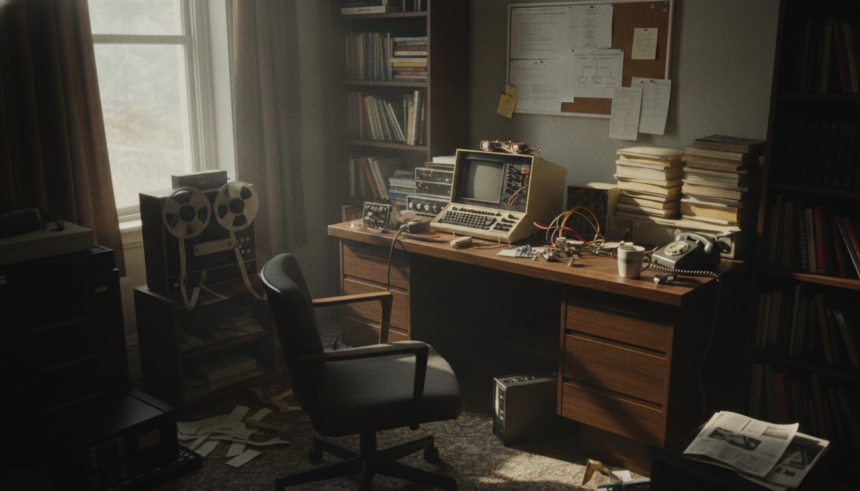
Microsoft started with a commitment the founders could not yet honour. After the MITS Altair 8800 appeared on the January 1975 cover of Popular Electronics, Gates and Paul Allen called MITS in Albuquerque and claimed they had a BASIC interpreter running for the machine. They had none. Roughly eight weeks of continuous coding later, the interpreter ran on the first demonstration attempt.
The bluff worked because of the state of the market, not because of nerve alone. The Altair shipped as a hobbyist kit with no usable high-level language, which meant MITS needed a programming environment more urgently than it needed proof that one already existed. Ed Roberts’s company was selling hardware that could not easily be programmed by its own customers; consequently a two-person outfit with no product, no office and no capital was able to attach itself to a hardware manufacturer’s distribution channel.
The demonstration result drove the next decision. Gates left Harvard because the licence was real revenue, and Microsoft was organised in 1975 around a specific structural choice: license software to hardware makers rather than build or sell machines. That choice is the reason the company compounded for fifty years, because software licences carry near-zero marginal cost per additional unit shipped, whereas every computer MITS sold consumed components, labour and inventory.
The 1975 Sequence, Step by Step
- January 1975: Popular Electronics features the MITS Altair 8800 on its cover.
- Gates and Allen contact MITS and claim a working BASIC interpreter for the 8800.
- Roughly eight weeks of round-the-clock coding, written without access to an Altair.
- Demonstration in Albuquerque: the interpreter runs on the first attempt.
- MITS licenses Altair BASIC; Gates leaves Harvard and Microsoft is founded in 1975.
Why the 1980 IBM Deal, Not the Code, Created the Fortune
The fortune came from a licensing clause. Microsoft purchased the 86-DOS operating system for a reported $50,000, licensed it to IBM as MS-DOS for the 1981 IBM PC, and retained the right to license the same operating system to other manufacturers. Because those redistribution rights stayed with Microsoft, every IBM-compatible clone maker that followed became a Microsoft customer rather than an IBM one.
IBM accepted that arrangement because it wanted speed to market more than it wanted ownership of a low-margin operating system; the PC was a side project measured against mainframe economics. As a result, when the clone market exploded — an outcome IBM’s own open hardware architecture created — the royalties flowed to Microsoft. The effect compounded through the 1990s, because each new PC manufacturer entering the market widened the installed base that MS-DOS and then Windows addressed, which in turn made the platform more attractive to application developers.
The scale of that effect is easier to state than to absorb. An analysis published by Billionaire Ledger in 2026 estimates Microsoft created roughly $5.84 trillion in value between 1986 and 2026, of which Gates retained approximately 1.9% after accounting for past share sales, dividends and shares given away. Therefore the headline fortune — approximately $115 billion in November 2026 — is a small residual of the value the licensing model generated, and the gap between the two numbers is the clearest measure of how much of Microsoft Gates sold or gave away.
The Clause That Mattered: Non-Exclusive Licensing
One contractual term produced the compounding: non-exclusivity. Because Microsoft could resell the same operating system to Compaq, Dell, Gateway and hundreds of smaller assemblers, its revenue scaled with the entire PC industry rather than with one customer. That same leverage over distribution later drew sustained antitrust scrutiny in the United States and Europe, where regulators argued the licensing structure foreclosed competition. Both readings describe the same clause — one as entrepreneurial foresight, the other as competitive harm.
From Majority Owner to a Stake Under 1%: The Numbers Behind the Decline
The Microsoft Founding Story, Retold: How Bill Gates Went From Altair Software to a Stake Under 1% ends with an ownership chart that falls while the company’s valuation climbs. Gates’s personal stake dropped below 1% because he sold shares steadily from the 1990s onward and transferred large blocks to the Gates Foundation Trust — not because Microsoft lost value. Microsoft’s market capitalisation rose substantially across the same decades, which means the decline is entirely a story of distribution rather than impairment.
Each stage had a specific driver. Programmed share sales ran for years through brokerage arrangements, dividends converted paper holdings into deployable cash, and charitable transfers moved stock out of his name permanently. The most consequential recent step came from the philanthropic side: the Gates Foundation Trust sold its remaining Microsoft shares in Q1 2026, closing out a position that at one point exceeded 25% of the trust’s portfolio. Consequently neither Gates personally nor his primary philanthropic vehicle is now levered to Microsoft’s share price.
| Period | Approximate position | Primary driver |
|---|---|---|
| 1986 IPO era | Founder-level majority stake | Original equity at public listing |
| Mid-1990s | Large stake; Cascade Investment formed in 1994 | Start of systematic diversification |
| 2000s | Stepped-down stake | Programmed share sales and dividends |
| 2010s | Single-digit percentage | Transfers to the Gates Foundation Trust |
| November 2026 | Personal stake under 1% | Cumulative sales and charitable gifts |
| Q1 2026 | Gates Foundation Trust exits Microsoft entirely | Trust portfolio reallocation |
Net worth estimates diverge sharply because unrecorded charitable transfers are difficult to track in real time. Bloomberg’s index briefly listed Gates at roughly $175 billion in July 2025 before correcting to about $124 billion once his undocumented donations were recalculated. As of November 2026, the commonly cited figure is approximately $115 billion, placing him around 17th on global billionaire rankings — a position that moves with methodology as much as with markets.
For verification, beneficial-ownership and institutional holdings disclosures filed with the U.S. Securities and Exchange Commission remain the primary public record. That matters because third-party wealth indices are modelled estimates, which means any claim about Gates’s holdings should be checked against the filings rather than against a headline.
Cascade Investment: Where the Money Actually Sits in 2026
Since 1994, the fortune has been managed by Cascade Investment under Michael Larson. The capital originated almost entirely in Microsoft share sales, but it now sits in public equities, farmland, commercial real estate and private operating companies. Therefore Microsoft’s daily share price has little bearing on the total — a point that still gets misreported whenever the stock moves sharply.
That diversification was deliberate and defensive. Concentration risk in a single technology holding would have made both the personal fortune and the foundation’s future payout schedule hostage to one share price, and a spend-down commitment with a hard deadline cannot tolerate that kind of volatility. As a result the portfolio tilts toward cash-generative industrials, freight rail, waste services and agriculture — assets whose earnings are less correlated with software cycles.
| Holding | Vehicle | Sector / note |
|---|---|---|
| Berkshire Hathaway | Gates Foundation Trust | Largest disclosed trust equity position |
| Caterpillar | Gates Foundation Trust | Industrial machinery |
| Canadian National Railway | Gates Foundation Trust | Freight rail |
| Waste Management | Gates Foundation Trust | Waste services |
| Deere & Co. | Gates Foundation Trust | Agricultural equipment |
| Republic Services | Cascade Investment | 37.9% private stake |
| Microsoft | Gates Foundation Trust | Position sold in full, Q1 2026 |
The table reflects Q2 2026 disclosures and Cascade’s reported private position, which means it is a partial picture by construction. Institutional equity positions appear on a quarterly reporting cycle, whereas farmland, real estate and private company stakes are disclosed on different schedules or not at all. Consequently the public record understates the breadth of the portfolio rather than overstating it.
The 2045 Sunset: Giving Away 99% on a Fixed Deadline
In May 2025, Gates announced on Gates Notes that he would give away 99% of his remaining fortune — then valued at roughly $107 billion — and that the Bill & Melinda Gates Foundation will close permanently on December 31, 2045. That reversed the long-standing assumption that the foundation would operate in perpetuity. On January 14, 2026, the board endorsed the operational mechanics: an annual payout of approximately $9 billion, deploying about $200 billion of additional funding over the final twenty years.
A fixed end date changes grantmaking behaviour because the corpus must reach zero rather than be preserved. Endowment preservation rewards conservative payout ratios; a sunset clause does the opposite, which means spend-down pressure now governs the calendar. As a result, grant volumes across 2026–2045 are planned well above historical levels, and the binding constraint shifts from available capital to the supply of fundable, measurable programmes.
The Sunset Commitments at a Glance
- 99% of remaining personal wealth pledged, announced May 2025 against a roughly $107 billion base
- Permanent closure date: December 31, 2045
- Board endorsement of sunset mechanics: January 14, 2026
- Planned annual payout: approximately $9 billion
- Additional funding deployed by 2045: approximately $200 billion
- September 2026: roughly $400 million directed to AI in education
The final two decades concentrate on eradicating infectious diseases — malaria and measles in particular — alongside reducing infant and maternal mortality and poverty reduction. Those targets are measured against external standards rather than internal ones, because burden-of-disease and elimination criteria are set by bodies such as the World Health Organization. The September 2026 commitment of roughly $400 million toward AI critical-thinking modules in education reflects Gates’s stated view that, left to the free market, generative AI would benefit the wealthy first; by comparison, federal AI research priorities tracked by the National Science Foundation sit on a different footing, because public funding answers to appropriations cycles rather than to a self-imposed deadline. Much of the measurement work flows through established academic institutions — the Institute for Health Metrics and Evaluation at the University of Washington among them — which means higher payouts translate into larger research and evaluation contracts, not just larger cheques.
There is a credible objection. A time-bound spend-down concentrates roughly $200 billion of private influence inside a twenty-year window, and critics argue that scale of concentrated giving effectively shapes global health agendas that would otherwise be set by multilateral and national agencies.
What the Retold Story Means for Grant Seekers and Climate Tech Founders
The Microsoft Founding Story, Retold: How Bill Gates Went From Altair Software to a Stake Under 1% has a practical ending for applicants. Because the capital no longer sits in concentrated Microsoft stock and must be fully deployed by December 31, 2045, funding decisions now follow a fixed payout calendar backed by a diversified balance sheet. Consequently proposals that demonstrate measurable outcomes well inside the 2045 window compete better than open-ended ones.
For climate technology, the screening logic differs from conventional venture capital. Breakthrough Energy Ventures evaluates ventures on emissions-reduction potential at scale rather than on exit horizons of eight to ten years, which means technical milestones and deployment pathways carry more weight than near-term revenue multiples. Founders building hardware-heavy energy systems should therefore frame impact against published federal baselines — the emissions inventories maintained by the U.S. Environmental Protection Agency and the deployment data published by the U.S. Department of Energy — rather than against market-size projections. Our ongoing coverage of climate tech and AI health investing tracks how those criteria are applied in practice.
Health and AI applicants face the same clock. The 2045 ceiling rewards projects with defined endpoints, therefore multi-decade exploratory research is a harder fit than programmes that can report measured outcomes against WHO elimination targets or the benchmarks used by the National Institutes of Health.
Practical Implications for Applicants
- Align project timelines to close well inside the December 31, 2045 horizon
- Quantify outcomes against recognised benchmarks from WHO, NIH or DOE programmes
- For climate proposals, lead with emissions impact at scale rather than exit multiples
- Track the foundation’s published priorities rather than Gates’s personal commentary, because the two are separate
- Verify holdings and investment claims against SEC filings before citing them in a proposal
Frequently Asked Questions
Why is Bill Gates’s Microsoft stake now under 1%?
Because of four decades of programmed share sales and charitable transfers — not because Microsoft lost value. Microsoft’s valuation rose across the same period. The Gates Foundation Trust also sold its remaining Microsoft shares in Q1 2026, closing a position that once exceeded 25% of the trust’s portfolio, which means neither Gates personally nor his main philanthropic vehicle now tracks Microsoft’s share price.
How did Bill Gates and Paul Allen get the Altair BASIC contract?
They committed first and coded afterwards. After the January 1975 Popular Electronics cover featuring the Altair 8800, they told MITS they had a BASIC interpreter ready. They did not. They wrote it in roughly eight weeks without an Altair to test on, and it ran on the first attempt during the Albuquerque demonstration, which secured the licence and prompted Gates to leave Harvard.
How much is Bill Gates worth in November 2026, and why do estimates differ?
Approximately $115 billion. Estimates diverge because unrecorded charitable transfers are difficult to track as they happen. Bloomberg’s index briefly listed roughly $175 billion in July 2025 before correcting to about $124 billion after recalculating his donations. Consequently any single figure is an estimate, and SEC filings represent the verifiable component of the total.
What is Cascade Investment and what does it hold?
Cascade Investment is Gates’s private investment vehicle, managed by Michael Larson since 1994. It holds public equities, farmland, real estate and private operating stakes, including a reported 37.9% of Republic Services. The capital originated in Microsoft share sales, which means the fortune today is diversified across industrials, rail, waste and agriculture rather than concentrated in software.
When will the Gates Foundation close, and how much will it spend first?
December 31, 2045. Gates announced in May 2025 that 99% of his remaining wealth goes to the foundation, and on January 14, 2026 the board endorsed the sunset mechanics: roughly $9 billion in annual payouts, adding about $200 billion over twenty years. Because the corpus must reach zero, grant volumes run above historical levels throughout that period.
How can organizations secure funding from the Gates Foundation for AI health initiatives?
Through published requests for proposals, Grand Challenges calls and invited proposals rather than unsolicited pitches. AI health applications compete better when outcomes are measured against WHO or NIH benchmarks, because external measurement is how the foundation assesses programme performance. The September 2026 commitment of roughly $400 million to AI in education signals where attention sits. Check the foundation’s own eligibility pages for current deadlines.
How does Breakthrough Energy Ventures differ from traditional venture capital?
It screens for emissions reduction at scale and accepts longer horizons. Because conventional funds target exits inside roughly a decade, capital-intensive energy hardware is structurally underfunded. Consequently Breakthrough Energy backs projects judged on deployment pathway and gigaton-scale impact, with DOE and EPA data frequently used as the measurement baseline rather than revenue forecasts.
Limitations of This Account and Competing Interpretations
Every number here is an estimate with a date attached. Net worth figures, value-created totals and stake percentages come from indices and filings that restate regularly, therefore the figures in this article are accurate only as of November 19, 2026.
Private holdings are opaque by design. Cascade Investment’s farmland, real estate and private operating stakes are not disclosed on the same quarterly schedule as public equities, which means the portfolio picture available to any outside observer is partial.
The founding narrative is also contested. The Altair episode and the 86-DOS acquisition have competing accounts from participants and from the original 86-DOS author, and the non-exclusive licensing model later drew sustained antitrust action in multiple jurisdictions. A reader should weigh both the entrepreneurial and the competitive-harm interpretations rather than accept either alone.
Two specific figures deserve caution: the $5.84 trillion value-created estimate and the approximately 1.9% retention figure come from a single secondary analysis and have not been independently audited.
On the philanthropy, the spend-down model attracts a consistent critique — a time-bound foundation concentrates agenda-setting power over two decades, and critics argue private giving at this scale substitutes for funding decisions that would otherwise sit with agencies such as the NIH, NSF and DOE. Those agencies also fund comparable health and climate work on published, recurring timetables, and applicants should assess them alongside foundation grants rather than instead of them.
Conclusion
The Microsoft Founding Story, Retold: How Bill Gates Went From Altair Software to a Stake Under 1% is best read as one causal chain. A non-exclusive licensing clause signed with IBM in 1980 turned a two-person software shop into the operating system supplier for the entire PC industry, and that clause — not the eight weeks of Altair BASIC coding — generated the fortune. Decades of programmed selling and charitable transfers then dismantled the position, which is why the personal stake now sits under 1% and the Gates Foundation Trust exited Microsoft entirely in Q1 2026.
What remains is a deadline. Roughly $9 billion a year and approximately $200 billion in total must be deployed before December 31, 2045, which means the operative question for 2026 readers is not how much of Microsoft Gates still owns, but where that money lands and who qualifies for it.
References
- U.S. Securities and Exchange Commission — beneficial ownership and institutional holdings disclosures: https://www.sec.gov/
- World Health Organization — global burden of disease and elimination standards for malaria and measles: https://www.who.int/
- National Institutes of Health — U.S. federal biomedical research funding structures and AI-in-health priorities: https://www.nih.gov/
- U.S. Department of Energy — clean energy research, development and deployment data: https://www.energy.gov/
- U.S. Environmental Protection Agency — greenhouse gas emissions inventories and mitigation reporting: https://www.epa.gov/
- U.S. National Science Foundation — AI research funding and national R&D investment trends: https://www.nsf.gov/
- University of Washington — Institute for Health Metrics and Evaluation, global health measurement research: https://www.washington.edu/