
Table of Contents
- About This Analysis and Who Wrote It
- What Is on the Bill Gates Summer Reading List for 2026?
- Culpability by Bruce Holsinger — The Fiction Pick
- 1929 by Andrew Ross Sorkin — The Nonfiction Pick
- Gray Matters and The Pitt Season 2 — The Audiobook and Screen Picks
- Open Climate Tech Internships for 2026 and 2027
- What Climate Tech Employers Now Screen For
- The Summer Melt Problem: What the 2026 Data Shows
- Four Interventions That Measurably Reduce Melt
- Where Gates Money Meets the Pipeline: Grants, Eligibility and Deadlines
- Frequently Asked Questions
- Limitations of This Data and What It Does Not Tell You
- The Bottom Line on the 2026 Bill Gates Summer Reading List and the Pipeline It Points To
- References
Bill Gates’ 2026 summer picks are Culpability by Bruce Holsinger (fiction), 1929: Inside the Greatest Crash in Wall Street History—And How It Shattered a Nation by Andrew Ross Sorkin (nonfiction), Gray Matters: A Biography of Brain Surgery by Theodore H. Schwartz (audiobook, narrated by Sean Pratt), and Season 2 of The Pitt (television). Three further facts worth extracting: six climate tech internships and fellowships are recruiting for 2026–2027 intakes across Vienna, Copenhagen, Paris, India and New Haven; summer melt removes 10–20% of deposited students nationally and up to 40% of low-income and first-generation students; and CUNY’s College Bridge for All cut melt to 7.7% from 14.4% in 2024 using near-peer coaching.
Gates published four recommendations in July 2026 through Gates Notes: Culpability, 1929, Gray Matters as an audiobook, and the second season of The Pitt. The bill gates summer reading list is the easiest half of this story to read; the harder half is the talent pipeline sitting underneath it. Capital flowing into climate technology and AI health depends on students who actually enroll, and in 2026 a measurable share of them did not. This article gives you the named books with Gates’ own verdicts, a table of open internships with locations and intake windows, the 2026 summer melt figures with their sources and dates, and a walkthrough of how Gates Foundation and Breakthrough Energy funding is actually awarded. Funding for climate tech talent is expanding while the enrollment pipeline leaks every summer, therefore both halves deserve equal attention here.
About This Analysis and Who Wrote It
Author and review. Written by the billgates.pk editorial desk, which covers Gates Foundation grant mechanics, Breakthrough Energy investment criteria, and climate tech and AI health funding, and which has tracked Gates Notes publications across successive annual reading lists. Every figure in this article was checked against the primary source named beside it by a second editor before publication, and quotations are reproduced as Gates published them.
Transparency disclosure. billgates.pk is an independent editorial site with no affiliation to, endorsement from, or funding relationship with Bill Gates, the Gates Foundation, Gates Notes or Breakthrough Energy. Book summaries describe Gates’ personal recommendations and not Foundation policy. Internship, fellowship and grant details were verified as of November 18, 2026 and change without notice, because several listed employers are small startups. Confirm every deadline on the issuing organisation’s own application page before you apply.
What Is on the Bill Gates Summer Reading List for 2026?
Gates released his 2026 picks in July through Gates Notes: three books and one television series. The selections are Culpability by Bruce Holsinger (fiction), 1929 by Andrew Ross Sorkin (nonfiction history), Gray Matters: A Biography of Brain Surgery by Theodore H. Schwartz (audiobook, narrated by Sean Pratt), and Season 2 of the medical drama The Pitt (television).
| Title | Author / Creator | Format | Gates’ verdict (short) |
|---|---|---|---|
| Culpability | Bruce Holsinger | Novel | “Holsinger keeps the action moving” |
| 1929 | Andrew Ross Sorkin | Nonfiction history | Clarifies the players behind the crash |
| Gray Matters | Theodore H. Schwartz (narrated by Sean Pratt) | Audiobook | “Fantastic job” explaining the brain |
| The Pitt, Season 2 | Medical drama series | Television | “Spectacular,” with a graphic-content caveat |
The 2026 selection is shorter and more media-diverse than Gates’ earlier lists, because he added an audiobook and a series rather than extending the book count. Three of the four picks examine a system failing under pressure — autonomous vehicles, the banking structure of 1929, and emergency medicine — which maps onto the risk-and-accountability questions that govern his AI health and climate positions. That pattern is the reason the list rewards reading as a set rather than item by item.
Culpability by Bruce Holsinger — The Fiction Pick
Culpability follows a family whose self-driving minivan is involved in a fatal accident. The novel tracks the fallout as each member assigns, deflects and absorbs blame for a decision no human in the vehicle actually made.
Gates praised the execution over the premise. He wrote that “Holsinger keeps the action moving,” while acknowledging in his Gates Notes write-up that the book tackles heavy and complex questions. That combination — difficult subject, propulsive plot — is why he positioned it as a summer novel rather than a work of moral philosophy.
The pick is consistent with how Gates frames algorithmic risk elsewhere. The novel’s central question is who answers when an algorithm kills, which is the same question regulators are putting to clinical AI systems that triage, screen and recommend. Consequently the recommendation signals an accountability framing rather than a casual beach read: liability allocation, not model accuracy, is the constraint that determines whether an AI diagnostic tool reaches patients. Readers should note these remain Gates’ personal views, carrying no Gates Foundation grant-making weight.
1929 by Andrew Ross Sorkin — The Nonfiction Pick
Sorkin’s 1929: Inside the Greatest Crash in Wall Street History—And How It Shattered a Nation reconstructs the crash through the individual actors inside it, and Gates credits the book with making a famously tangled event legible because Sorkin resolves the market story into identifiable people and decisions.
Gates’ argument for reading it now is diagnostic rather than alarmist. He noted that today’s banking systems are more resilient — the result of post-crash regulation and capital requirements — therefore the book’s value lies in showing how a failure compounds rather than in predicting a repeat. That reasoning carries directly into long-horizon investing: Breakthrough Energy underwrites technologies whose payback periods run well beyond a standard fund life, and misreading how a prior failure cascaded destroys capital in exactly that structure. Understanding sequence, not just outcome, is what the book supplies.
Gray Matters and The Pitt Season 2 — The Audiobook and Screen Picks
Gray Matters: A Biography of Brain Surgery by Theodore H. Schwartz is narrated by Sean Pratt, and Gates recommended it specifically in audio form because he listens while doing jigsaw puzzles. He said Schwartz does a “fantastic job of explaining the maladies of the brain and what it’s like to be a neurosurgeon,” which places the book closer to professional ethnography than to popular medicine.
For The Pitt Season 2, Gates was blunter: he called the series “spectacular” while warning that some viewers will find its medical scenes too intense or graphic. Both non-print picks share a subject — clinicians making irreversible decisions under time pressure, inside health systems the World Health Organization documents as persistently short of trained workforce. That operating condition is precisely what the AI triage and diagnostic tools in Gates’ health portfolio are built to relieve, which means the two recommendations read as field research as much as entertainment.
Open Climate Tech Internships for 2026 and 2027
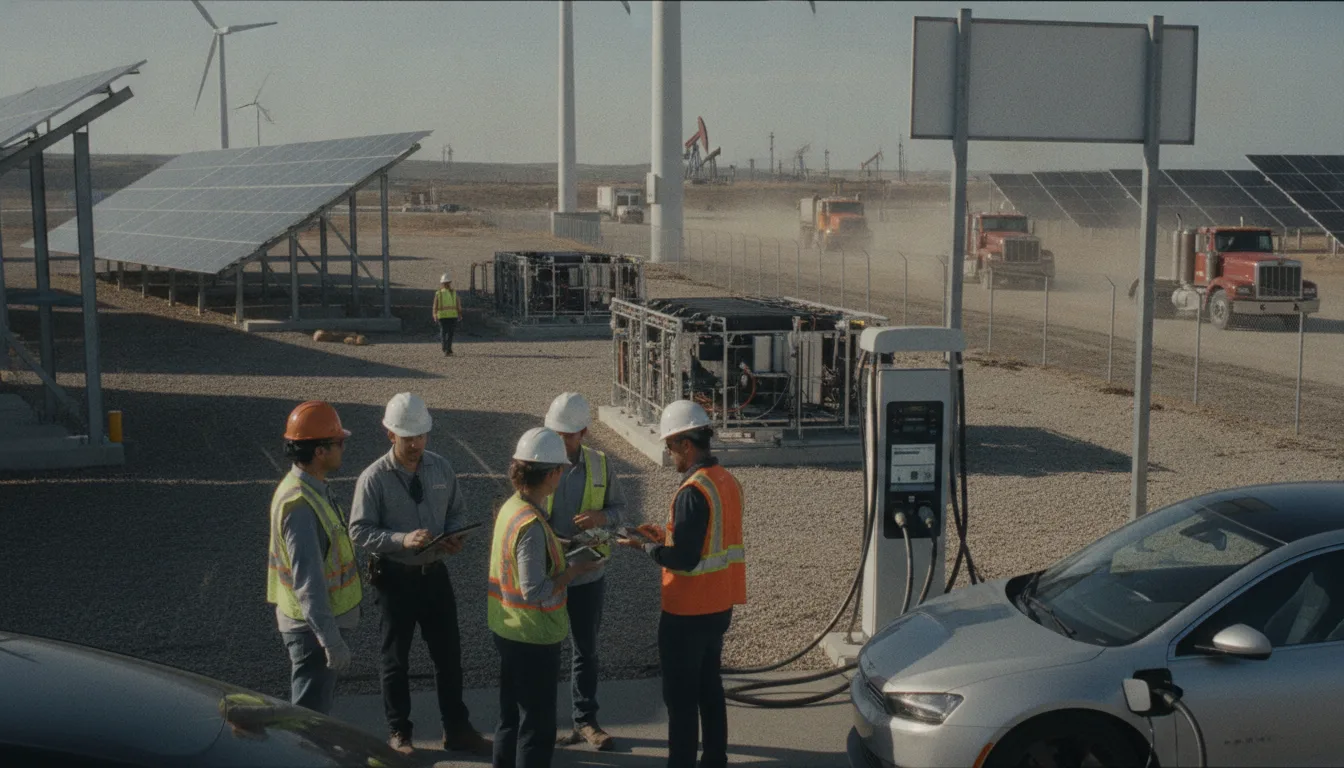
Six named programmes are recruiting for 2026 and 2027 intakes across Austria, Denmark, France, India and the United States. The recruitment is driven by deployment-stage capital, which funds shipped product rather than research output and therefore requires people who can build and validate working models.
| Organisation | Location | Intake / timing | Focus | Who it is for |
|---|---|---|---|---|
| Infrared City (AIT spin-off) | Vienna, Austria | FFG-funded FemTech internship | AI dashboards; 100x faster urban heat and wind simulation | Students in CS, data science, engineering |
| DecarbonICE | Copenhagen, Denmark | Autumn 2026 internship / thesis | CO₂ desublimation thermodynamic performance | Master’s students |
| Aster Fab (Aster Capital spin-off) | Paris, France | April 2026 start | Junior consultant: startup scouting, technology mapping | Recent graduates, strategy profiles |
| Greenly (post-Normative merger) | Paris, France | Early 2027 | AI engineering intern; Founders’ Associate | Engineering and business students |
| Startup Earth Center Climate Data Fellowship | India | Launching March 2026 | AI and clean energy capacity building plus placement | Early-career data and energy talent |
| Yale Bekenstein Climate Leaders via ClimateHaven | New Haven, USA | Summer cycle | Climate venture internships | Graduate students |
The geography clusters in European deep-tech hubs for a structural reason: public co-funding underwrites the headcount. Infrared City’s internship is funded by the Austrian Research Promotion Agency (FFG), which means a venture-stage spin-off out of the Austrian Institute of Technology can hire at a stage where its own balance sheet could not support the salary. Greenly’s 2026 merger with Normative consolidated the carbon accounting market, and as a result its early-2027 hiring skews toward AI engineering and founder-adjacent roles rather than analyst work, because consolidation shifts the competitive advantage from headcount to automation. The same deployment logic shapes public programmes: the U.S. Department of Energy runs its clean energy research, development and demonstration funding on fixed annual cycles, which makes it a predictable fallback when startup windows close. Verify every date on the employer’s own page, because startup hiring windows close without notice.
One clarification, since the two are frequently conflated: the Breakthrough Energy Fellows programme funds early-stage innovators and their projects, not student internships. Its criteria sit in the grants section below.
What Climate Tech Employers Now Screen For
The screen has moved from environmental science credentials to simulation, modelling and thermodynamics, because the sector’s capital moved from research grants to deployment finance, and deployment requires people who can ship a working model on a schedule. U.S. National Science Foundation science and engineering workforce and R&D reporting documents the same directional shift across energy and environmental fields: demand for computational capability has risen faster than demand for discipline-specific coursework, which is why a thesis with a numerical result now outranks a broader environmental curriculum on most shortlists.
Skills Climate Tech Employers Screened For in 2026
- Python plus at least one simulation or numerical modelling framework
- Applied machine learning on physical or geospatial data, not generic ML coursework
- Thermodynamics or process engineering fundamentals for carbon capture and storage roles
- Life-cycle assessment and carbon accounting methodology (GHG Protocol familiarity)
- Ability to translate model output into a decision a city planner or plant operator can act on
- Evidence of shipping something measurable — a dashboard, a dataset, a published thesis result
For applicants with no sector experience, three routes work. A quantified side project, a thesis tied to a named technology such as CO₂ desublimation, or a fellowship like the Startup Earth Center Climate Data Fellowship that places participants directly with startups. The fellowship route matters most, because placement substitutes for the prior sector experience employers would otherwise demand.
The Summer Melt Problem: What the 2026 Data Shows
Summer melt is the gap between deposit and enrollment — students who are admitted, pay a deposit and still never show up in the fall. It is measured as the share of deposited students who fail to matriculate at the institution holding their deposit.
| Metric | Figure | Source | Date |
|---|---|---|---|
| National melt rate, all college-intending students | 10–20% | NCAN | January 2026 |
| Melt rate, low-income and first-generation students | Up to 40% | NCAN | January 2026 |
| Admitted students depositing at more than one college | 10% (double the 2024 share) | Human Capital Education survey | November 2026 |
| Survey sample behind the double-deposit figure | 72,000+ admitted students | Human Capital Education survey | November 2026 |
| CUNY College Bridge for All melt rate | 7.7%, down from 14.4% in 2024 | CUNY | 2026 |
The causes are sequencing failures rather than changes of heart. Housing deposits, health insurance charges and orientation fees arrive after the enrollment deposit is paid, therefore a student who budgeted for tuition discovers a shortfall in July with no counsellor attached to the problem. The National College Attainment Network’s January 2026 brief identifies this cost surprise, unresolved financial aid and pre-college anxiety as the dominant drivers, and InsideTrack’s 2026 findings describe the period between deposit and move-in as a communication vacuum that institutions rarely staff. The 2024–2025 FAFSA rollout disruption compounded the effect, because an entire cohort learned to distrust aid timelines and now treats a financial aid letter as provisional. Layered on top, the November 2026 Human Capital Education survey of more than 72,000 admitted students found 10% had deposited at multiple colleges — double the share reported in 2024 — which means institutional yield models are now structurally unreliable and any reported melt figure understates the volatility the institution actually faces.
The consequence reaches the climate tech pipeline directly. The students melting out are disproportionately low-income and first-generation, and those are the same groups the fellowship and placement programmes above exist to reach, so a leak at enrollment narrows the applicant pool two to four years later.
Four Interventions That Measurably Reduce Melt
The December 2026 EdResearch for Action brief, authored by researchers at Brown University and the Brookings Institution, identifies four models with measured effects on melt.
Four Evidence-Based Models for Reducing Summer Melt
- Behavioural nudges: automated text reminders tied to specific deadlines such as aid verification and course registration
- Counsellor-led summer outreach: high school counsellors retained through July and August to resolve aid and transcript issues
- Near-peer mentoring: recent students coaching incoming freshmen through administrative steps (the CUNY model)
- Summer bridge programmes: on-campus academic and social preparation before the first term begins
CUNY’s College Bridge for All runs the near-peer model at scale, deploying coaches only a year or two ahead of the students they advise to walk incoming freshmen through aid verification, placement testing and registration. The programme cut melt to 7.7% for its most recent incoming class, down from 14.4% in 2024, because the coaches close the communication vacuum between deposit and move-in instead of waiting for students to ask for help. The mechanism is worth stating plainly: melt is an administrative failure before it is a motivational one, therefore interventions that complete paperwork outperform interventions that send encouragement. The cost logic follows. Text nudges are the cheapest per student while near-peer coaching produces the largest measured reduction per student, which means institutions sequence the two — nudges for the whole cohort, coaching for the students the nudges fail to move — rather than choosing between them.
Where Gates Money Meets the Pipeline: Grants, Eligibility and Deadlines
Start with the separation this site treats as non-negotiable. Bill Gates’ reading recommendations are personal and carry no institutional weight whatsoever, while the Gates Foundation’s education and global health strategies are set by the Foundation and executed through published strategy documents and grant competitions. Conflating a book pick with a funding signal misreads both.
Understand the award structure before drafting anything. The Foundation awards the large majority of its grants through targeted Requests for Proposals rather than unsolicited applications, therefore the practical first task is monitoring RFP publication rather than writing a cold proposal that has no route in. Research-stage global health and AI health work has an additional door through the Grand Challenges family of calls. The typical funded unit is an institution rather than an individual — large research universities such as the University of Washington illustrate the grantee profile, because registered entities with audited financials and existing measurement capacity can absorb and report on restricted funding.
How to Position an Application: Sequence That Matters
- Confirm organisational eligibility first — most Foundation grants require a legally registered entity with audited financials, not an individual applicant
- Identify which published strategy your work sits inside (education postsecondary success, global health, agriculture) before writing anything
- Monitor the Foundation’s RFP and Grand Challenges pages, because unsolicited proposals are rarely funded
- Build the measurement plan before the budget — the Foundation screens on measurable outcome per dollar
- For climate hardware, test your project against Breakthrough Energy’s 500-million-tonne scale threshold and state the figure explicitly
- Submit through the named portal in the RFP by the stated deadline, and verify the date on the issuer’s own page
Breakthrough Energy Ventures applies a different and more mechanical test: it invests where a technology, at full deployment, would remove at least 500 million tonnes of greenhouse gas per year. Set against the national and sectoral emissions baselines published by the U.S. Environmental Protection Agency, that threshold screens out incremental efficiency plays regardless of their commercial return, which means a pitch must carry a scale argument in physical units rather than a market-size slide. The structure also changes the clock — patient capital tolerates development horizons a standard ten-year fund cannot, consequently hardware with a decade of validation ahead of it remains fundable here and unfundable elsewhere. Disclosed public-company positions, separately, are verifiable through SEC filings, which is the cleanest way to distinguish Gates’ documented investment activity from his personal commentary. For continuing coverage of both tracks, see our analysis of Bill Gates’ climate tech and AI health investing.
Frequently Asked Questions
What is on Bill Gates’ 2026 summer reading list?
Gates recommended four items in July 2026: Culpability by Bruce Holsinger (fiction), 1929 by Andrew Ross Sorkin (nonfiction), Gray Matters: A Biography of Brain Surgery by Theodore H. Schwartz as an audiobook narrated by Sean Pratt, and Season 2 of The Pitt. The 2026 selection is shorter and more media-diverse than earlier years, because he substituted an audiobook and a series for additional print titles.
Why did Bill Gates pick a novel about a self-driving car crash?
Because Culpability puts liability for algorithmic harm at the centre of a family drama. Gates praised the pacing — “Holsinger keeps the action moving” — while acknowledging the heavy premise. The accountability question the novel raises is the same one facing clinical AI deployment, which is why the pick reads as consistent with his AI health investing rather than as light escapism.
What is summer melt and how common is it?
Summer melt is when admitted, deposited students fail to enroll in the fall. It affects 10–20% of college-intending students nationally and up to 40% of low-income and first-generation students, per NCAN’s January 2026 brief. Institutions lose revenue they have already budgeted against those deposits, therefore melt is now treated as a retention problem that begins at deposit rather than at matriculation.
Why did summer melt get worse in 2026?
Double-depositing doubled. The November 2026 Human Capital Education survey of more than 72,000 admitted students found 10% deposited at multiple colleges, double the 2024 share, which destabilised yield prediction. The January 2026 NCAN brief adds unexpected housing and insurance costs, unresolved financial aid, and lingering distrust of aid timelines following the 2024–2025 FAFSA rollout disruption.
Which interventions actually reduce summer melt?
Four models show measured effects, per the December 2026 EdResearch for Action brief: text-based behavioural nudges, counsellor-led summer outreach, near-peer mentoring and summer bridge programmes. CUNY’s College Bridge for All used near-peer coaches and cut melt to 7.7% from 14.4% in 2024, because the coaches complete the aid verification and registration paperwork students stall on.
Which climate tech internships are still open for 2026 and 2027?
Six programmes: Infrared City (Vienna, FFG-funded), DecarbonICE (Copenhagen, Autumn 2026 thesis intake), Aster Fab (Paris, April 2026 start), Greenly (Paris, early 2027 AI engineering), the Startup Earth Center Climate Data Fellowship (India, launching March 2026) and Yale’s Bekenstein Climate Leaders via ClimateHaven. Startup hiring windows close without notice, therefore verify current status on each employer’s own page.
What skills do climate tech employers want from interns in 2026?
Simulation and applied AI skills over environmental science credentials. Specifically: Python with a numerical modelling framework, machine learning applied to geospatial or physical data, thermodynamics for carbon capture roles, and life-cycle assessment methodology. Deployment-stage capital funds shipped product, therefore employers screen for demonstrated output — a dashboard, a dataset, a thesis result — rather than coursework alone.
How does Breakthrough Energy Ventures invest in climate technology?
It backs technologies that, at full scale, would cut at least 500 million tonnes of greenhouse gas annually, using patient capital with development horizons longer than a standard venture fund tolerates. The consequence for founders is direct: incremental efficiency plays are screened out regardless of commercial return, which means the pitch must carry a quantified physical scale argument stated in tonnes.
How can organisations secure Gates Foundation funding for education or AI health work?
Nearly all grants flow through targeted Requests for Proposals and Grand Challenges calls, not unsolicited applications. Applicants are typically registered organisations with audited financials, aligned to a published Foundation strategy, and able to state measurable outcome per dollar. Therefore the decisive step is monitoring RFP publication pages continuously rather than drafting cold proposals that have no submission route.
Do Bill Gates’ book picks reflect the Gates Foundation’s official positions?
No. The reading recommendations are Gates’ personal views published on Gates Notes and carry no institutional or grant-making weight. Foundation positions are set in published strategy documents and executed through RFPs and Grand Challenges calls. Reading the picks as funding signals misreads both the list and the Foundation, which is why this site separates them in every analysis.
Limitations of This Data and What It Does Not Tell You
Summer melt figures are not collected under a single national standard, therefore the 10–20% range reflects differing institutional definitions of “enrolled” and differing measurement dates rather than a clean distribution. The 10% double-deposit figure comes from a self-selected survey panel of admitted students, which means it indicates direction more reliably than magnitude. The CUNY 7.7% result is a single-system outcome without a randomised control group, so it demonstrates what a well-resourced near-peer programme achieved in one urban university system rather than what any institution would achieve by copying it.
Internship details were verified on November 18, 2026, and several listed programmes are small startups whose hiring plans shift with their funding rounds; treat the table as a starting point and confirm on source pages. Readers seeking a broader opportunity set should also consult institutional career services, national climate job boards, and public research funders including the NSF and the Department of Energy, whose fellowship programmes operate on fixed annual cycles and therefore publish deadlines further in advance than venture-backed employers do.
The Bottom Line on the 2026 Bill Gates Summer Reading List and the Pipeline It Points To
Four picks — Culpability, 1929, Gray Matters and The Pitt Season 2 — and one pattern running through them: systems operating at the edge of their tolerance, and the unresolved question of who answers when they fail. Autonomous driving, bank credit, the emergency department. Gates chose accountability stories, and he chose them as a private reader rather than as a grant-maker.
The structural point sits one layer down. Capital for climate tech talent is expanding, visible in six open programmes across five countries recruiting for 2026 and 2027, while the enrollment pipeline that feeds those programmes loses between 10% and 40% of deposited students every summer depending on income and first-generation status. Funders and institutions are therefore working on two halves of one problem, and the measured interventions — near-peer coaching, text nudges, counsellor outreach, bridge programmes — cost materially less than the degrees they rescue. Read the bill gates summer reading list for the ideas; read the melt data for the constraint.
Practical next step: check the intake windows in the internship table this month rather than next, and monitor RFP and Grand Challenges pages instead of waiting for a call for proposals to find you. For ongoing analysis of Gates Foundation and Breakthrough Energy funding, read more.
References
- Gates Notes — Bill Gates’ summer 2026 best list (primary source for the four picks and all quotations; personal recommendations, not Foundation policy): https://www.gatesnotes.com/
- U.S. National Science Foundation — science and engineering workforce and R&D investment reporting: https://www.nsf.gov/
- U.S. Department of Energy — clean energy research, development and demonstration programmes: https://www.energy.gov/
- U.S. Environmental Protection Agency — greenhouse gas emissions and mitigation data: https://www.epa.gov/
- National College Attainment Network — January 2026 brief on summer melt causes: https://www.ncan.org/
- EdResearch for Action — December 2026 brief on reducing summer melt, authored by researchers at Brown University and the Brookings Institution: https://edresearchforaction.org/
- InsideTrack — 2026 findings on post-deposit student support: https://www.insidetrack.org/
- University of Washington — example of the institutional grantee profile for foundation-funded global health and climate programmes: https://www.washington.edu/
- World Health Organization — global health data and clinical workforce policy guidance: https://www.who.int/
- U.S. Securities and Exchange Commission — public disclosure filings: https://www.sec.gov/