

Table of Contents
- The Commercial Breakthrough of US Small Modular Reactors in 2026
- Understanding Small Modular Reactors: Technology and Benefits
- SMRs vs. Traditional Large Nuclear Reactors
- Key Advantages of Small Modular Reactors
- Driving Forces Behind US SMR Investment and Market Growth
- Key Drivers of SMR Market Expansion
- Bill Gates, Breakthrough Energy, and the Future of Nuclear Energy
- Challenges and Overcoming Barriers to SMR Deployment
- Major Challenges in SMR Deployment
- FAQ
- Limitations and Alternatives in Clean Energy
- Conclusion: A New Era for US SMR Investment and Clean Energy
- References
Key Takeaways: US SMR Investment Reaches Commercial Threshold
The U.S. small modular reactor (SMR) industry is entering a pivotal commercial phase in 2026, marked by the recent NRC approval for TVA’s Clinch River project. This milestone, driven by significant US SMR investment from both public and private sectors—including Bill Gates’ Breakthrough Energy—signals a transformative shift in clean energy. SMRs offer enhanced safety, cost-effectiveness, and grid flexibility, positioning them as a critical solution for decarbonization despite ongoing challenges in regulation and supply chain development.
The landscape of clean energy in the United States is undergoing a significant transformation in October 2026, driven by the commercialization of Small Modular Reactors (SMRs). The U.S. Nuclear Regulatory Commission (NRC) recently granted a construction permit to the Tennessee Valley Authority (TVA) for a GE Vernova-Hitachi BWRX-300 SMR at its Clinch River site. This landmark decision, resulting from a comprehensive 14-month technical review, marks a critical turning point for the nation’s energy future.
This article delves into how US SMR investment is propelling these advanced nuclear technologies across the commercial threshold, examining the strategic vision of entities like Breakthrough Energy and Bill Gates. We will explore the technological advantages of SMRs, the market forces accelerating their adoption, and the challenges that must be addressed for their widespread deployment, ultimately shaping the future of clean, reliable power.
The Commercial Breakthrough of US Small Modular Reactors in 2026
October 2026 marks a historic moment for clean energy infrastructure in the United States, because the U.S. Nuclear Regulatory Commission (NRC) granted a construction permit for the nation’s first commercial Small Modular Reactor (SMR). This pivotal decision was awarded to the Tennessee Valley Authority (TVA) for its GE Vernova-Hitachi BWRX-300 SMR project at the Clinch River site in Oak Ridge, Tennessee, resulting from an intensive 14-month technical review by the NRC.
This regulatory approval signifies that SMR technology has crossed a critical commercial threshold, which means it has moved from conceptual design to tangible deployment. The permit, therefore, provides a clear pathway for construction, consequently driving confidence and further US SMR investment into these advanced nuclear solutions. This milestone demonstrates the effectiveness of government oversight in validating the safety and operational readiness of SMRs, thus setting a precedent for future projects and accelerating their integration into the national energy grid.
Understanding Small Modular Reactors: Technology and Benefits
Small Modular Reactors (SMRs) represent a significant evolution in nuclear energy technology, characterized by their compact size, modular construction, and enhanced safety features. Unlike traditional gigawatt-scale nuclear plants, SMRs typically have an electrical output of up to 300 MW, designed for factory fabrication and subsequent on-site assembly. This modular approach significantly reduces construction timelines and costs, consequently making them more accessible for diverse energy needs.
The benefits of SMR technology are extensive, due to their innovative design principles. They are engineered with passive safety systems that rely on natural forces like gravity and convection for cooling, therefore requiring minimal human intervention in emergency scenarios. Furthermore, their smaller footprint and lower power output enable greater deployment flexibility, which means they can serve smaller grids, remote communities, or industrial applications. This adaptability, combined with their ability to provide carbon-free baseload power, positions SMRs as a crucial component in global decarbonization efforts, consequently impacting climate change mitigation strategies.
SMRs vs. Traditional Large Nuclear Reactors
| Characteristic | Small Modular Reactors (SMRs) | Traditional Large Nuclear Reactors |
|---|---|---|
| Electrical Output (MW) | Up to 300 MW | Over 1000 MW |
| Construction Method | Modular, factory-built components | Custom, on-site construction |
| Safety System Design | Passive, natural forces | Active, requires external power |
| Capital Cost | Lower per unit, scalable | Higher per unit, massive scale |
| Deployment Flexibility | High, for diverse locations | Limited, large grid integration |
| Construction Timeline | Shorter, predictable | Longer, complex |
| Fueling Cycle | Extended, less frequent | Regular, more frequent |
Key Advantages of Small Modular Reactors
- Enhanced Safety Features: Passive safety systems reduce risk and operator intervention.
- Lower Capital Costs per Unit: Factory fabrication and modularity decrease construction expenses.
- Flexible Deployment Options: Suitable for smaller grids, remote areas, and industrial sites.
- Reduced Construction Timelines: Modular design allows for faster assembly and commissioning.
- Improved Grid Integration: Can be scaled to match specific energy demands.
- Reduced Waste Volume: More efficient fuel utilization and smaller waste footprint.
Driving Forces Behind US SMR Investment and Market Growth
The burgeoning market for SMRs in the U.S. is driven by a confluence of robust policy support, increasing energy demand, and significant private sector engagement. Government incentives, notably through the Inflation Reduction Act and various U.S. Department of Energy (DOE) programs, provide crucial financial backing for SMR development and deployment (U.S. Department of Energy). This strategic federal support consequently de-risks early-stage projects, which means it attracts further private capital and accelerates innovation.
Furthermore, the persistent demand for reliable, carbon-free baseload power across the nation is a primary market driver. As renewable energy sources like solar and wind expand, the need for dispatchable, non-intermittent power sources to stabilize the grid becomes more acute. SMRs fill this critical gap, therefore offering a consistent and clean energy supply that complements intermittent renewables. This market dynamic, coupled with technological advancements that enhance SMR efficiency and safety, results in a compelling case for continued US SMR investment.
Analysts project substantial SMR market growth, because regulatory clarity and successful pilot projects bolster investor confidence. The commitment from leading energy companies and utilities to explore and adopt SMRs further solidifies this trajectory, consequently positioning SMRs as a cornerstone of the nation’s future energy mix. This expansion is also fueled by the environmental imperative to reduce greenhouse gas emissions, driven by the U.S. Environmental Protection Agency’s (EPA) climate goals (U.S. Environmental Protection Agency).
Key Drivers of SMR Market Expansion
- Government Incentives and Policy Support: Federal funding and legislative backing de-risk SMR projects.
- Increasing Demand for Clean Baseload Power: SMRs provide reliable, carbon-free energy to stabilize grids.
- Technological Advancements and Standardization: Improved designs enhance efficiency and safety.
- Private Sector Investment and Innovation: Venture capital and corporate funding accelerate development.
- Climate Change Mitigation Goals: SMRs offer a significant pathway to decarbonization.
Bill Gates, Breakthrough Energy, and the Future of Nuclear Energy
Bill Gates and his climate-focused investment vehicle, Breakthrough Energy, are pivotal players in the advanced nuclear energy sector, particularly concerning US SMR investment. Gates has long articulated a vision where advanced nuclear technologies, including SMRs, are essential for achieving global decarbonization goals, because they offer a reliable, emissions-free power source that can operate continuously. This perspective drives Breakthrough Energy’s strategic approach to identifying and funding innovative SMR companies.
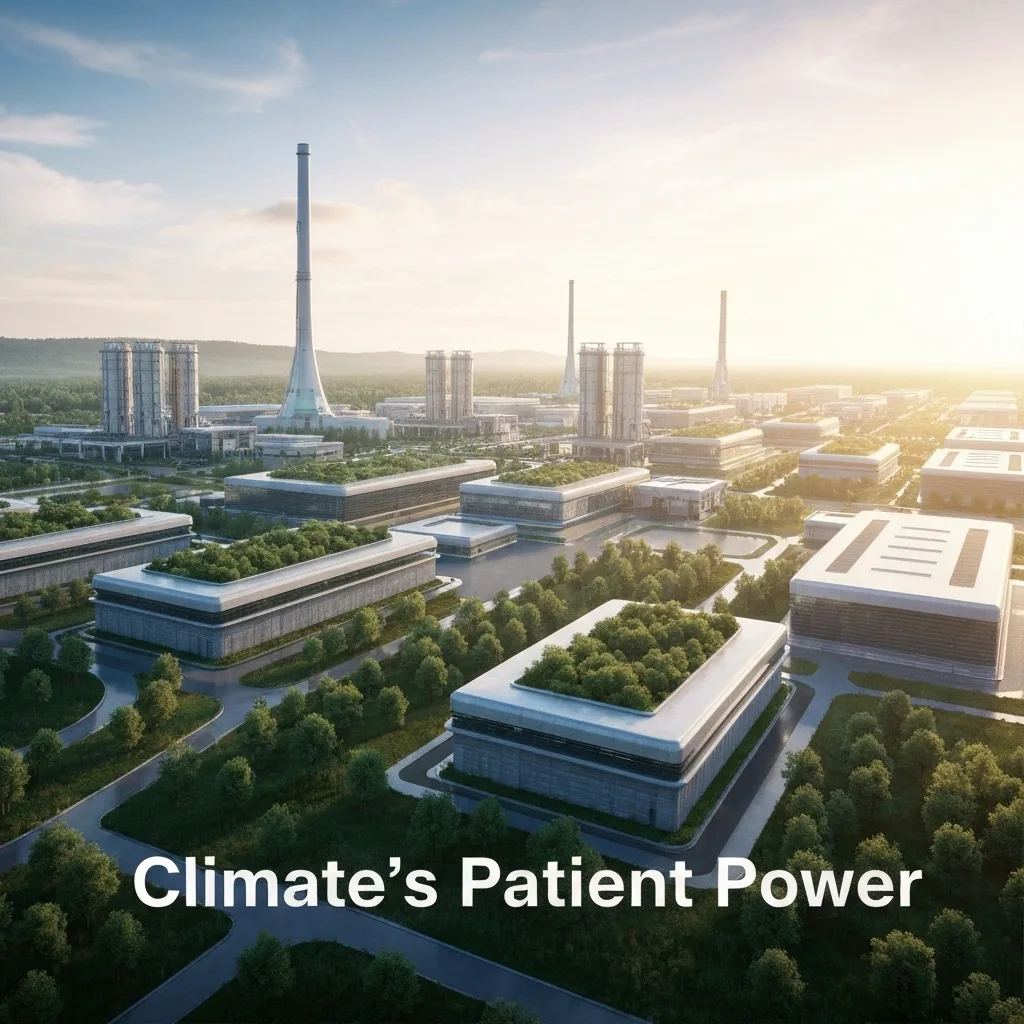
Breakthrough Energy Ventures (BEV), the investment arm, focuses on patient capital, meaning it invests in high-impact technologies with long development timelines that traditional venture capital often avoids. This philosophy is perfectly suited for SMR development, which requires substantial upfront R&D and regulatory navigation. One notable example is TerraPower, an advanced nuclear reactor design company co-founded by Gates, which is developing the Natrium reactor – a sodium-cooled fast reactor designed to be cost-effective and flexible. Insights into such investment strategies can be found in U.S. Securities and Exchange Commission (SEC) filings (U.S. Securities and Exchange Commission).
The impact of Breakthrough Energy’s involvement is profound, because their investments not only provide critical funding but also lend significant credibility and technical expertise to the SMR industry. This leadership helps to accelerate the commercialization of these technologies, consequently bridging the gap between innovative concepts and market deployment. Their strategic priorities align with global sustainability, therefore positioning SMRs as a key solution in their broader portfolio of climate tech investments.
Challenges and Overcoming Barriers to SMR Deployment
Despite the promising commercial threshold crossed in 2026, the widespread deployment of SMRs continues to face several significant challenges. Regulatory hurdles extend beyond initial construction permits, due to the need for comprehensive operational licensing and ongoing safety oversight by bodies like the NRC. These processes are inherently complex and time-consuming, consequently impacting project timelines and costs. Standardizing regulatory frameworks is therefore crucial to streamline future approvals.
Another substantial barrier is the development of a robust supply chain capable of supporting the mass production and deployment of modular components. Scaling manufacturing capabilities and ensuring quality control across a distributed supply network presents logistical complexities, which means significant coordination and investment are required. The U.S. National Science Foundation (NSF) supports foundational research to address manufacturing challenges in advanced technologies, consequently aiding SMR supply chain innovation (U.S. National Science Foundation).
Public perception and acceptance also remain critical factors. Overcoming historical anxieties associated with nuclear power requires transparent communication about SMR safety features, waste management, and economic benefits. Finally, securing adequate financing for early-mover projects continues to be a hurdle, despite government incentives, because the long-term return on investment can be perceived as uncertain. Addressing these challenges collectively is essential for realizing the full potential of SMRs as a clean energy solution.
Major Challenges in SMR Deployment
- Complex Regulatory Licensing: Navigating comprehensive operational and safety approvals.
- Supply Chain Development and Scale-Up: Establishing robust manufacturing and distribution networks.
- Public Acceptance and Social License: Addressing historical nuclear anxieties through transparent communication.
- High Upfront Financing Requirements: Securing capital for projects with long development cycles.
- Waste Management: Developing long-term solutions for spent nuclear fuel.
FAQ
What is Breakthrough Energy Ventures and how does it invest in climate technology, including SMRs?
Breakthrough Energy Ventures (BEV) is an investment fund founded by Bill Gates that supports innovative climate technologies, including Small Modular Reactors (SMRs). It employs a patient capital approach, investing in high-risk, high-reward solutions with long development timelines that traditional venture capital often avoids. BEV focuses on sectors critical for decarbonization, such as electricity, manufacturing, and agriculture, seeing SMRs as a vital component for providing reliable, carbon-free baseload power to achieve global climate goals.
How does Bill Gates’ climate tech investment strategy, particularly for SMRs, differ from traditional Venture Capital?
Bill Gates’ climate tech investment strategy, exemplified by Breakthrough Energy, differs from traditional Venture Capital primarily through its long-term, patient capital approach. While traditional VC seeks rapid returns, Gates’ strategy acknowledges that groundbreaking climate solutions like SMRs require significant time and capital for R&D, regulatory approval, and commercialization. This allows investments in technologies that address ‘hard-to-decarbonize’ sectors, prioritizing impact and global benefit over quick financial exits, consequently enabling foundational advancements in areas like advanced nuclear technology.
What are the strategic priorities for Bill Gates’ philanthropic and investment endeavors that align with US SMR investment?
Bill Gates’ strategic priorities align with US SMR investment by focusing on accelerating the transition to a zero-carbon economy and improving global well-being. His philanthropic and investment endeavors prioritize climate change mitigation, clean energy innovation, and global health. SMRs fit this vision by offering a reliable, emissions-free power source crucial for decarbonization, which consequently reduces health impacts from pollution and supports sustainable development. This strategic alignment drives significant financial and intellectual capital towards advanced nuclear solutions.
What is the current timeline for commercial Small Modular Reactor deployment in the U.S.?
The U.S. SMR commercial deployment timeline reached a significant milestone in October 2026 with the U.S. Nuclear Regulatory Commission (NRC) granting a construction permit for the first commercial SMR project to the Tennessee Valley Authority (TVA) at Clinch River. This permit enables the physical construction of the GE Vernova-Hitachi BWRX-300 SMR. While construction will take several years, this approval marks the formal entry into the commercial deployment phase, signaling that operational SMRs are on track for the early to mid-2030s.
What are the primary benefits of investing in Small Modular Reactors for clean energy?
Investing in Small Modular Reactors (SMRs) offers several primary benefits for clean energy, including enhanced safety, cost-effectiveness, and grid flexibility. SMRs feature passive safety systems, reducing accident risks. Their modular, factory-built components lead to lower capital costs and faster construction compared to large nuclear plants. Furthermore, their smaller size allows for deployment in diverse locations, providing reliable, carbon-free baseload power that can complement intermittent renewables and contribute significantly to decarbonization goals.
Limitations and Alternatives in Clean Energy
While Small Modular Reactors offer significant promise for clean energy, it is crucial to acknowledge their inherent limitations and consider alternative solutions within a comprehensive decarbonization strategy. Challenges persist regarding the long-term management and disposal of radioactive waste, which means robust regulatory and technical solutions are still under development to ensure environmental safety. Furthermore, while SMRs aim for lower capital costs per unit, the upfront investment for early projects remains substantial, therefore requiring sustained financial commitment.
Security concerns related to nuclear materials also necessitate stringent safeguards and oversight. Despite their advanced safety features, public perception can still be influenced by historical nuclear accidents, consequently impacting social license for new deployments. Therefore, a balanced approach to clean energy includes a portfolio of technologies. Alternatives like utility-scale solar and wind power, coupled with advanced battery storage, continue to expand rapidly. Geothermal energy, hydropower, and carbon capture technologies also play vital roles, consequently reducing reliance on any single energy source. The U.S. National Institutes of Health (NIH) emphasizes the importance of diverse public health strategies, a principle that mirrors the need for diverse energy solutions to ensure global well-being (National Institutes of Health).
Conclusion: A New Era for US SMR Investment and Clean Energy
The year 2026 marks a definitive new era for US SMR investment and the nation’s clean energy ambitions. The recent NRC approval for TVA’s Clinch River project underscores the maturity and regulatory acceptance of Small Modular Reactor technology. This pivotal moment, driven by targeted government incentives and strategic private capital from visionary investors like Bill Gates and Breakthrough Energy, confirms SMRs as a viable and critical component of future energy infrastructure.
As SMRs move towards widespread deployment, they promise to deliver reliable, carbon-free power, consequently accelerating global decarbonization efforts. While challenges remain, the clear pathway to commercialization indicates that SMRs are set to play a transformative role in achieving a sustainable and resilient energy future. Read more about Bill Gates’ climate tech initiatives on billgates.pk.
References
- U.S. Department of Energy (DOE). (n.d.). Retrieved from https://www.energy.gov/
- U.S. Environmental Protection Agency (EPA). (n.d.). Retrieved from https://www.epa.gov/
- U.S. National Science Foundation (NSF). (n.d.). Retrieved from https://www.nsf.gov/
- U.S. Securities and Exchange Commission (SEC). (n.d.). Retrieved from https://www.sec.gov/
- National Institutes of Health (NIH). (n.d.). Retrieved from https://www.nih.gov/