
Table of Contents
- Introduction: The Memo That Reset the Debate
- Quick Answer Box: What Changed and Why
- The Three Tough Truths About Climate, Explained
- Truth One: Humanity Adapts, Therefore Collapse Framing Misleads
- Truth Two: Temperature Is a Poor Proxy for Progress
- Truth Three: Health and Prosperity Are the Best Defenses
- The Fertilizer Ban Case Study: When Emissions Policy Hurt People
- COP30 in Belém: The $1.4 Billion Gates Foundation Climate Adaptation Pledge
- Smallholder Farmers: One-Third of Food, Under 1% of Climate Finance
- The 10-to-1 Adaptation Return Claim
- Emissions Metrics vs Human Welfare Metrics: The Core Trade-Off
- The Backlash and the Support: Who Said What
- Conservationists: The Missing Biodiversity Chapter
- Global Health: The 63% Rise in Heat-Related Mortality
- The Middle Ground: Rejecting the Either/Or Frame
- Inside Gates Notes in 2026: The Post-by-Post Climate Record
- Why Breakthrough Energy Still Funds Emissions Technology
- What the Shift Means If You Are Seeking Gates Funding
- Frequently Asked Questions
- What is Bill Gates's climate memo and when was it published?
- What are the three tough truths about climate according to Bill Gates?
- Did Bill Gates change his position on climate change?
- How much did the Gates Foundation pledge for climate adaptation at COP30?
- Why do critics say the Gates climate memo is shortsighted?
- Does Bill Gates still support net-zero emissions targets?
- What does "development is adaptation" mean?
- How can organisations secure Gates Foundation funding for climate adaptation?
- How does Breakthrough Energy Ventures differ from traditional venture capital?
- What climate topics has Gates Notes covered in 2026?
- Limitations, Open Questions and Alternative Readings
- Key Takeaways
- References
Key Takeaway
>
The bill gates climate memo, published on Gates Notes as “Three Tough Truths About Climate” on October 28, 2025, argued that climate strategy should be measured by human welfare outcomes rather than temperature targets, because welfare gains are measurable and attributable while fractions of a degree of avoided warming are not.
>
- Published days before COP30 opened in Belém, Brazil, which means the timing functioned as a deliberate agenda-setting move.
- Backed by a four-year, $1.4 billion Gates Foundation climate adaptation commitment announced at COP30 in November 2025.
- Targets smallholder farmers in sub-Saharan Africa and South Asia, who grow one-third of the world’s food but receive under 1% of global climate finance.
- Criticised by conservationists for omitting biodiversity entirely; supported by global health researchers citing a 63% rise in heat-related mortality since the 1990s.
- Breakthrough Energy continued funding hard-to-abate emissions technology through 2026, therefore the shift is one of rhetoric and philanthropic priority rather than a withdrawal of capital.
Introduction: The Memo That Reset the Debate
The bill gates climate memo is the 17-page Gates Notes post titled “Three Tough Truths About Climate”, published on October 28, 2025. It reframed what counts as success in climate policy, moving the measure away from emissions curves and temperature targets and toward documented improvements in human welfare — the central argument now running through all Gates Notes climate commentary.
The framing changed because of a measurement problem rather than a scientific one. A vaccination campaign, a drought-tolerant seed release or a livestock health programme produces a countable outcome attributable to a specific intervention, whereas 0.1°C of avoided warming cannot be traced to any single grant. Consequently, philanthropic capital was reallocated toward adaptation, and the November 2025 COP30 pledge supplied the financial proof that the rhetorical shift carried money behind it.
What follows is the full record: the three truths as Gates stated them, the fertilizer case study at the centre of his argument, the mechanics of the $1.4 billion adaptation commitment, the backlash from conservationists and the endorsement from global health researchers, the post-by-post Gates Notes climate output through October 2026, and the practical consequences for anyone preparing a funding proposal.
About this analysis
>
This article was written by the billgates.pk editorial team, which tracks Gates Foundation grant-making, Breakthrough Energy investment activity and Gates Notes publications, with a standing editorial rule: the Foundation’s institutional positions are reported separately from Bill Gates’s personal views, because the two do not always align.
Transparency note
>
No part of this analysis is sponsored by, affiliated with or endorsed by the Bill & Melinda Gates Foundation, Breakthrough Energy or Gates Notes. All figures are drawn from the sources listed at the end. Where a number is a modelled estimate rather than a realised result, it is labelled as such in the text.
Quick Answer Box: What Changed and Why
Gates did not abandon decarbonisation; he subordinated it to welfare metrics, which means the dispute over emissions vs human welfare is fundamentally about measurement and sequencing rather than about climate science itself.
The shift in five dated facts
- October 28, 2025 — Gates publishes “Three Tough Truths About Climate” on Gates Notes, days before COP30 opens in Belém, Brazil
- The argument — the memo rejects “doomsday” framing and states that temperature is a poor proxy for progress
- November 2025 — the Gates Foundation commits $1.4 billion over four years to climate adaptation at COP30
- The target group — smallholder farmers in sub-Saharan Africa and South Asia, with a stated return of more than $10 in social and economic benefit per $1 invested within a decade
- 2026 — Breakthrough Energy continues backing enhanced geothermal and aviation decarbonisation, therefore emissions funding runs alongside the welfare rhetoric rather than replacing it
The Three Tough Truths About Climate, Explained
The bill gates climate memo sets out three truths: humanity will adapt, temperature is a poor proxy for progress, and health and prosperity are the strongest available defences against climate harm. All three appear in the Gates Notes post of October 28, 2025, and each is framed as a correction to what Gates describes as a distorted set of priorities.
The three tough truths, as stated in the memo
- Humanity will adapt — climate change is a serious problem but not an extinction event, therefore collapse framing distorts how resources are prioritised
- Temperature is a poor proxy for progress — degrees of warming measure neither the suffering avoided nor the lives improved
- Health and prosperity are the best defences — poverty and disease remain the dominant risks facing the most vulnerable populations
Truth One: Humanity Adapts, Therefore Collapse Framing Misleads
Gates’s answer to the question of whether climate change is an existential threat is no — not for human civilisation as a whole. He argues in the memo that climate change will not bring about “humanity’s demise”, while still describing it as a serious problem producing severe regional harm. The analytical claim behind this is one of attention allocation: because apocalyptic framing implies that every available resource belongs to emissions reduction, it crowds out spending on the poverty and disease burdens that already kill people today. Many climate scientists contest this framing directly, and that disagreement is documented in the backlash section below.
Truth Two: Temperature Is a Poor Proxy for Progress
The second truth is a measurement argument. A 0.1°C difference in projected warming cannot be attributed to any single programme, because the causal chain runs through global emissions aggregates over decades. A drought-tolerant seed release or a childhood immunisation campaign, by contrast, produces a countable outcome within a grant cycle. Consequently Gates prefers welfare indicators — child mortality, crop yields, household income — which happen to be the same metrics the Gates Foundation has used across its global health portfolio for two decades. Conventional assessments from bodies such as the World Health Organization remain the counterweight here, because they document substantial health impacts tied directly to warming levels.
Truth Three: Health and Prosperity Are the Best Defenses
The third truth collapses the distinction between development and climate policy. A household with income, nutrition and access to healthcare survives a heatwave or a failed harvest that kills a household without them, therefore development spending functions as adaptation spending without needing to be relabelled. The Gates Foundation stated the position verbatim in its November 2025 COP30 announcement: “development is adaptation.” The effect of that formulation is to make the Foundation’s existing agriculture and health grants legible as climate work.
The Fertilizer Ban Case Study: When Emissions Policy Hurt People
The memo’s central evidentiary example is a national fertilizer ban. Gates describes a low-income country that moved to cut agricultural emissions by banning synthetic fertilizers; because yields in that farming system depended on those inputs, crop production fell sharply, resulting in reduced food availability, which drove prices up and ultimately triggered a national crisis. The chain matters more than any single link in it: an emissions measure taken in isolation transmitted its costs through the food system to the households least able to absorb them. The example is presented here as Gates’s argument in the memo rather than as independently verified causation.
Rhetorically, the case study is doing specific work. Gates uses it to argue that emissions targets applied without regard to agricultural productivity shift costs onto the poorest, therefore sequencing — what you cut, and what you build first — determines whether a policy helps or harms. The honest limitation is that the memo generalises from one national policy failure. Critics respond that poor implementation and the absence of substitute inputs caused the collapse, not the emissions objective itself, which means the example supports a case for better policy design more comfortably than it supports a case for demoting emissions targets.
COP30 in Belém: The $1.4 Billion Gates Foundation Climate Adaptation Pledge
At COP30 in Belém, Brazil, in November 2025, the Bill & Melinda Gates Foundation announced $1.4 billion over four years for climate adaptation, concentrated on smallholder farming systems in sub-Saharan Africa and South Asia. The commitment, detailed on gatesfoundation.org, turned the memo’s argument into a budget line, which is why bill gates cop30 coverage treated the pledge and the memo as a single intervention in the pre-conference debate.
| Parameter | Detail |
|---|---|
| Total commitment | $1.4 billion |
| Term | Four years, announced November 2025 |
| Announcement venue | COP30, Belém, Brazil |
| Primary regions | Sub-Saharan Africa, South Asia |
| Beneficiary group | Smallholder farmers |
| Share of world food produced by group | One-third |
| Share of global climate finance received | Under 1% |
| Stated return | More than $10 per $1 within a decade (WRI estimate) |
The choice of adaptation over mitigation follows from how the Foundation operates. It funds outcomes it can attribute and measure, therefore seed systems, livestock health and soil productivity fit its grant-making model far better than energy infrastructure, which carries technology risk and multi-decade payback periods. Breakthrough Energy handles that category with venture and catalytic capital instead. This distinction is institutional rather than personal: the Foundation’s gates foundation climate adaptation strategy is a grant-making decision, while Gates’s views on emissions technology appear under his own name on Gates Notes.
Smallholder Farmers: One-Third of Food, Under 1% of Climate Finance
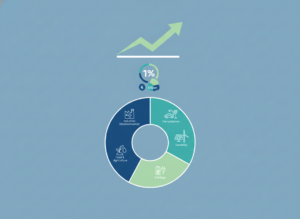
The allocation gap is the Foundation’s core justification for climate adaptation funding for smallholder farmers. Farmers in low-income countries produce roughly one-third of the world’s food yet receive less than 1% of global climate finance. That imbalance exists because adaptation finance has flowed predominantly toward large infrastructure projects in middle-income countries, where capital can be deployed in bigger tranches with established intermediaries. As a result, farm-level resilience remains structurally underfunded, which means a marginal dollar directed there starts from a much lower base and, on the Foundation’s reasoning, produces outsized welfare gains per unit of spend.
The 10-to-1 Adaptation Return Claim
The headline return figure — more than $10 in social and economic benefit for every $1 invested within a decade — comes from World Resources Institute estimates cited by the Foundation in its COP30 materials. It requires qualification. The number represents modelled social and economic benefit, not realised cash returns to an investor, and the ratio varies substantially by intervention type, region and baseline conditions. An irrigation or early-warning investment in a drought-prone district will not share the economics of a livestock vaccination programme. Treat the figure as a planning estimate that supports the direction of travel rather than as a guaranteed yield.
Emissions Metrics vs Human Welfare Metrics: The Core Trade-Off
The emissions vs human welfare debate turns on three disagreements: what counts as success, over what time horizon, and who bears the cost if the chosen metric is wrong. Because the memo does not reject decarbonisation, net zero emissions criticism is a more accurate description of Gates’s position than reversal or denial — he disputes the primacy of the target, not the need to cut emissions.
Commentary published in November 2025 in response to the memo framed the argument against a projected warming path of roughly 1.9°C by 2100. The reasoning attributed to Gates runs as follows: because expected warming has moved below earlier worst-case trajectories, the marginal value of additional temperature-target advocacy has fallen relative to spending that protects people from warming already locked in. That projection belongs to the surrounding commentary rather than to Gates’s own text, and it carries an important caveat — assessments from the US Environmental Protection Agency and the World Health Organization document severe health, agricultural and water impacts at that level of warming, so a lower projection is not an argument that the problem has been solved.
| Dimension | Emissions-first framework | Welfare-first framework (the memo) |
|---|---|---|
| Primary success metric | Tonnes of CO2e avoided | Lives improved: yields, income, mortality |
| Time horizon | Decades to 2100 | Grant cycle to one decade |
| Headline target | Net zero and temperature limits | Measurable welfare gains in poor regions |
| Unit of attribution | Global aggregate | Specific programme and population |
| Typical funded intervention | Clean energy and industrial technology | Seeds, livestock health, nutrition, primary care |
| Main criticism levelled against it | Costs fall on low-income populations | Omits biodiversity; weakens mitigation urgency |
Where the two frameworks genuinely conflict is budgetary, not scientific. A fixed philanthropic pool spent on adaptation is not spent on mitigation, therefore the trade-off is real at the level of any single institution, even though the either/or framing is rejected by most climate scientists.
The Backlash and the Support: Who Said What
Reaction to the bill gates climate memo split along disciplinary lines: conservation biology against it, global health largely in favour, and climate science mostly rejecting the either/or frame outright. The bill gates climate backlash was sharpest from conservationists, whose objection was not to Gates’s welfare priorities but to what the document left out.
| Name | Affiliation | Position | Date |
|---|---|---|---|
| Brian O’Donnell | Campaign for Nature | Called the memo “dangerously shortsighted” | October 2025 |
| Reda Sadki | Global health advocacy | Supportive; cites Lancet Countdown mortality data | 2025 |
| Chris Field | Stanford University | Rejects the either/or framing | 2025 |
| Gates Foundation | Official institutional position | “Development is adaptation”; $1.4bn pledge | November 2025 |
| Bill Gates | Personal, Gates Notes | Continues emissions-technology advocacy | October 2026 |
Conservationists: The Missing Biodiversity Chapter
“Dangerously shortsighted.”
— Brian O’Donnell, Director, Campaign for Nature, October 2025
O’Donnell’s Campaign for Nature op-ed made a specific, checkable charge: across 17 pages, the memo did not mention nature, biodiversity or ecosystems once. The substantive argument follows from that omission. Human welfare in the exact regions the Foundation is targeting depends on pollination, soil biology, freshwater systems and fisheries, therefore treating welfare as separable from ecological function understates the risk to the food and water security the pledge is meant to protect. O’Donnell further argued that loosening emissions targets would accelerate species extinction, because no climate strategy survives the collapse of the natural systems it assumes.
Global Health: The 63% Rise in Heat-Related Mortality
Global health researchers welcomed the reframing for a straightforward reason: the harm Gates describes already appears in their data. The 2025 Lancet Countdown reported that heat-related mortality has risen 63% since the 1990s, which means climate damage now registers as a measurable health burden rather than a projection. Advocates including Reda Sadki argued that framing climate change as a public health crisis matches the surveillance systems health agencies already operate, and that correspondence is why the shift read as a merger of Gates’s long-standing global health work with his climate agenda rather than as a retreat. WHO climate-and-health guidance supports the same framing on independent grounds.
The Middle Ground: Rejecting the Either/Or Frame
Stanford University climate scientist Chris Field took the position that investment does not have to be an “either/or choice”, because long-term mitigation and short-term human development reinforce one another: development raises the capacity to absorb shocks, while mitigation reduces the size of the shocks that must be absorbed. Our editorial read sits close to Field’s. The memo’s measurement critique is strong — attributable outcomes genuinely do determine what large foundations can fund and defend. Its implied budget trade-off is weaker, because Foundation grant money and Breakthrough Energy venture capital draw on different pools with different return requirements, which means adaptation spending is not obviously displacing mitigation spending in practice.
Inside Gates Notes in 2026: The Post-by-Post Climate Record
Gates Notes climate output in 2026 has covered three main subjects: the annual letter on inequity and climate priorities, next-generation geothermal energy, and the economics of decarbonising aviation. In the bill gates annual letter 2026, published earlier this year, Gates restated the thesis directly — “inequity is the reason our climate strategies need to prioritize human welfare” — which anchored the memo’s logic as the organising principle for the year rather than a one-off intervention before COP30.
| Date | Post or event | Central claim |
|---|---|---|
| October 28, 2025 | “Three Tough Truths About Climate” | Welfare beats temperature as a metric |
| November 2025 | COP30 adaptation announcement | Development is adaptation; $1.4bn pledged |
| Early 2026 | Annual letter, The Year Ahead | Inequity drives the welfare-first strategy |
| Mid-2026 | Fervo Energy Cape Station visit, Utah | Enhanced geothermal is advancing toward cost competitiveness |
| October 12, 2026 | “For an affordable climate win, look to the sky” | Aviation fuel is a solvable cost problem |
The recency anchor is the October 12, 2026 Gates Notes post, “For an affordable climate win, look to the sky”, which addresses the engineering and cost challenges of decarbonising flight — the sustainable aviation fuel question Bill Gates has repeatedly identified as a hard-to-abate problem. The consequence is difficult to argue around: a detailed post on one of the most emissions-intensive sectors in the economy, published nearly a year after the adaptation pivot, indicates the memo narrowed the priority ranking rather than the subject range.
The geothermal thread works the same way. Gates toured Fervo Energy’s Cape Station project in Utah during 2026, and enhanced geothermal fits the welfare argument on its own terms: firm, dispatchable low-carbon power lowers electricity costs, and lower energy costs raise real incomes, therefore the technology reads simultaneously as mitigation and as development. The US Department of Energy assesses enhanced geothermal systems as having substantial untapped generation potential, which is the technical basis for treating Cape Station as more than a demonstration project.
Why Breakthrough Energy Still Funds Emissions Technology
Has Bill Gates stopped funding emissions reduction? No. The structural reason is institutional design: the Gates Foundation makes grants judged against measurable human outcomes, while Breakthrough Energy deploys venture and catalytic capital against technology risk, therefore the two vehicles pursue different objectives by construction. Breakthrough Energy Ventures 2026 activity — aviation fuel, enhanced geothermal, industrial heat — reflects a mandate the Foundation was never built to carry.
Foundation grants versus Breakthrough Energy capital
- Gates Foundation: philanthropic grants, welfare and health outcome metrics, adaptation and agriculture focus
- Breakthrough Energy Ventures: equity investment, emissions-reduction technology, hard-to-abate sectors
- Hard-to-abate priorities visible in 2026: aviation fuel, enhanced geothermal, industrial heat, storage
- Timeframe difference: grants report within programme cycles; venture positions are held considerably longer than a standard fund’s horizon
- Practical read: the memo changed philanthropic priority ranking, it did not withdraw emissions capital
For founders, the consequence is a routing decision. An emissions-reduction hardware company pitches Breakthrough Energy rather than the Foundation, because grant eligibility tests attributable human outcomes while venture diligence tests technology risk, unit economics and scale pathway — two different questions with two different evidence bases. Our analysis of Bill Gates’s climate tech and AI health investing approach covers how Breakthrough Energy’s thesis diverges from conventional venture capital on holding period and tolerance for first-of-a-kind technical risk, which is the distinction most misdirected pitches get wrong.
What the Shift Means If You Are Seeking Gates Funding
The practical effect of the memo for applicants is a change in what leads a proposal. Submissions that quantify human outcomes — yields, household income, morbidity, mortality, nutritional status — align with the Foundation’s stated priorities, whereas proposals leading with tonnes of CO2 avoided belong with Breakthrough Energy instead. One procedural point matters more than framing: the Gates Foundation primarily solicits work through published requests for proposals and invited partnerships rather than unsolicited applications, so verify current openings on gatesfoundation.org before investing time in a submission.
Being transparent about access is important here. Because most Foundation funding is not open-call, partnership routes, consortium membership and existing relationships with implementing organisations carry more weight than application polish. Eligibility rules also change by programme and by year, which means the Foundation’s own grant pages are the only authoritative source on what is open today.
How to align a proposal with Gates climate priorities
- Identify the correct vehicle: the Gates Foundation for welfare and adaptation outcomes, Breakthrough Energy for emissions technology
- Check live opportunities on the Gates Foundation grant pages rather than sending unsolicited material
- Define a measurable human-welfare primary outcome — yield, income, morbidity or mortality — with a stated baseline
- Attach the emissions benefit as a secondary co-benefit, not the headline claim
- Name the beneficiary population and geography explicitly, prioritising sub-Saharan Africa or South Asia where relevant
- Build a measurement plan with named data sources and an independent evaluation partner
- Show a scaling path and a local delivery partner, because the Foundation funds pathways to deployment rather than pilots alone
Eligibility checklist before you submit
- Registered legal entity able to receive and audit international grant funds
- Work falls inside a currently published programme strategy or open RFP
- Quantified outcome metrics with a stated baseline and measurement method
- Named in-country implementation partner
- Global access commitment on resulting products or data, where applicable
- Budget and timeline matched to the opportunity’s stated term
Frequently Asked Questions
What is Bill Gates’s climate memo and when was it published?
The bill gates climate memo is “Three Tough Truths About Climate”, a 17-page Gates Notes post published on October 28, 2025, days before COP30 opened in Belém, Brazil. It argued that climate strategy should be judged by human welfare outcomes rather than temperature targets. The Gates Foundation followed in November 2025 with a $1.4 billion, four-year climate adaptation commitment, which gave the argument a budget.
What are the three tough truths about climate according to Bill Gates?
Humanity will adapt rather than collapse; temperature is a poor proxy for progress; and health and prosperity are the strongest defences against climate harm. Gates’s consequence from these three claims is an allocation rule: because welfare gains are measurable and attributable to specific programmes, he argues they form a better basis for directing philanthropic capital than fractions of a degree of avoided warming.
Did Bill Gates change his position on climate change?
He changed his priority ranking, not his view of the science. Gates continues to describe climate change as a serious problem, and Breakthrough Energy kept funding emissions technology through 2026 — including the October 12, 2026 Gates Notes post on aviation decarbonisation. The substantive change is in which metrics he treats as the measure of success, which is a framing dispute rather than a reversal.
How much did the Gates Foundation pledge for climate adaptation at COP30?
$1.4 billion over four years, announced at COP30 in Belém in November 2025. The commitment targets smallholder farmers in sub-Saharan Africa and South Asia, a group producing roughly one-third of the world’s food while receiving under 1% of global climate finance. The Foundation cited World Resources Institute estimates of more than $10 returned in social and economic benefit per dollar invested.
Why do critics say the Gates climate memo is shortsighted?
Because the 17-page document did not mention nature, biodiversity or ecosystems once. Brian O’Donnell of the Campaign for Nature called it “dangerously shortsighted” in October 2025. His causal argument: human welfare depends on functioning natural systems for food and water, therefore treating welfare and ecology as separate problems understates the risk that ecosystem decline undoes the welfare gains being funded.
Does Bill Gates still support net-zero emissions targets?
He supports decarbonisation but rejects treating temperature limits and net-zero dates as the sole measure of success. His continued investment in enhanced geothermal, storage and aviation fuel through 2026 demonstrates ongoing commitment to emissions cuts. The memo’s argument is narrower than it is often reported: rigid targets pursued without regard to welfare costs transfer those costs onto low-income populations.
What does “development is adaptation” mean?
It means raising incomes, health and agricultural productivity is itself climate adaptation. The mechanism is direct: a household with nutrition, healthcare and savings survives a heatwave or failed harvest that destroys a household without them, therefore development spending reduces climate vulnerability without needing a separate adaptation label. The phrase comes from the Gates Foundation’s November 2025 COP30 messaging.
How can organisations secure Gates Foundation funding for climate adaptation?
Through published requests for proposals and invited partnerships rather than unsolicited applications. The practical requirements are consistent across programmes: a measurable human-welfare outcome with a stated baseline, a named in-country delivery partner, a credible independent evaluation plan and a scaling pathway beyond a pilot. Check the Foundation’s own grant pages for current eligibility, because criteria vary by programme and by year.
How does Breakthrough Energy Ventures differ from traditional venture capital?
It accepts longer holding periods and heavier technology risk than a standard fund. That tolerance exists because hard-to-abate sectors need capital across decades rather than inside a five-year exit window. Its 2026 emphasis on aviation fuel, enhanced geothermal and industrial heat reflects that mandate, and it funds emissions reduction while the Gates Foundation funds adaptation and welfare outcomes.
What climate topics has Gates Notes covered in 2026?
The annual letter on inequity and climate priorities, next-generation geothermal at Fervo Energy’s Cape Station in Utah, and aviation decarbonisation in the October 12, 2026 post “For an affordable climate win, look to the sky”. The consequence of that range is clear: emissions technology stayed on the Gates Notes agenda throughout the year following the adaptation pivot.
Limitations, Open Questions and Alternative Readings
A clear line separates what is documented from what is inferred in this analysis. The memo text, the $1.4 billion pledge figure, the publication dates and the attributed quotations are documented in primary sources from Gates Notes, the Gates Foundation, the Campaign for Nature and the 2025 Lancet Countdown. The internal reasoning behind the reallocation of philanthropic capital is inferred from public statements rather than disclosed, which means alternative readings of motive remain open. The 10-to-1 adaptation return is a modelled estimate of social and economic benefit, not a realised financial result, therefore it should not be read as a guarantee. The fertilizer ban example is presented by Gates and summarised here as his argument, not as independently verified causation.
Open questions a reader should keep in view
- Whether welfare-first allocation reduces total mitigation funding or simply relabels existing development spend
- Whether adaptation returns hold outside the agricultural interventions the estimates were built on
- How the omission of biodiversity affects long-run food and water security in the same target regions
- Whether Gates Foundation grant criteria formally change, or only the public framing has moved
- How much of the $1.4 billion has been disbursed against the four-year schedule as of late 2026
Key Takeaways
The bill gates climate memo succeeded in moving climate philanthropy toward measurable welfare outcomes, because measurability determines what large foundations can fund, report and defend. Its two genuine weaknesses remain unaddressed: the silence on biodiversity across 17 pages, and an implied budget trade-off that does not hold once you account for the Gates Foundation and Breakthrough Energy drawing on separate capital pools with separate mandates. Capital flows through 2026 show continuity in emissions technology, therefore the pivot is best described as one of emphasis and metrics rather than retreat.
Funding-seekers should work through the alignment steps and eligibility checklist above, and our climate tech and AI health investing analysis covers the investment-thesis side in more depth.
Six things to remember
- Published October 28, 2025 on Gates Notes as “Three Tough Truths About Climate”, days before COP30 in Belém
- Core argument: temperature is a poor proxy for progress, therefore welfare metrics should guide spending
- Financial proof: $1.4 billion over four years for climate adaptation, announced November 2025
- Target: smallholder farmers producing one-third of global food on under 1% of climate finance
- Main criticism: no mention of nature or biodiversity across 17 pages
- Emissions funding continued in 2026 through Breakthrough Energy, including geothermal and aviation fuel
References
- Gates, B. “Three Tough Truths About Climate.” Gates Notes, October 28, 2025. https://www.gatesnotes.com
- Gates, B. “For an affordable climate win, look to the sky.” Gates Notes, October 12, 2026. https://www.gatesnotes.com
- Bill & Melinda Gates Foundation. COP30 climate adaptation commitment announcement, November 2025. https://www.gatesfoundation.org
- O’Donnell, B. Op-ed response to the Gates climate memo. Campaign for Nature, October 2025. https://www.campaignfornature.org
- Sadki, R. Commentary on Gates’s climate framing and Lancet Countdown data, 2025. https://www.redasadki.me
- World Health Organization. “Climate change and health” fact sheet. https://www.who.int/news-room/fact-sheets/detail/climate-change-and-health
- US Environmental Protection Agency. Climate Change Indicators. https://www.epa.gov/climate-indicators
- US Department of Energy. Enhanced Geothermal Systems. https://www.energy.gov/eere/geothermal/enhanced-geothermal-systems