
Table of Contents
- What Gates Said at Harvard and Why It Still Matters
- The Joke That Framed a Moral Argument
- The Market Failure at the Center of the Speech
- The 2026 Budget: Turning a Commencement Charge into a $9 Billion Payout
- The 2045 Sunset and the $200 Billion Commitment
- Where the Money Goes
- AI as the New Market Failure
- The $1 Billion AI Commitment
- The Language Gap in AI Training Data
- Health, Agriculture, and Climate: The Original Agenda, Updated
- Maternal and Child Health
- Climate-Smart Agriculture
- From Top-Down to Community-Led
- What This Means for Grant Seekers and Researchers
- Frequently Asked Questions
- What was the main message of the Bill Gates Harvard commencement speech?
- What did Bill Gates joke about at Harvard?
- How large is the Gates Foundation's 2026 budget?
- When will the Gates Foundation close?
- How does AI connect to the 2007 Harvard speech?
- Limitations of This Analysis
- Conclusion
- References
Key Takeaway: The Bill Gates Harvard commencement speech of 2007 argued that innovation matters most when it reaches the people least able to pay for it. That argument now underpins the Gates Foundation’s 2026 strategy.
>
- Budget: A record $9 billion annual budget was announced in January 2026.
- Timeline: The Foundation plans to close in 2045 and to invest an additional $200 billion before then.
- AI: A September 2026 commitment of at least $1 billion over two years targets AI-enabled solutions for marginalized populations.
- Allocation: Roughly 70% of the 2026 budget goes to global health. The remaining 30% supports agriculture and U.S. education.
>
The speech set the moral agenda. The 2026 budget, sunset date, and AI push set the scale and the deadline.
When Bill Gates walked onto the stage in Cambridge in 2007, he opened with a line that drew laughter: “Dad, I always told you I’d come back and get my degree.” The joke worked because the audience knew the story. Gates had left Harvard to build Microsoft, and the university was now honoring its most famous dropout. Behind the humor sat a serious charge to the graduating class. Gates told them that the world’s deepest inequities were their business, and that talent and technology should be aimed at those inequities rather than away from them.
Nearly two decades later, that charge reads less like a graduation sentiment and more like a strategic blueprint. The Gates Foundation’s 2026 priorities follow the same logic. It aims to end preventable deaths, reduce extreme poverty, and make sure new technology does not bypass the world’s poorest. The difference is scale and urgency. A fixed closure date of 2045 has compressed the timeline, and artificial intelligence has introduced a new version of the market failure Gates described at Harvard.
This article traces that line from the 2007 speech to the 2026 budget. It explains why the Foundation’s spending, its AI commitment, and its health and agriculture goals follow directly from the argument Gates made that day.
About the Author: This analysis was prepared by the billgates.pk editorial team. The team covers the Gates Foundation, Breakthrough Energy, and Bill Gates’s philanthropic and investment activity, with a focus on funding amounts, timelines, recipients, and measurable outcomes.
Transparency Note: billgates.pk is an independent publication and is not affiliated with Bill Gates, the Gates Foundation, or Breakthrough Energy. Figures in this article come from Foundation announcements, the 2026 Goalkeepers Report, published speech transcripts, and third-party coverage, all cited below. Where a statement reflects Bill Gates’s personal view rather than an official Foundation position, we say so.
What Gates Said at Harvard and Why It Still Matters
The Bill Gates Harvard commencement speech still matters because it laid out the operating philosophy the Gates Foundation follows today. Innovation, Gates argued, does not reduce inequity unless someone deliberately steers it toward the people markets ignore. That principle explains nearly every major Foundation decision in 2026, from the size of the budget to the focus on AI.
The Joke That Framed a Moral Argument
The “come back and get my degree” line did more than entertain. According to the published transcript of the 2007 address, Gates used his own unfinished education to pivot toward a confession. During his time at Harvard, he had learned a great deal about ideas and almost nothing about the inequities shaping most people’s lives.
That self-critique gave the speech its moral weight. Because Gates presented himself as someone who had initially missed the point, his call to action landed as an invitation rather than a lecture. As a result, graduates heard a direct question: what will you do with your advantages?
The Market Failure at the Center of the Speech
The core of the address was an economic argument. Life-saving innovations, from vaccines to computers, reach the people who can pay for them first. The people with the greatest need, who often have the least purchasing power, are left waiting. Gates framed this as a market failure. Markets reward demand backed by money, not demand backed by need. Consequently, preventable diseases continued to kill millions of children, even though the tools to stop them already existed.
This framing matters for anyone tracking the Foundation in 2026. It explains why the Foundation describes its role as filling gaps markets leave behind, rather than competing with them. It also explains why Gates applies the same diagnosis to artificial intelligence today.
The 2026 Budget: Turning a Commencement Charge into a $9 Billion Payout
The clearest link between the speech and the present is money. In January 2026, the Gates Foundation announced a record $9 billion annual budget. The figure marks the end of a four-year plan to reach a steady-state budget at this level. The Foundation now spends at its highest sustained rate in its history because the leadership chose to front-load impact rather than preserve capital indefinitely.
The 2045 Sunset and the $200 Billion Commitment
The budget increase is a direct result of the Foundation’s decision to close in 2045. Bill Gates announced that the Foundation will invest an additional $200 billion before closing its doors. That is double what it spent during its first 25 years.
A sunset clause changes behavior. Because the Foundation has a fixed end date, every year of delay reduces the total impact it can achieve. Therefore, the leadership has a structural incentive to deploy capital aggressively and to measure results tightly. Mark Suzman, CEO of the Gates Foundation, described the logic in a January 2026 statement reported by Charity Journal:
“The foundation’s 2045 closure deadline gives us a once-in-a-generation opportunity to make transformative progress… Ensuring as much of every dollar as possible flows toward impact is critical to achieving our ambitious goals to save and improve millions more lives over the next 20 years.”
— Mark Suzman, CEO, Gates Foundation (January 2026)
The emphasis on “every dollar” signals operational discipline. When the time horizon is finite, overhead and slow-moving programs carry a higher opportunity cost.
Where the Money Goes
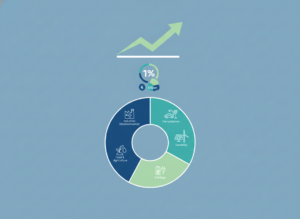
The 2026 allocation mirrors the priorities Gates named at Harvard. Approximately 70% of the budget goes to global health initiatives, specifically in the Global South. The remaining 30% supports agricultural development in low- and middle-income countries, as well as U.S. education.
The weighting toward health follows from the speech’s central image of children dying from preventable causes. Health interventions such as vaccines deliver measurable reductions in mortality. Because of that, they suit a foundation racing a deadline and judging itself by lives saved.
AI as the New Market Failure
The Foundation’s newest priority applies the 2007 diagnosis to a 2026 technology. At Harvard, Gates warned that innovations bypass the poor when the poor cannot pay. The Foundation now identifies artificial intelligence as the latest and fastest-moving instance of that pattern.
The $1 Billion AI Commitment
In September 2026, the Gates Foundation committed at least $1 billion over the next two years to expand access to AI-enabled solutions in health, education, and agriculture for marginalized populations. The commitment was paired with the 2026 Goalkeepers Report, titled “Make This Matter: AI, Equity, and the Choice We Can’t Delay.” The report warns that without deliberate intervention, AI is likely to widen the gap between the richest and poorest.
The parallel to the commencement address is explicit. In the 2026 Goalkeepers Report, Bill Gates wrote:
“The Gates Foundation was created in part to address a basic market failure: the people with the greatest needs often have the least power to shape where innovation and investment go… AI presents the same challenge, only at much greater speed. Left to the market alone, the most capable tools will be built first for the people and institutions most able to pay for them.”
— Bill Gates, 2026 Goalkeepers Report (September 2026)
The phrase “only at much greater speed” carries the analytical weight. Vaccines and PCs took years to diffuse. AI tools scale in months. Consequently, the window for steering AI toward equity is shorter, which explains why the commitment runs over two years rather than a decade.
The Language Gap in AI Training Data
The Goalkeepers Report highlights one concrete barrier: more than 90% of the data used to train early large language models came from English-language sources. The effect is direct. Tools trained mostly on English text perform less reliably for speakers of other languages and in contexts underrepresented in the data. As a result, a health worker in a rural clinic receives a weaker tool than a user in a wealthy, English-speaking market.
The Foundation’s response is to prioritize investments in AI tools that work in local languages and are built with data from the populations they are meant to serve. For researchers and startups following AI health and climate tech investing, this focus signals what kinds of proposals align with the Foundation’s stated goals. These include local-language capability, locally sourced data, and deployment in health, education, or agriculture.
Health, Agriculture, and Climate: The Original Agenda, Updated
The Foundation’s core 2026 goals stay closely tied to the vision in the Bill Gates Harvard commencement speech. Its strategies have been updated for climate change and for a shift in how programs are designed.
Maternal and Child Health
The Foundation’s primary goal for 2026 is ensuring that “no mother, child, or baby dies of a preventable cause.” It also aims for the next generation to grow up free of deadly infectious diseases. This goal is the most direct descendant of the 2007 address, which centered on preventable child deaths. The continuity matters because it shows that the Foundation’s headline objective has held steady for nearly two decades, even as tools and budgets have changed.
Climate-Smart Agriculture
Climate change hits the world’s poorest hardest because smallholder farmers depend on weather they cannot control and have few financial buffers against bad harvests. The Foundation therefore funds “climate-smart innovations” in agriculture designed for regions where extreme weather takes the worst toll. This extends the market-failure argument to food security. Farmers in low-income regions represent enormous need but limited commercial demand, so private investment in tools for them lags.
From Top-Down to Community-Led
The most notable strategic shift in 2026 concerns method rather than goals. In an October 2026 statement, Mark Suzman said the Foundation is prioritizing “listening to communities and understanding local realities rather than assuming solutions from the outside.” The aim is for local governments and health workers to have the capacity to define their own priorities.
This shift complements the AI language strategy. Both rest on the same premise: solutions designed far from the people they serve tend to underperform. As a result, the Foundation is directing more attention toward local capacity and local data.
What This Means for Grant Seekers and Researchers
For organizations seeking Foundation support, the line from the 2007 speech to 2026 offers a practical filter. The Foundation’s stated priorities reward work that addresses needs markets ignore, delivers measurable outcomes, and is grounded in the communities it serves.
Three signals stand out. First, the 2045 deadline means the Foundation favors work that produces results within a defined timeframe, because delayed impact counts for less under a sunset model. Second, the $1 billion AI commitment points toward AI applications in health, education, and agriculture, especially those that address language and data gaps. Third, the community-led emphasis suggests proposals developed with local partners align more closely with current strategy than externally designed solutions. These are readings of public statements, not published grant criteria, so applicants should confirm requirements directly with the Foundation.
Frequently Asked Questions
What was the main message of the Bill Gates Harvard commencement speech?
Gates argued that innovation does the most good when it reaches people who cannot pay for it. Speaking in 2007, he urged graduates to apply their talents to the world’s deepest inequities, including preventable diseases and extreme poverty. He framed the problem as a market failure: life-saving tools reach the wealthy first, while those with the greatest need wait. That framing still guides the Foundation’s strategy today.
What did Bill Gates joke about at Harvard?
He opened by saying, “Dad, I always told you I’d come back and get my degree.” The line played on his status as Harvard’s most famous dropout, since he left to build Microsoft. The joke set up a more serious point. Gates admitted he had left Harvard without real awareness of global inequity, which became the foundation for his call to action to the graduating class.
How large is the Gates Foundation’s 2026 budget?
The Gates Foundation announced a record $9 billion annual budget in January 2026. The figure completes a four-year plan to reach a steady-state budget at that level. Approximately 70% supports global health in the Global South. The remaining 30% funds agricultural development in low- and middle-income countries and U.S. education, reflecting priorities Gates outlined at Harvard.
When will the Gates Foundation close?
The Foundation plans to close in 2045. Before then, Bill Gates announced it will invest an additional $200 billion, double what it spent in its first 25 years. The fixed end date explains the higher annual budget. Each year of delay reduces total achievable impact, so the Foundation has a strong incentive to deploy capital quickly and track results closely.
How does AI connect to the 2007 Harvard speech?
The Foundation treats AI as the newest version of the market failure Gates described in 2007. In the 2026 Goalkeepers Report, Gates wrote that AI presents the same challenge “only at much greater speed.” In September 2026, the Foundation committed at least $1 billion over two years to AI solutions in health, education, and agriculture for marginalized populations.
Limitations of This Analysis
Research limitations: This article relies on Foundation announcements, the 2026 Goalkeepers Report, a published transcript of the 2007 address, and third-party coverage. The Foundation’s internal grant-making data and program-level outcomes were not independently reviewed. The connection between the speech and current priorities is an editorial interpretation supported by public statements, not a claim made formally by the Foundation.
Alternative approaches: Other analysts weigh the Foundation’s record differently. Some assess it by long-term health outcomes, some by its influence on global health policy, and some by its approach to country-level partnerships. Readers seeking a fuller picture should compare this analysis with independent evaluations and with perspectives from organizations in the regions the Foundation serves.
Professional consultation: Organizations planning grant applications should consult the Gates Foundation’s official guidance directly. Eligibility, timelines, and priorities change, and this article does not substitute for current program requirements or advice from experienced grant professionals.
Conclusion
The Bill Gates Harvard commencement speech asked the class of 2007 to aim their talents at the world’s deepest inequities. In 2026, the Gates Foundation is running that philosophy at an unprecedented scale. A record $9 billion annual budget, a $200 billion commitment before the 2045 closure, and at least $1 billion directed at AI for marginalized populations all trace back to the same diagnosis. Markets alone do not deliver innovation to the people who need it most.
What has changed is the clock. The sunset date compresses the Foundation’s timeline, and AI compresses the window for steering technology toward equity. The result is a foundation that acts with more urgency than at any point in its history. The “Harvard dropout who came back” is now trying to make sure the technological shifts of the 2020s, like the PC revolution he helped start, do not leave the world’s most vulnerable behind.
Read more on billgates.pk for ongoing analysis of Gates Foundation funding, AI health investment, and climate technology strategy.
References
- Bill Gates — Harvard Commencement Address transcript (2007). English Speeches Channel. Link
- Gates Foundation — 2026 budget announcement (January 2026). gatesfoundation.org. Link
- Charity Journal — Coverage of the Gates Foundation’s $9 billion budget and Mark Suzman statement (January 2026). charityjournal.org. Link
- Gates Foundation — 2045 closure and $200 billion commitment. gatesfoundation.org. Link
- Gates Foundation — $1 billion AI commitment (September 2026). gatesfoundation.org. Link
- Bill Gates — 2026 Goalkeepers Report, “Make This Matter: AI, Equity, and the Choice We Can’t Delay” (September 2026). gatesnotes.com. Link
- Gates Foundation — Mark Suzman statement on community-led priorities (October 2026). gatesfoundation.org. Link