
Table of Contents
- Who Runs Grand Challenges Africa in 2026 — and Why the Administrator Matters
- Who Qualifies: Grand Challenges Africa Eligibility Criteria for 2026
- Who Does Not Qualify
- Which Portal You Must Use: The 2026 Country Routing Rule
- What Happens If You Apply Through the Wrong Portal
- Open 2026 Rounds, Grant Sizes and Disbursement
- How to Apply: The 2026 Submission Sequence
- Post-Award Obligations: Attachments, Intellectual Property and Reporting
- Why the Portal Rule Tightened: The Shift to Africa-Led Funding Decisions
- Frequently Asked Questions
- Limitations of This Guide and Alternative Funding Routes
- Conclusion
- References
Key Takeaway
>
Grand Challenges Africa grant eligibility in 2026 rests on two gates. First, the lead applicant must be a researcher or innovator working full-time at an Africa-based institution — non-profit, university, health research institute, civil society organisation or for-profit company. Second, the application must be submitted through the portal assigned to the applicant’s physical country of work. Researchers based in South Africa, Ethiopia, Rwanda, Senegal and, since May 2026, Kenya must use their national Grand Challenges platform; everyone else applies via the Science for Africa Foundation’s GC Africa portal. Seed grants run up to $200,000 over 24 months.
A technically eligible African researcher who submits a strong proposal on the wrong portal is screened out at administrative review before a single reviewer reads the science. That is the most avoidable rejection in the 2025–2026 funding rounds, and it is entirely procedural. This guide resolves Grand Challenges Africa grant eligibility in 2026 on four fronts: who qualifies, which portal applies to your location, what the money actually looks like, and what obligations attach after an award is signed.
The programme is administered by the Science for Africa Foundation (SFA Foundation), which took over management from the African Academy of Sciences, and it operates inside the global Grand Challenges network. Co-funders include the Bill & Melinda Gates Foundation, Wellcome, Foundation S–Sanofi Collective and the Patrick J. McGovern Foundation. The sections below cover the active 2026 rounds: Round 16 on climate change, agriculture and health; Round 17 on women’s health; the AI and large language model stream; and Transition to Scale grants now open to African innovators.
About this guide: Written by the billgates.pk editorial team, which tracks Gates Foundation and partner funding programmes, including eligibility rules, award ceilings and application deadlines. Coverage follows the money and the stated requirements rather than promotional framing.
Transparency note: This article summarises publicly published programme information as of October 24, 2026. Eligibility wording and portal routing are set per Request for Proposals. The RFP document and the relevant portal remain the authoritative sources. This is not grant advice, and billgates.pk is not affiliated with the SFA Foundation or any funder named here.
Who Runs Grand Challenges Africa in 2026 — and Why the Administrator Matters
Grand Challenges Africa is managed by the Science for Africa Foundation, headquartered in Nairobi, as part of the global Grand Challenges network funded by the Bill & Melinda Gates Foundation and partner organisations. The programme transitioned from its earlier home at the African Academy of Sciences, and it funds Africa-led scientific solutions aligned to the Sustainable Development Goals.
That administrative change matters for applicants because funding is now channelled through an Africa-based administrator working alongside national partner platforms. Eligibility decisions and application routing are therefore made regionally rather than from a single central office. Consequently, the “which portal” question is no longer a clerical detail — it determines whether an application enters a review pipeline at all. Under a centralised model, a misdirected submission could be reassigned internally. Under a federated model of independent national platforms, each with its own budget and review panel, it cannot.
Thematic priorities follow the co-funder. The Gates Foundation, Wellcome, Foundation S–Sanofi Collective, the Patrick J. McGovern Foundation and the Pasteur Network each bring their own strategic focus, resulting in 2025–2026 rounds concentrated on climate-resilient agriculture, artificial intelligence in global health, and women’s health innovation. For applicants, this means the eligible discipline range shifts call by call, driven by which partner is underwriting the round rather than by a fixed GC Africa remit.
Who Qualifies: Grand Challenges Africa Eligibility Criteria for 2026
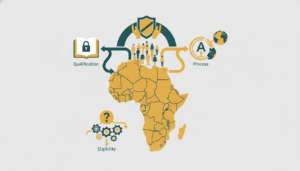
Grand Challenges Africa grant eligibility in 2026 turns on full-time affiliation with an Africa-based organisation, not on nationality alone. The calls are open to African innovators and researchers working full-time in African-based organisations, which includes non-profits, academic institutions, health research institutions, civil society groups and for-profit companies.
The practical test the SFA Foundation applies is institutional rather than personal. The applying organisation must be based in an African country and able to receive grant funds and account for how they are spent, because funds disburse to institutions and not to individuals. An African national employed full-time at a US or European university therefore does not meet the lead applicant test, even with deep continental research ties — the affiliation, not the passport, carries the eligibility.
Lead applicant status has shifted decisively. In the 2026 cycles, African Principal Investigators serve as Lead Applicant without a required co-lead from the Global North. The effect is structural: budget control, data governance and intellectual leadership sit with the African institution from the outset, which reverses the earlier dependency model in which continental researchers entered calls as junior partners on Northern-led consortia.
Partnership expectations are the second competitive filter. GC Africa actively encourages intra-Africa relationships, and applicants are typically asked to describe how the project builds on an existing partnership or establishes a new one across the continent. Because that narrative is scored, a single-institution proposal with no continental partner is competitively weak even when it clears every formal eligibility threshold.
2026 Eligibility Checklist for Lead Applicants
- Employed full-time by an organisation based and legally registered in an African country
- Institution type: non-profit, academic institution, health research institute, civil society organisation or for-profit company
- Named as Lead Applicant / Principal Investigator — no Global North co-lead required in 2026 cycles
- Project aligned to the specific Request for Proposals theme (climate and health, women’s health, AI and LLMs in global health)
- Describes an existing or new intra-Africa partnership
- Submitting through the portal assigned to the applicant’s country of work
- Institution able to receive tranched funding and report on expenditure
Who Does Not Qualify
Four profiles are routinely screened out. A lead institution based outside Africa fails the affiliation test regardless of the project’s implementation country. An applicant who is not employed full-time at the applying institution fails the same test, because part-time or honorary affiliation does not establish administrative responsibility for the award. An applicant based in a country operating its own Grand Challenges platform who submits on the GC Africa portal is disqualified on routing grounds. And an individual applying without the institutional affiliation a call requires cannot receive disbursement, therefore the application closes at screening.
Which Portal You Must Use: The 2026 Country Routing Rule
Grand Challenges Africa grant eligibility in 2026 includes a routing condition: the portal is determined by where the researcher physically works, not by citizenship and not by where the project will be implemented. Submitting through the wrong portal results in administrative disqualification.
The cause is the federated structure of the Grand Challenges network. Each national platform owns its own review pipeline, review panel and budget line. As a result, a misrouted or duplicated submission cannot be transferred between portals mid-cycle — the receiving platform has no mandate to review an application that belongs to another country’s allocation, so the file is closed out.
| Applicant’s country of work | Portal to use | Operating body |
|---|---|---|
| Most African countries (default) | GC Africa portal | Science for Africa Foundation |
| South Africa | Grand Challenges South Africa | SAMRC |
| Ethiopia | Grand Challenges Ethiopia | National Grand Challenges platform |
| Rwanda | Grand Challenges Rwanda | National Grand Challenges platform |
| Senegal | Grand Challenges Senegal | National Grand Challenges platform |
| Kenya (from May 2026) | Grand Challenges Kenya Platform | National platform — verify per call |
| Outside Africa | Regional portal (e.g. GC Brazil, GC India) or central Gates Foundation portal | Grand Challenges network |
Kenya is the newest entry and the one most likely to trip applicants. The Grand Challenges Kenya Platform was announced in May 2026 during the Science, Technology, Research and Innovation for Society Week, with Prof. Shaukat Abdulrazak, Principal Secretary for the State Department of Science, Research and Innovation, framing the launch as a commitment to accelerating homegrown solutions. The consequence for Kenya-based researchers is immediate: because the transition is recent, each RFP must be checked individually to confirm whether that call routes through the national platform or still through GC Africa.
What Happens If You Apply Through the Wrong Portal
Misrouted applications are screened out at administrative review before scientific assessment, which means the proposal is never scored on merit. There is no appeal based on the strength of the science, because the failure is jurisdictional. Verify the portal on the specific RFP page before drafting rather than after, since routing is set per call and a submission built around one platform’s form fields will not transfer cleanly to another.
Open 2026 Rounds, Grant Sizes and Disbursement
GC Africa seed grants in the 2025–2026 cycles provide up to $200,000 over 24 months, while Transition to Scale funding reaches $500,000 or more depending on the specific partner initiative.
Round 16, “Accelerating & Catalysing Solutions for Climate Change’s Impact on Agriculture and Health,” is co-funded by the SFA Foundation, Wellcome and Foundation S–Sanofi Collective. The co-funding structure widens the eligible discipline range, because a call that couples agricultural and health outcomes draws in agronomists, epidemiologists, climate scientists and health systems researchers simultaneously. US Environmental Protection Agency assessments of climate impacts on crop yields and heat-related illness illustrate why the two outcomes are treated as one problem rather than two.
Round 17, “Accelerating Innovation in Vaginal Formulations in Support of Women’s Health,” is a seed grant addressing the shortage of biological data from low- and middle-income countries. That data gap is the stated driver of the call, which means proposals generating LMIC-specific data align more closely with the funder’s rationale. World Health Organization guidance on women’s and maternal health has long identified under-representation of LMIC populations in formulation and clinical evidence as a constraint on product development.
A separate stream with the Patrick J. McGovern Foundation and the Pasteur Network funds equitable and responsible approaches to using AI and large language models to improve global health and maternal care. Responsible-use criteria in this stream map onto the evidence standards that bodies such as the National Institutes of Health apply to AI in diagnostics and clinical decision support — validation, bias assessment and clinical relevance rather than model novelty. Our climate tech and AI health investing analysis tracks how Gates-linked funders are structuring this category.
| Round / programme | Focus area | Award ceiling | Duration | Funding partners |
|---|---|---|---|---|
| Round 16 | Climate change impact on agriculture and health | Up to $200,000 | 24 months | SFA Foundation, Wellcome, Foundation S–Sanofi Collective |
| Round 17 | Vaginal formulations, women’s health | Up to $200,000 | 24 months | SFA Foundation and partners |
| AI and LLMs in global health | Equitable AI, maternal care | Not stated | Not stated | Patrick J. McGovern Foundation, Pasteur Network |
| Transition to Scale 2026 | Scaling proven seed-stage innovations | $500,000 or more | Not stated | SFA Foundation and partner initiatives |
Transition to Scale grants are open to African innovators in 2026 and are directed at teams whose seed-stage results demonstrate traction. Therefore the realistic route into scale funding is a completed, documented seed project with evidence of promising results, not a cold application.
Disbursement is tranched, with the first tranche typically covering 60% of initial project costs. The effect is a cash-flow requirement on the host institution, which must carry expenditure between releases. Institutions without working capital or bridge financing face mid-project stalls that have nothing to do with the research itself.
How to Apply: The 2026 Submission Sequence
Order matters here. Portal confirmation and institutional sign-off both gate submission, and both routinely take longer than drafting the proposal narrative, which means starting with the writing is the wrong sequence.
- Read the specific Request for Proposals and confirm which portal that call routes through.
- Verify your institution is Africa-based, registered and able to administer grant funds.
- Confirm you are employed full-time at that institution and can serve as Lead Applicant.
- Identify and secure written agreement from an intra-Africa partner institution.
- Register an account on the correct portal and review the full submission form before drafting.
- Draft the proposal against the call’s stated scoring criteria, including the partnership narrative.
- Build a budget within the award ceiling and model cash flow around tranched disbursement.
- Obtain institutional and ethics approvals where the research involves human participants.
- Submit before the published deadline and retain the portal confirmation reference.
Deadline discipline deserves emphasis. The SFA Foundation has extended deadlines on individual rounds, including Round 17, whose submission window ran into late 2025 and early 2026. Extensions are announced per call, however, and cannot be assumed — a team that plans around a hypothetical extension is planning around a decision it does not control.
Post-Award Obligations: Attachments, Intellectual Property and Reporting
Award conditions extend beyond spending the money. For certain university-based grants, winning teams are required to complete an attachment at a sponsor’s R&D or innovation unit before full funds are released, which means the project timeline must absorb a placement period that the scientific workplan did not originally account for.
Intellectual property generated under these grants is typically co-owned with the sponsoring foundation. The consequence runs directly into commercialisation planning: co-ownership changes licensing negotiations, affects spin-out valuation and requires the institution’s technology transfer office to review award terms before signature rather than after. A team that assumes sole institutional ownership and builds a commercial plan on that assumption will renegotiate it later from a weaker position.
Reporting drives the release schedule. Because the first tranche commonly covers 60% of initial costs, subsequent releases depend on milestone and financial reporting being accepted. As a result, institutions with thin grants administration capacity face delays that are contractual rather than scientific — the laboratory work is on schedule while the disbursement is not.
Why the Portal Rule Tightened: The Shift to Africa-Led Funding Decisions
The routing rule is the administrative expression of decentralisation, not bureaucracy for its own sake. Management of GC Africa moved to the SFA Foundation, and national platforms followed in South Africa, Ethiopia, Rwanda, Senegal and, in May 2026, Kenya. Review panels, national priorities and submission portals multiplied as a direct result. Research funders operating national competitive calls — the US National Science Foundation model among them — have long tied submission channels to jurisdiction for exactly this reason: a panel can only award from the budget it controls.
The effect on research communities has been substantive rather than procedural.
“It’s important to bring all good minds to address important problems and Grand Challenges Africa has enabled researchers [to] create research communities which enable scientists in the same field to talk, collaborate and learn from each other”
— Prof. Iruka Okeke, University of Ibadan, Nigeria
Strategically, this changes how a competitive proposal is written. Aligning a project with a national platform’s stated priorities now carries more weight than it did under centralised review, because the panel reading the application sits inside that national system. Applicants in South Africa, Ethiopia, Rwanda, Senegal and Kenya should therefore read their national platform’s strategy document alongside the global RFP, since the two documents together define what scores well.
Frequently Asked Questions
Who is eligible for Grand Challenges Africa grants in 2026?
Grand Challenges Africa grant eligibility in 2026 requires full-time employment at an Africa-based organisation — non-profit, university, health research institute, civil society group or for-profit company — that can legally receive and account for grant funds. African Principal Investigators lead applications without a Global North co-lead in the 2026 cycles. Nationality alone does not qualify an applicant who works full-time outside Africa.
Which portal must I use to apply for Grand Challenges Africa funding?
Use the portal assigned to your country of work. Researchers in South Africa (SAMRC), Ethiopia, Rwanda, Senegal and Kenya use national Grand Challenges platforms; applicants in all other African countries use the SFA Foundation’s GC Africa portal. Confirm routing on the specific RFP page before drafting, because a misrouted application is disqualified at administrative screening and never reaches scientific review.
How much funding does a Grand Challenges Africa seed grant provide?
Up to $200,000 over 24 months for the 2025–2026 seed rounds, including Rounds 16 and 17. Transition to Scale funding reaches $500,000 or more depending on the partner initiative. Funds release in tranches, with the first tranche typically covering 60% of initial project costs, which places a cash-flow obligation on the host institution.
Can a researcher based outside Africa apply to Grand Challenges Africa?
No, not as Lead Applicant. The calls require full-time affiliation with an Africa-based organisation. Researchers outside Africa apply through their own regional Grand Challenges portal, such as GC Brazil or GC India, or through the central Gates Foundation portal, and may participate as collaborators where the specific call permits it.
What is Grand Challenges Kenya and does it change where I apply?
The Grand Challenges Kenya Platform was announced in May 2026 during the Science, Technology, Research and Innovation for Society Week, with Principal Secretary Prof. Shaukat Abdulrazak presenting it as a commitment to accelerating homegrown solutions. Because the platform is recent, Kenya-based applicants should check each RFP individually to confirm whether submissions route nationally or still through GC Africa.
Does Grand Challenges Africa require an intra-Africa partnership?
Most 2026 calls require applicants to describe how the project builds on an existing partnership or establishes a new one across the continent. Partnership quality is scored as part of the assessment, therefore single-institution proposals are competitively weak even when they meet every formal eligibility threshold.
Who owns the intellectual property from a Grand Challenges Africa grant?
Intellectual property generated under these grants is typically co-owned with the sponsoring foundation. Certain university-based awards additionally require an attachment at a sponsor’s R&D or innovation unit before full funds release. Technology transfer offices should review both terms before the award agreement is signed, because co-ownership reshapes licensing options.
What themes are funded in the 2026 rounds?
Round 16 funds solutions to climate change’s impact on agriculture and health with Wellcome and Foundation S–Sanofi Collective. Round 17 funds vaginal formulation innovation in support of women’s health. A separate stream with the Patrick J. McGovern Foundation and the Pasteur Network funds equitable and responsible use of AI and large language models in global health and maternal care.
Limitations of This Guide and Alternative Funding Routes
Eligibility wording and portal routing are set per Request for Proposals and change between rounds. Deadlines have been extended on individual calls, including Round 17, which means the published RFP document and the relevant portal are the only authoritative sources at the moment of application. This guide reflects the position as of October 2026 and is not grant advice.
Several variables are not public. Internal scoring weights, panel composition for national platforms, and success rates per round are not consistently published, therefore applicants cannot calculate competitiveness in advance and should not budget on an assumed probability of award. Institutional grants administration capacity is also a differentiator that no RFP states openly — large research institutions such as the University of Washington, home to IHME, operate dedicated grants offices that absorb tranche-reporting demands that a smaller institution handles on top of research duties.
A parallel application strategy is rational given tranched disbursement and single-cycle deadlines, because one missed window delays a project by a full round.
Alternative and Complementary Funding Routes
- Country-specific Grand Challenges platforms with their own national calls (SAMRC, Ethiopia, Rwanda, Senegal, Kenya)
- Direct Gates Foundation Grand Challenges global calls for non-Africa-based collaborators
- Wellcome and Foundation S–Sanofi Collective standalone climate and health calls
- National science and research councils in the applicant’s country
- Institutional bridge funding to cover gaps between grant tranches
Conclusion
Grand Challenges Africa grant eligibility in 2026 is settled by two tests — full-time affiliation with an Africa-based institution, and submission through the portal assigned to your country of work — and failing the second nullifies passing the first. Seed grants run up to $200,000 over 24 months, Transition to Scale awards reach $500,000 or more depending on the partner initiative, and the first tranche typically covers around 60% of initial costs, which makes institutional cash flow a planning item rather than an afterthought.
Because funding decisions have moved to African institutions and national platforms in South Africa, Ethiopia, Rwanda, Senegal and Kenya, the competitive edge now lies in aligning proposals with national priorities and documenting genuine intra-Africa partnerships rather than assembling a consortium for appearance. Verify your portal first, then write.
For ongoing coverage of Gates Foundation grant eligibility, funding rounds and application deadlines, read more at billgates.pk.
References
- Science for Africa Foundation — Grand Challenges Africa programme administration, Requests for Proposals, eligibility criteria, and Round 16 and Round 17 scope and award parameters.
- Grand Challenges network — federated regional and country portal structure and the instruction that applicants submit through the portal matching their location.
- South African Medical Research Council (SAMRC) — Grand Challenges South Africa, the national platform through which South Africa-based applicants submit.
- World Health Organization — global health and maternal health guidance establishing the LMIC evidence gap addressed by Round 17 and the maternal-care AI stream.
- National Institutes of Health — biomedical research standards and the evidence base on AI applications in diagnostics and clinical care.
- U.S. National Science Foundation — comparative reference on how national research funders structure competitive calls and jurisdictional review pipelines.
- U.S. Environmental Protection Agency — data on climate change impacts across agriculture and health outcomes.
- University of Washington — institutional research infrastructure, including IHME, used to illustrate grants administration capacity requirements.