

Table of Contents
- What the Gates Foundation actually funds in 2026
- Why the record $9B 2026 payout changes applicant odds
- How to apply for a Gates Foundation grant: the four real entry points
- Who is eligible, and who is quietly screened out
- The Letter of Inquiry: the gate before the gate
- Inside the review: screening, external review, and program-officer advocacy
- Grand Challenges: the only reliably open door
- Gates Foundation vs Gates Family Foundation: do not apply to the wrong one
- If the Gates Foundation is the wrong door: Breakthrough Energy and other routes
- Frequently asked questions about Gates Foundation grant applications
- Limitations of this guide, and where applicants should verify
- Conclusion
- References
Key Takeaway: A gates foundation grant application usually begins with a relationship, not a form. The foundation channels the large majority of its funding through invited proposals and does not accept unsolicited proposals for core programme work, which leaves Grand Challenges calls and published RFPs as the open routes. The foundation’s record $9 billion annual payout for 2026, approved January 14, 2026, compresses decision timelines because every dollar must clear before the planned 2045 closure.
The Bill & Melinda Gates Foundation approved a $9 billion annual payout for 2026 on January 14, 2026 — the largest in its history — as part of an accelerated spend-down toward a planned 2045 closure. More capital is moving per quarter than at any previous point, and grant terms are tightening as a result. What has not changed is the gate itself: a gates foundation grant application is, in most cases, something you are invited to submit rather than something you initiate. Therefore the decisive work happens months before any portal opens.
This guide is written for researchers, NGO programme leads and founders weighing whether to spend six weeks drafting a proposal. The short answer to that question depends entirely on which of four entry points you qualify for: an invited programme proposal, a Grand Challenges open call, a published request for proposals, or a sub-award through an existing grantee. Each carries a different award ceiling, a different timeline, and a different probability of ever reaching a reviewer.
About this guide: Written by the editorial team at billgates.pk, an independent analysis site covering Gates Foundation grants, Breakthrough Energy investments and climate and health funding. Content is assembled from the foundation’s published programme documentation, official Grand Challenges RFP listings, and peer-reviewed analyses of its review processes.
Transparency: billgates.pk is not affiliated with, endorsed by, or authorised to speak for the Bill & Melinda Gates Foundation or Breakthrough Energy. All figures, eligibility rules and deadlines in this article should be verified against the official sources linked throughout before you submit anything.
What the Gates Foundation actually funds in 2026
The foundation funds organisations pursuing measurable outcomes in global health, global development, US K-12 and postsecondary education, and agriculture in low- and middle-income countries. Funding flows almost entirely through structured programme strategies rather than open-ended giving, which means fit with a published strategy matters more than the general merit of an idea.
The mechanism is worth understanding because it explains most rejections. Programme teams write multi-year strategies first, setting out the problem, the theory of change and the target metrics. Grants are then made to execute those strategies. Consequently, an applicant whose work sits outside a current strategy loses on fit rather than on quality — a technically excellent proposal addressing a problem no team is currently funded to solve does not advance.
The accelerated 2026 payout intensifies this pattern rather than loosening it. Because each programme strategy now has more capital to deploy against the same closure deadline, the effect is larger average awards and faster disbursement inside existing pipelines, not a wider funnel of new entrants. More money per strategy does not translate into more strategies.
Global health continues to dominate the portfolio, and the reason is burden-of-disease arithmetic. World Health Organization global health statistics consistently identify malaria, tuberculosis and gaps in routine childhood immunisation among the largest preventable contributors to mortality in low-income countries, which is why vaccine development and immunisation delivery absorb a disproportionate share of foundation spending. AI-assisted diagnostics have grown within that portfolio in parallel, driven by the same logic the National Institutes of Health applies to clinical validation: a diagnostic tool is funded on evidence of performance in the setting where it will be deployed, not on model architecture.
Program areas funded in 2026
- Global Health — vaccine development, malaria and TB tools, maternal and newborn health
- Global Development — primary health care delivery, immunisation systems, water and sanitation
- Global Growth & Opportunity — financial inclusion, smallholder agriculture, nutrition
- Gender Equality — women’s economic empowerment and health access
- US Programs — K-12 math outcomes, postsecondary completion, education data systems
- Global Policy & Advocacy — country financing, data systems, multilateral coordination
Why the record $9B 2026 payout changes applicant odds
The $9 billion 2026 payout, approved January 14, 2026, raises the volume of capital moving per quarter but does not open an unsolicited door. As a result, the odds improve materially for applicants already inside a programme pipeline and change very little for cold applicants submitting into the void.
The causal chain runs through the closure date. A fixed 2045 endpoint means the endowment must be fully deployed within roughly two decades, and every dollar committed late in that window carries less time to produce a result. Therefore programme officers increasingly favour shorter grant terms, projects with defined endpoints, and partners with demonstrated absorptive capacity — organisations that have already managed awards of comparable size without disbursement delays. A five-year award to an experienced delivery partner retires more capital, more reliably, than fifteen small exploratory grants.
The second-order effect reshapes who wins. Fewer exploratory small grants are issued per dollar of payout, while scale-up and delivery grants expand. Which means early-stage researchers without an institutional track record should target Grand Challenges calls, where novelty is explicitly scored, rather than core programme funding, where delivery history dominates.
The decisive implication for anyone drafting now: write for a three-to-five-year horizon with a measurable endpoint and a defensible exit. Open-ended research agendas with no terminal milestone fit poorly against the foundation’s remaining timeline, and that misfit surfaces during programme officer diligence rather than at final approval.
How to apply for a Gates Foundation grant: the four real entry points
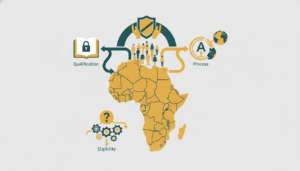
A gates foundation grant application reaches a decision through one of four routes, and only two of them are open to the public. Those four are invited programme proposals, Grand Challenges open calls, published strategy-specific requests for proposals, and sub-awards through organisations the foundation already funds.
The invited proposal deserves a precise definition because it is the route most funding actually travels. A programme officer identifies an organisation as a potential partner, requests a concept note or Letter of Inquiry, and — if that document survives screening — issues a proposal invitation through the foundation’s grant portal. Because the invitation is the gate, visibility and published evidence matter more than proposal polish. Peer-reviewed output, conference presence in the relevant technical community, and credible country partners are what put an organisation in front of a programme team in the first place.
State the corollary plainly: the foundation does not accept unsolicited proposals for core programme funding. Cold submissions are therefore screened out before technical review, and effort spent perfecting one is effort wasted.
The four entry points, in order of how most funding actually flows
- Invited proposal — build visibility with the relevant programme team through publications, conference presence and country partners, secure a programme officer conversation, submit a concept note or Letter of Inquiry on request, then complete the invited proposal in the grant portal.
- Grand Challenges open calls — monitor the Grand Challenges RFP listings, confirm the call’s eligibility and country scope, and submit the online application against the published deadline.
- Published requests for proposals — track the foundation’s funding opportunities page for strategy-specific RFPs, which carry fixed windows and named programme contacts.
- Partnership and intermediary routes — apply as a sub-awardee through an existing grantee, a CGIAR or university consortium, or a pooled fund the foundation already finances.
Award size tracks the route closely, and that relationship is the single most useful planning tool an applicant has. Open calls are designed to de-risk early ideas cheaply, so their ceilings are low and their terms are short. Invited programme grants fund delivery at scale, so their ranges run into eight figures and their diligence is correspondingly heavier. Matching your funding need to a realistic route before writing anything prevents the most common failure mode: a seven-figure request submitted into a seed-grant competition.
Award tiers by entry route
| Entry route | Typical award range | Term | Open to cold applicants? |
|---|---|---|---|
| Grand Challenges seed-style call | Approx. $100,000 | 12–24 months | Yes |
| Grand Challenges full / scale-up award | Six to seven figures | 2–4 years | Yes, via published RFP |
| Published strategy RFP | Varies by call | Varies by call | Yes, within the window |
| Invited programme proposal | Seven to eight figures | 3–5 years | No |
| Sub-award through an existing grantee | Set by prime grantee | Within prime’s term | Indirectly |
Who is eligible, and who is quietly screened out
Eligibility turns on two things: organisational status and strategy fit. The foundation funds institutions — registered NGOs, universities, research institutes, social enterprises and companies working on priority problems — and does not fund individuals seeking personal support. Which means an individual researcher applies through their institution, not in their own name.
The screening logic follows from the strategy architecture described earlier. Because programme teams work from approved strategy documents with fixed metrics, an application that cannot be mapped to a current strategy is closed on fit before any technical review occurs, regardless of scientific merit. This is why so many strong applications receive a response that reads as generic: the decision was made on scope, not on content.
Several common misreadings are worth correcting. For-profit companies are eligible, typically through programme-related investments or grants structured around a charitable purpose, which is how the foundation funds vaccine manufacturers and agricultural input companies. Religious organisations are eligible for non-sectarian work. Political campaigning and lobbying activity are not fundable under any route.
For unaffiliated individuals, the practical path is institutional hosting. Major research universities maintain the grant administration, compliance and audit infrastructure the foundation requires of its partners — the University of Washington, whose Institute for Health Metrics and Evaluation produces widely cited global health metrics, is a well-known example of the institutional-host route. Fellowships, university consortia and Grand Challenges calls that permit institutional affiliation are the realistic alternatives.
Eligible versus ineligible applicants
| Applicant type | Eligible | Condition or caveat |
|---|---|---|
| Registered non-profit / NGO | Yes | Must map to a current programme strategy |
| University or research institute | Yes | Applies as the institution, not the researcher |
| For-profit company | Yes | Charitable purpose or programme-related investment |
| Social enterprise | Yes | Measurable public benefit required |
| Government agency or multilateral body | Yes | Typically via partnership or pooled funds |
| Individual researcher (no institution) | No | Apply through an institutional host |
| Student seeking tuition or scholarship | No | Only within named scholarship programmes |
| Political or lobbying organisation | No | Partisan and lobbying activity excluded |
What the Gates Foundation does not fund
- Personal or individual financial assistance, including tuition and scholarships outside named programmes
- Political campaigns, lobbying and partisan activity
- Religious proselytising or sectarian programming
- Capital campaigns, building funds and endowment contributions
- Work outside a current programme strategy, however strong the science
- Projects without a measurable outcome and a defined endpoint
The Letter of Inquiry: the gate before the gate
A Letter of Inquiry is a short structured summary — commonly two to three pages — that a programme officer uses to decide whether to request a full proposal. It is a screening document rather than a persuasive essay, therefore it is judged on strategy fit and measurability rather than narrative quality.
The causal reality shapes how it should be written. Programme officers read far more inquiries than they can advance, which means the first 150 words determine the outcome. Lead with the problem and its quantified baseline, the intervention, the measurable result and the budget figure. Burying the number on page two is a common and fatal habit carried over from academic writing, where the method precedes the finding.
The structure that survives screening is consistent: a problem statement tied explicitly to a named programme strategy; the intervention and the evidence base it rests on; outcome metrics with baselines and a stated measurement method; delivery partners and country scope; total budget and term in months; and organisational capacity to manage an award of that size. Each element answers a question the programme officer must answer internally before advancing the inquiry.
The difference between weak and strong framing is concrete. “Strengthen health systems in East Africa” tells a reviewer nothing measurable and maps to no specific strategy metric. “Raise measles second-dose coverage in 14 districts from 41% to 80% within 36 months” names the indicator, the baseline, the geography, the target and the term. The second version survives screening because a programme officer can carry it into an internal conversation without rewriting it first.
Letter of Inquiry checklist
- Named programme strategy the work maps to
- One-sentence problem statement with a quantified baseline
- The intervention and the evidence it rests on
- Two to four outcome metrics with targets and measurement method
- Geography, target population and delivery partners
- Total budget requested and grant term in months
- Organisational track record of managing awards of comparable size
- Named institutional contact and signing authority
Inside the review: screening, external review, and program-officer advocacy
A gates foundation grant application typically moves through five stages and takes four to nine months from Letter of Inquiry to signed agreement. The single biggest variable in that range is not document quality — it is whether a programme officer is actively advocating for the proposal internally.
That makes the programme officer the decisive actor. They shape the budget, stress-test the metrics, challenge the partner structure, and ultimately carry the proposal into investment review. Which means most of the real negotiation happens before formal submission, in revision cycles that never appear in any published process diagram. Applicants who treat the programme officer as a gatekeeper to be impressed rather than a collaborator to be worked with consistently take longer and concede more at the diligence stage.
External review should be described honestly. Technical peer review is used for scientific calls, scored against published criteria, and competition is severe. Peer-reviewed analysis of the Grand Challenges in Global Health initiative, indexed in PubMed Central, documented more than 1,500 letters of intent submitted against a small number of eventual awards. Consequently rejection is the statistical norm rather than a signal of weakness, and fit-based screening — not technical scoring — closes the majority of inquiries.
What applicants genuinely control is narrow but decisive: metric clarity, budget realism, and responsiveness during due diligence. Proposals stall most often because requested documentation arrives late or because a budget cannot withstand line-item scrutiny, both of which are failures of preparation rather than of science.
The five review stages and typical duration
- Eligibility and fit screening — 2 to 6 weeks; most inquiries are closed here on strategy fit.
- Programme officer diligence — 3 to 8 weeks; budget, metrics and partner structure are reworked.
- External or technical review — 4 to 10 weeks for scientific calls; scored against published criteria.
- Investment committee review and approval — 4 to 8 weeks; legal, compliance and risk checks run in parallel.
- Grant agreement and first disbursement — 2 to 6 weeks after approval, subject to signed terms and a reporting schedule.
Grand Challenges: the only reliably open door
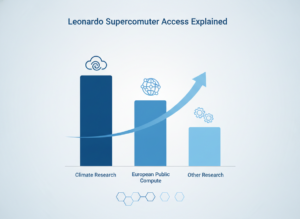
Grand Challenges is the foundation’s open competition family, and because applications are submitted directly against published RFPs without an invitation, it is the realistic first route for an unaffiliated researcher or an early-stage team. No programme officer relationship is required to reach a reviewer.
The structure is a network rather than a single programme: regional and country-led Grand Challenges initiatives, partner-run calls co-funded with other research funders, and calls linked to the annual Grand Challenges meeting. Each carries its own eligibility scope, award ceiling and review panel, which means two calls running simultaneously can impose entirely different country restrictions and budget limits.
The scoring logic should drive how you write. Calls assess novelty alongside the feasibility of a defined milestone, therefore a narrow testable claim outperforms a broad programme description. A proposal to demonstrate a specific diagnostic threshold in a named population within 18 months is assessable; a proposal to “develop a platform for improved diagnostics” is not.
Verify every date against the official Grand Challenges RFP listing before committing to a plan, because windows shift between cycles and several calls are restricted to specific regions. The 2026 effect of the larger payout has been additional partner-run calls, which means more open windows across the year than in prior cycles — but also more variation in eligibility between them.
Grand Challenges and open-call routes: 2026 windows
| Call type | Who can apply | Award ceiling | 2026 window |
|---|---|---|---|
| Grand Challenges global open call | Institutions worldwide, per call scope | Set per call | Verify on official RFP listing |
| Regional / country-led calls | Applicants in named countries | Set per call | Verify on official RFP listing |
| Partner-funder joint calls | Per co-funder eligibility rules | Set jointly per call | Verify on official RFP listing |
| Strategy-specific published RFPs | Per strategy scope | Varies | Fixed window, named contact |
| Rolling expressions of interest | Varies | Not stated | Open until call closes |
Gates Foundation vs Gates Family Foundation: do not apply to the wrong one
They are unrelated organisations. The Bill & Melinda Gates Foundation is the Seattle-based global funder described throughout this guide; the Gates Family Foundation is a Denver-based Colorado funder with no connection to Bill Gates. Therefore applications sent to the wrong entity are simply discarded — there is no internal forwarding between them.
The practical consequence is larger than a naming confusion suggests, because geographic and thematic scope differ completely. A Colorado community education project has no route into the Seattle foundation’s strategies, and a global immunisation proposal has no route into the Denver funder’s Colorado mandate. Confirm the legal name and headquarters address on any funding page before submitting.
Two different funders with similar names
| Attribute | Bill & Melinda Gates Foundation | Gates Family Foundation |
|---|---|---|
| Headquarters | Seattle, Washington | Denver, Colorado |
| Founders / origin | Bill Gates and Melinda French Gates | Gates family of Colorado; no link to Bill Gates |
| Geographic scope | Global, plus US education | Primarily Colorado |
| Focus areas | Global health, development, agriculture, US education | Colorado education, community and conservation |
| Unsolicited applications | Not accepted for core programmes | Verify directly with the funder |
If the Gates Foundation is the wrong door: Breakthrough Energy and other routes
A climate hardware company or energy storage venture is usually a poor fit for foundation grants and a strong fit for Breakthrough Energy. The reason is structural: the foundation funds charitable outcomes, while Breakthrough Energy Ventures takes equity in companies capable of reducing at least 500 megatons of annual greenhouse gas emissions at scale. Those are different tests applied to the same technology.
The instrument difference drives everything downstream. A grant demands measurable public benefit, a defined endpoint and reporting against outcome metrics. Equity demands a credible commercial exit and a path to margin. Therefore the same energy storage technology requires two entirely different narratives — one framed around deployment in underserved markets with a counted health or emissions outcome, the other framed around unit economics, cost curves and addressable market. Founders who submit the philanthropic version to an equity investor read as uninvestable, and the reverse reads as uncharitable. Our climate tech and AI health investing analysis tracks how those two tests are applied in practice across the Gates portfolio.
The Breakthrough Energy route operates differently from the foundation’s. Companies enter through inbound submission and technical diligence focused on physics and cost rather than programme fit, while the Fellows programme runs defined cycles for pre-company and early-stage projects. The capital is patient by design, with a 15-to-20-year horizon rather than the standard seven-to-ten-year fund clock, because hardware decarbonisation rarely resolves inside a conventional fund life.
Federal programmes frequently beat both. The U.S. Department of Energy and ARPA-E fund energy storage and hardware demonstration non-dilutively, which means a team can retire technical risk before raising equity and consequently raise at a higher valuation later. The National Science Foundation supports fundamental AI and climate research that falls outside any foundation strategy, and NIH programmes fund the clinical validation work that AI diagnostics require before any global health funder will consider deployment at scale.
Where to take a climate or health innovation
| Funder | Instrument | Time horizon | Best fit |
|---|---|---|---|
| Gates Foundation programme grant | Grant | 3–5 years | Delivery at scale in LMIC settings |
| Grand Challenges open call | Grant | 12–24 months | Early, testable innovation |
| Breakthrough Energy Ventures | Equity | 15–20 years | Companies with large emissions impact |
| Breakthrough Energy Fellows | Programme support | Defined cycles | Pre-company climate projects |
| DOE / ARPA-E | Non-dilutive federal funding | 1–3 years | Energy hardware and demonstration |
| NSF or NIH research grant | Non-dilutive federal funding | 2–5 years | Fundamental research and clinical validation |
Frequently asked questions about Gates Foundation grant applications
Can anyone apply for a Gates Foundation grant?
No. The foundation funds organisations rather than individuals, and the majority of its funding is invited. Unaffiliated individuals therefore need either an institutional host — a university, NGO or research institute — or a Grand Challenges open call that accepts direct applications, because core programme funding is closed to unsolicited requests from any applicant type.
How does the Gates Foundation grant application process actually work?
It runs through four routes: invited proposals, Grand Challenges calls, published RFPs and sub-awards through existing grantees. The sequence inside each is similar — strategy fit screening, Letter of Inquiry, programme officer diligence, external or technical review where applicable, then investment approval and grant agreement. Expect four to nine months end to end, driven largely by how quickly diligence questions are answered.
What is a Letter of Inquiry for the Gates Foundation?
A two-to-three-page screening summary a programme officer uses to decide whether to request a full proposal. It needs the named strategy, a quantified problem statement, the intervention and its evidence base, outcome metrics with targets, geography and partners, and the budget and term. Because it is a screening document, it is judged on strategy fit and measurability rather than narrative.
How much money can you get from a Gates Foundation grant?
Awards range from roughly $100,000 seed grants in open calls to multi-million-dollar programme grants, with the largest invited awards running into eight figures. The route determines the ceiling, as set out in the award tier table above. Which means choosing the wrong route caps your request before a reviewer ever assesses the work itself.
How long does it take to hear back from the Gates Foundation?
Expect two to six weeks for an initial screening response, and four to nine months from Letter of Inquiry to signed agreement. Silence beyond roughly eight weeks generally signals a closed inquiry, because fit-based screening happens early and rejected inquiries are not always individually acknowledged at volume.
Does the Gates Foundation accept unsolicited proposals?
No, not for core programme funding. Programme teams work from approved multi-year strategies with fixed metrics, therefore gates foundation unsolicited proposals are screened out before technical review. The open alternatives are Grand Challenges calls and published strategy RFPs, both of which accept direct submissions against stated deadlines and eligibility rules.
What does the Gates Foundation not fund?
Individuals, scholarships outside named programmes, political and lobbying activity, religious proselytising, capital campaigns and endowment contributions. It also declines work falling outside a current programme strategy and projects without a measurable outcome and defined endpoint, because the accelerated spend-down requires every commitment to produce a countable result.
How do organizations secure Gates Foundation funding for AI health initiatives?
Through global health strategy teams and Grand Challenges AI calls, with proposals framed around deployment in low- and middle-income settings. Validation data and a named country implementation partner carry more weight than model novelty, because the foundation applies clinical evidence standards comparable to those NIH uses — performance in the deployment setting, not benchmark accuracy.
Is the Gates Family Foundation the same as the Bill & Melinda Gates Foundation?
No, they are unrelated. The Bill & Melinda Gates Foundation is the Seattle-based global funder; the Gates Family Foundation is a Denver-based Colorado funder with no connection to Bill Gates. Misdirected applications are discarded rather than forwarded, so confirm the legal name and headquarters before submitting anything.
How does the foundation’s 2045 closure plan affect grant applications?
It increases the money available now and shortens grant terms. The $9 billion 2026 payout approved January 14, 2026, combined with a fixed 2045 end date, pushes programme officers toward defined-endpoint projects with experienced delivery partners. Consequently open-ended research agendas fit poorly, and a three-to-five-year scope with a measurable terminal milestone competes better.
Limitations of this guide, and where applicants should verify
No gates foundation grant application should be built on a secondary source alone. Award ranges, deadline windows, country eligibility and strategy scopes change from call to call and from cycle to cycle, and they must be verified on gatesfoundation.org and the official Grand Challenges RFP listings before you commit staff time.
There is genuine uncertainty here that deserves stating. The foundation does not publish acceptance rates for invited proposals, which means the stage durations in this guide are drawn from published programme documentation and grantee-reported experience rather than an official success-rate dataset. Treat them as planning ranges, not commitments.
Following any process does not produce funding. Competition is severe — the peer-reviewed Grand Challenges figures cited earlier record more than 1,500 letters of intent against a small number of awards — and strategy fit determines most outcomes before merit is assessed. For applicants whose work falls outside current foundation strategies, NSF, NIH, DOE/ARPA-E and Breakthrough Energy routes are frequently faster and better matched to the project.
billgates.pk is an independent analysis site. It is not affiliated with, endorsed by, or speaking for the Bill & Melinda Gates Foundation or Breakthrough Energy.
Conclusion
The outcome of a gates foundation grant application is largely determined before the form exists. Strategy fit, a measurable outcome with a baseline and a target, and a programme officer who already knows your organisation’s name do more work than any amount of proposal drafting. The 2026 payout increase moves more capital through that same gate rather than widening it.
Three concrete next actions: map your work to a named 2026 programme strategy and write that strategy’s title at the top of your draft; build a one-page Letter of Inquiry against the checklist above, leading with the number; and track the official Grand Challenges RFP listing weekly, because the open windows are where unaffiliated applicants actually win.
Read more — subscribe for 2026 Grand Challenges deadline alerts.
References
- Bill & Melinda Gates Foundation — record $9 billion annual payout for 2026, approved January 14, 2026, and the planned 2045 closure commitment. https://www.gatesfoundation.org/
- Grand Challenges — official requests for proposals and open call listings, including eligibility scopes, award ceilings and deadline windows. https://gcgh.grandchallenges.org/challenges
- PubMed Central — peer-reviewed analysis of Grand Challenges in Global Health proposal review volumes, documenting more than 1,500 letters of intent against a small number of awards. https://pmc.ncbi.nlm.nih.gov/
- World Health Organization — global health statistics and priority disease burden data for malaria, tuberculosis and routine immunisation. https://www.who.int/
- National Institutes of Health — biomedical research programmes and clinical validation standards for AI-assisted diagnostics. https://www.nih.gov/
- U.S. National Science Foundation — federal funding priorities for fundamental AI and climate research. https://www.nsf.gov/
- U.S. Department of Energy — clean energy technology research and ARPA-E funding mechanisms. https://www.energy.gov/
- University of Washington — institutional research partnerships and IHME global health metrics. https://www.washington.edu/