
Table of Contents
- Why the Bill Gates Reading List Works as a Funding Signal
- Theme One: AI Liability and the Ethics Stress-Test
- What This Means for AI Health Applicants
- Theme Two: Climate Infrastructure and the Permitting Problem
- Theme Three: Neuroscience, Aging and the Health Portfolio
- Why Aging Is Becoming a Global Health Question
- Theme Four: Market Fragility and the Industrial Base
- The 2026 Reading List at a Glance
- How to Use the List If You Are Seeking Funding
- Frequently Asked Questions
- Limitations of This Analysis
- Conclusion
- References
Key Takeaway: The 2026 bill gates reading list functions as an advance signal of capital allocation, because each title tracks a sector where Gates is already deploying money — Culpability to AI ethics and his November 2026 regulatory warnings, Abundance and Clearing the Air to Breakthrough Energy’s infrastructure bottlenecks, Gray Matters to more than $100 million in personal Alzheimer’s research funding, and 1929 to capital preservation across Cascade Investment’s holdings.
>
- AI: Culpability (Summer 2026) mirrors Gates’s shift from optimism to caution on model risk.
- Climate: Abundance explains the permitting failures that preceded Breakthrough Energy Catalyst’s February 2026 investment pause.
- Health: Gray Matters aligns with Gates’s neuroscience and aging-population interests.
- Markets: 1929 signals attention to financial fragility during a technological transition.
>
For founders and researchers seeking Gates-aligned funding, the reading list is a cheaper research tool than any pitch deck review.
Bill Gates has published book recommendations on Gates Notes for well over a decade, and most coverage treats them as a celebrity curiosity — what the rich guy packs for vacation. That reading misses the point. Across his late 2025 and 2026 selections, the titles line up with the sectors where his money actually moves, which means the list works less like a holiday diversion and more like a research bibliography for a portfolio spanning global health, climate technology and legacy industrials.
The pattern holds because Gates reads instrumentally. He has said as much repeatedly: he reads to understand systems he intends to intervene in. Consequently, when a novel about autonomous-vehicle liability appears on his summer list in the same year he begins publicly calling for a supervisory layer on AI models, the sequencing is not coincidence. It is homework becoming policy.
This analysis maps four themes from his recent recommendations onto specific, dated capital decisions — including Breakthrough Energy Catalyst’s February 2026 pivot and Breakthrough Energy Ventures’ $43 million Series A in Lydian in July 2026 — and explains what each signal is worth to anyone building in these sectors.
About This Analysis: Written by the editorial team at billgates.pk, which tracks the funding flows, timelines and measurable outcomes of Bill Gates’s philanthropic and investment activity across climate tech and AI health investing. We separate the institutional positions of the Gates Foundation from the personal views of Bill Gates throughout.
Transparency Note: billgates.pk is an independent publication. It is not affiliated with, endorsed by, or funded by Bill Gates, the Gates Foundation, Breakthrough Energy or Cascade Investment. Book titles and publication dates reflect lists published on Gates Notes. Investment figures are drawn from reporting cited inline. Interpretations connecting books to capital decisions are our editorial analysis, not statements from Gates or any of his organisations.
Why the Bill Gates Reading List Works as a Funding Signal
The bill gates reading list predicts capital movement because Gates’s reading precedes his public positions by months rather than years, and his public positions precede or accompany deployment decisions at Breakthrough Energy and the Gates Foundation.
The mechanism is straightforward. Gates operates as an unusually hands-on principal across three distinct vehicles: the Bill & Melinda Gates Foundation for global health and development, Breakthrough Energy for climate technology, and Cascade Investment for personal and endowment assets. Each requires him to form a view on technical questions that generalist investors outsource to analysts. Therefore he builds that view from books, and the books surface publicly before the cheques clear.
For Dr. Anya Sharma types — the lab leads and climate-tech founders who need to understand an investor’s thesis before they write a proposal — this makes the list unusually useful. A venture firm’s website states what it funds. A reading list reveals what the decision-maker is still trying to understand, which is where new money tends to go.
Theme One: AI Liability and the Ethics Stress-Test
Gates’s Summer 2026 fiction pick, Culpability by Bruce Holsinger, opens with a fatal crash involving a self-driving car and then works through the question of who carries the blame — the driver, the manufacturer, or the software developer.
That premise is not idle entertainment for a man whose wealth remains tied to Microsoft, which holds a multi-billion-dollar partnership with OpenAI. Reading a novel that assigns moral weight to autonomous system failure functions as an ethics stress-test on the exact technology his career and holdings helped capitalise.
The timing matters. In a November 5, 2026 interview on The Ezra Klein Show, Gates warned that AI has already crossed biological and cyber thresholds that enable small groups to cause mass harm. He stated that AI “makes nuclear weapons look like nothing” and called for an urgent supervisory layer on all models.
“Makes nuclear weapons look like nothing.”
— Bill Gates, describing AI risk on The Ezra Klein Show, November 5, 2026
That is a sharp departure from the broadly optimistic framing Gates used in earlier years, and the effect of the shift is already visible in his economic prescriptions. He is now publicly advocating taxes on AI use to fund pensions and offset job displacement. Consequently, organisations working on AI-driven economic inequality have a clearer read on where foundation attention is drifting than they did twelve months ago.
What This Means for AI Health Applicants
Applicants should expect governance and liability questions to carry more weight in AI health proposals, because the principal has publicly reframed model risk as a near-term safety problem rather than a distant one. A proposal that treats oversight as a compliance afterthought now reads as naive against Gates’s stated position.
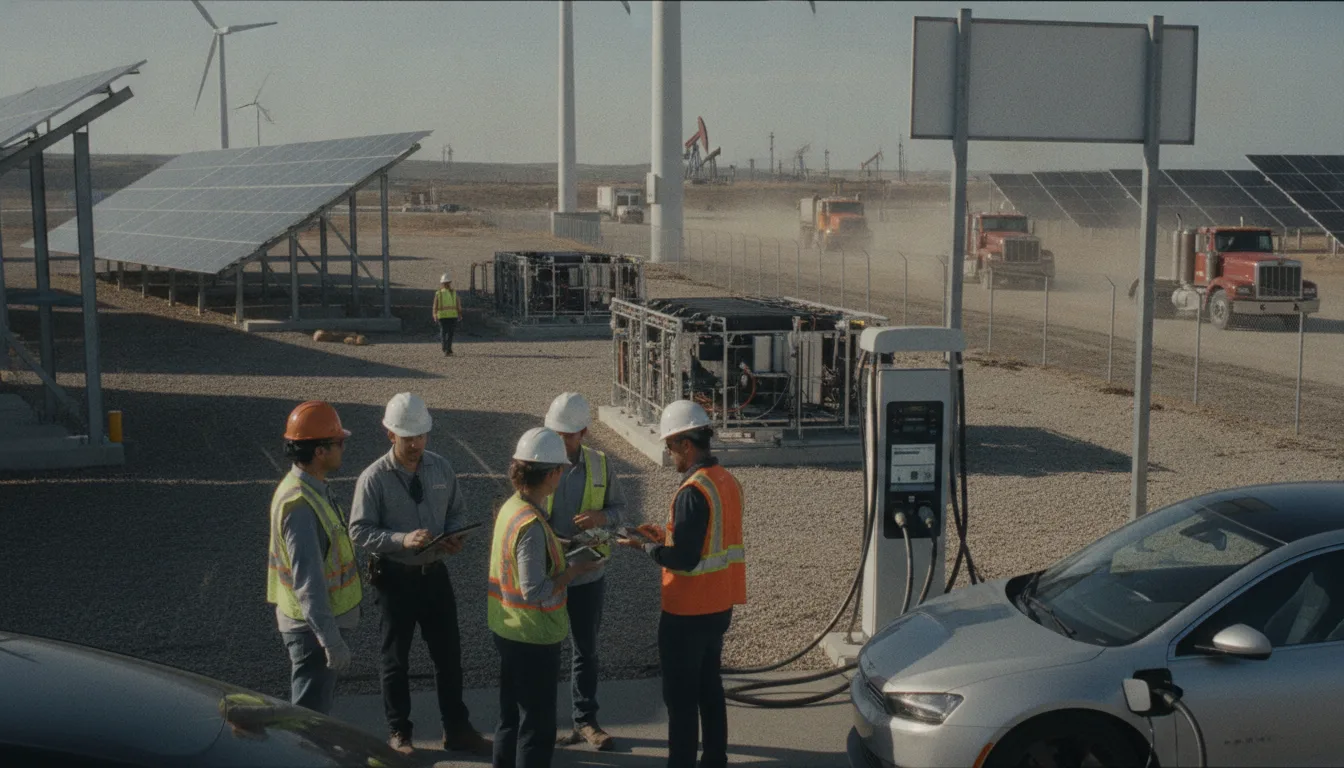
Theme Two: Climate Infrastructure and the Permitting Problem
Two Winter 2025 selections explain Breakthrough Energy’s hardest operational problem better than any press release: Abundance by Ezra Klein and Derek Thompson, and Clearing the Air: A Hopeful Guide to Solving Climate Change in 50 Questions and Answers by Hannah Ritchie.
Abundance argues that American progress stalls at regulatory bottlenecks and permitting, and that funding a project is not the same as finishing one. Ritchie’s book supplies the data-driven counterweight — a structured, optimistic case that the climate problem is tractable. Together they form the intellectual scaffolding for Gates’s long-standing focus on the “green premium,” the additional cost of choosing clean technology over fossil fuels.
Then reality tested the thesis. In February 2026, Breakthrough Energy’s Catalyst fund — which had raised over $1 billion to finance the scale-up of nascent green technologies — announced it was suspending new investments. After spending what reporting described as “high hundreds of millions of dollars” across 10 startups, the fund pivoted to managing and supporting its existing portfolio.
That outcome is precisely the failure mode Abundance describes. Catalyst was built to bridge the gap between demonstrated technology and commercial scale, and the gap turned out to be governed less by capital availability than by the physical and regulatory difficulty of building infrastructure. As a result, the fund reallocated toward depth over breadth.
Breakthrough Energy Ventures, the earlier-stage arm, kept deploying. In July 2026, BEV led a $43 million Series A in Lydian, a Cambridge-based startup developing synthetic sustainable aviation fuel designed to cut lifecycle emissions by up to 95%.
| Vehicle | 2026 Action | Scale | Direction |
|---|---|---|---|
| BE Catalyst | Suspended new investments (Feb 2026) | Over $1bn raised; 10 startups | Portfolio support only |
| BE Ventures | Led Lydian Series A (Jul 2026) | $43 million | Still deploying |
| Lydian technology | Synthetic sustainable aviation fuel | Up to 95% lifecycle emissions cut | Early commercial |
The read-across for founders is specific: demonstration-stage climate capital from the Gates orbit tightened in 2026, while early-stage capital for high-leverage fuel and materials chemistry did not.
Theme Three: Neuroscience, Aging and the Health Portfolio
Gates’s Summer 2026 non-fiction pick Gray Matters: A Biography of Brain Surgery by Theodore H. Schwartz traces brain surgery from ancient trepanation to modern minimally invasive technique. Gates recommended the audiobook specifically, noting that it explains the maladies of the brain and the history of the field.
This selection maps to the most personal line item in his portfolio. Over the past decade, Gates has personally invested more than $100 million into Alzheimer’s research, including the Dementia Discovery Fund. The reading is therefore due diligence on a field he has already funded rather than reconnaissance on a new one.
The aging theme runs wider than neurology. His Winter 2025 fiction pick, Remarkably Bright Creatures by Shelby Van Pelt, prompted him to reflect on what communities can do to help older people find purpose. Taken together with Gray Matters, the pattern points toward an intersection the Gates Foundation’s global health work increasingly has to confront: aging populations, neurological health and healthcare access in systems originally designed around infectious disease.
Why Aging Is Becoming a Global Health Question
Demographic transition is driving the shift. Because childhood mortality has fallen sharply in many of the countries where the Foundation operates, the burden of disease moves toward chronic and age-related conditions. Consequently, grant-seekers working on dementia, neurological access or geriatric care in middle-income settings are addressing a problem the Foundation’s own success helped create.
Theme Four: Market Fragility and the Industrial Base
Two further titles — 1929: Inside the Greatest Crash in Wall Street History—And How It Shattered a Nation by Andrew Ross Sorkin (Summer 2026) and Who Knew by Barry Diller (Winter 2025) — connect to the least discussed part of Gates’s money: the old economy.
Cascade Investment, which manages Gates’s personal wealth and the Foundation’s endowment, holds large stakes in traditional industries including railroads such as Canadian National Railway, waste management and agriculture. Reading Sorkin’s account of the macroeconomic failures behind the Great Depression in 2026 points toward a focus on market fragility, historical cycles and capital preservation during a period of simultaneous geopolitical and technological transition.
Gates’s own framing of 1929 emphasised the value of understanding past financial mistakes to maintain banking-system resilience today. That is a defensive posture, and it sits logically alongside the Catalyst pause: both reflect a principal reducing exposure to fragile scale-up risk while the macro picture is unsettled.
Diller’s Who Knew, an insider memoir on the evolution of media and entertainment, pairs with Steven Pinker’s When Everyone Knows That Everyone Knows on his earlier list. Both concern how information travels and how shared knowledge forms — which maps directly to Gates’s investments in educational technology and the Foundation’s work countering health misinformation.
The 2026 Reading List at a Glance
| Title | Author | List | Mapped Capital Area |
|---|---|---|---|
| Culpability | Bruce Holsinger | Summer 2026 | AI ethics, liability, Microsoft/OpenAI exposure |
| 1929 | Andrew Ross Sorkin | Summer 2026 | Cascade Investment, capital preservation |
| Gray Matters | Theodore H. Schwartz | Summer 2026 | Alzheimer’s research, over $100m personal |
| Abundance | Klein and Thompson | Winter 2025 | Breakthrough Energy infrastructure strategy |
| Clearing the Air | Hannah Ritchie | Winter 2025 | Climate data, green premium |
| Who Knew | Barry Diller | Winter 2025 | Media, communication, edtech |
| Remarkably Bright Creatures | Shelby Van Pelt | Winter 2025 | Aging populations, community health |
How to Use the List If You Are Seeking Funding
Treat the list as a thesis document and align your framing to it, because proposals that answer the question the funder is currently asking outperform those that answer last year’s question.
- Read the mapped book, not the summary. A proposal that engages the permitting argument in Abundance speaks the same language as Breakthrough Energy’s 2026 experience.
- Match stage to vehicle. Catalyst is not taking new positions as of February 2026; BEV led a Series A in July 2026. Target accordingly.
- Build governance into AI health proposals. Gates’s November 2026 call for a supervisory layer on all models sets the expectation.
- Quantify the emissions or health delta. Lydian’s pitch carried a specific figure — up to 95% lifecycle emissions reduction. Specificity travels.
- Separate the Foundation from the man. Gates’s personal views on AI taxation are not Foundation policy. Address the right entity.
Frequently Asked Questions
What books are on the bill gates reading list for 2026?
His Summer 2026 list includes Culpability by Bruce Holsinger, 1929 by Andrew Ross Sorkin, and the audiobook of Gray Matters by Theodore H. Schwartz. Winter 2025 selections included Abundance, Clearing the Air, Who Knew and Remarkably Bright Creatures.
Why did Breakthrough Energy Catalyst stop making new investments?
Catalyst suspended new investments in February 2026 after deploying high hundreds of millions of dollars across 10 startups. The fund, which raised over $1 billion, pivoted to supporting its existing portfolio because scaling physical climate infrastructure proved harder than financing it — the bottleneck problem Abundance describes.
What has Bill Gates said about AI risk in 2026?
On November 5, 2026, on The Ezra Klein Show, Gates said AI has crossed biological and cyber thresholds enabling small groups to cause mass harm. He described the risk as making nuclear weapons “look like nothing” and called for an urgent supervisory layer on all models, plus taxes on AI use to fund pensions.
How much has Bill Gates invested in Alzheimer’s research?
Over the past decade he has personally committed more than $100 million to Alzheimer’s research, including the Dementia Discovery Fund. This is personal capital rather than Gates Foundation grant money, which matters for anyone identifying the correct funding route.
Does the reading list indicate where Gates Foundation grants will go?
Not directly. The list reflects Bill Gates’s personal reading and interests. Foundation grant priorities are set institutionally and published separately. The list indicates direction of attention, which is useful context but not a funding announcement.
Limitations of This Analysis
Research limitations. The mapping between books and capital decisions is correlational and interpretive. Gates has not stated that specific titles drove specific investments, and reading order relative to deal timelines cannot be established from public sources. Some figures reported here — notably the “high hundreds of millions” spent by Catalyst — come from reporting rather than audited disclosure, so treat the range as approximate.
Alternative readings. A reasonable alternative interpretation is that Gates reads broadly and the overlap with his portfolio reflects sector concentration rather than causation: anyone holding climate, health and technology assets will naturally pick up books on those topics. We think the timing of Culpability against his November 2026 AI statements argues for a tighter connection, but the weaker interpretation remains defensible.
Professional consultation. Nothing here constitutes investment or grant-writing advice. Funding criteria at the Gates Foundation, Breakthrough Energy Ventures and Breakthrough Energy Catalyst change, and eligibility rules are set by those organisations. Verify current requirements with the relevant programme office, and consult qualified advisers before making investment or fundraising decisions based on sector signals.
Conclusion
The 2026 selections are unusually utilitarian. The fiction stress-tests the ethics of technologies Gates helped capitalise; the non-fiction supplies operating theory for infrastructure, neuroscience and market fragility. Because the pattern is consistent across both summer and winter lists, it is reasonable to treat the bill gates reading list as a leading indicator of where attention — and eventually capital — is heading.
The hard evidence sits in the dated decisions. Catalyst paused new investments in February 2026 after the permitting and scale-up difficulties that Abundance anatomises. BEV committed $43 million to Lydian’s synthetic aviation fuel in July 2026. Gates issued his starkest AI warning yet on November 5, 2026, months after a novel about autonomous-vehicle liability appeared on his summer list. The books came first in each case.
For founders, researchers and grant-seekers, that sequencing is the actionable part. Read what the principal is reading, and you are reading the thesis before it becomes a term sheet.
Read more analysis of Gates-aligned funding flows, deadlines and eligibility at billgates.pk.
References
- Bill Gates, “My summer best list for 2026,” Gates Notes — gatesnotes.com
- Bill Gates, winter 2025 book recommendations, Gates Notes — gatesnotes.com
- Bill Gates, additional book commentary, Gates Notes — gatesnotes.com
- Reporting on Breakthrough Energy Catalyst’s February 2026 suspension of new investments — politicopro.com
- Reporting on Breakthrough Energy Ventures’ $43 million Series A in Lydian, July 2026 — geekwire.com
- Sustainable aviation fuel and climate investment coverage — esgnews.com
- Theodore H. Schwartz, author background for Gray Matters — theodorehschwartzmd.com
- Culpability review coverage — kirkusreviews.com
- Coverage of Gates’s November 2026 AI risk remarks — biggo.com
- Additional reporting on Gates’s technology commentary — letemsvetemapplem.eu
- Investment commentary on Cascade Investment holdings — investingtimedaily.com